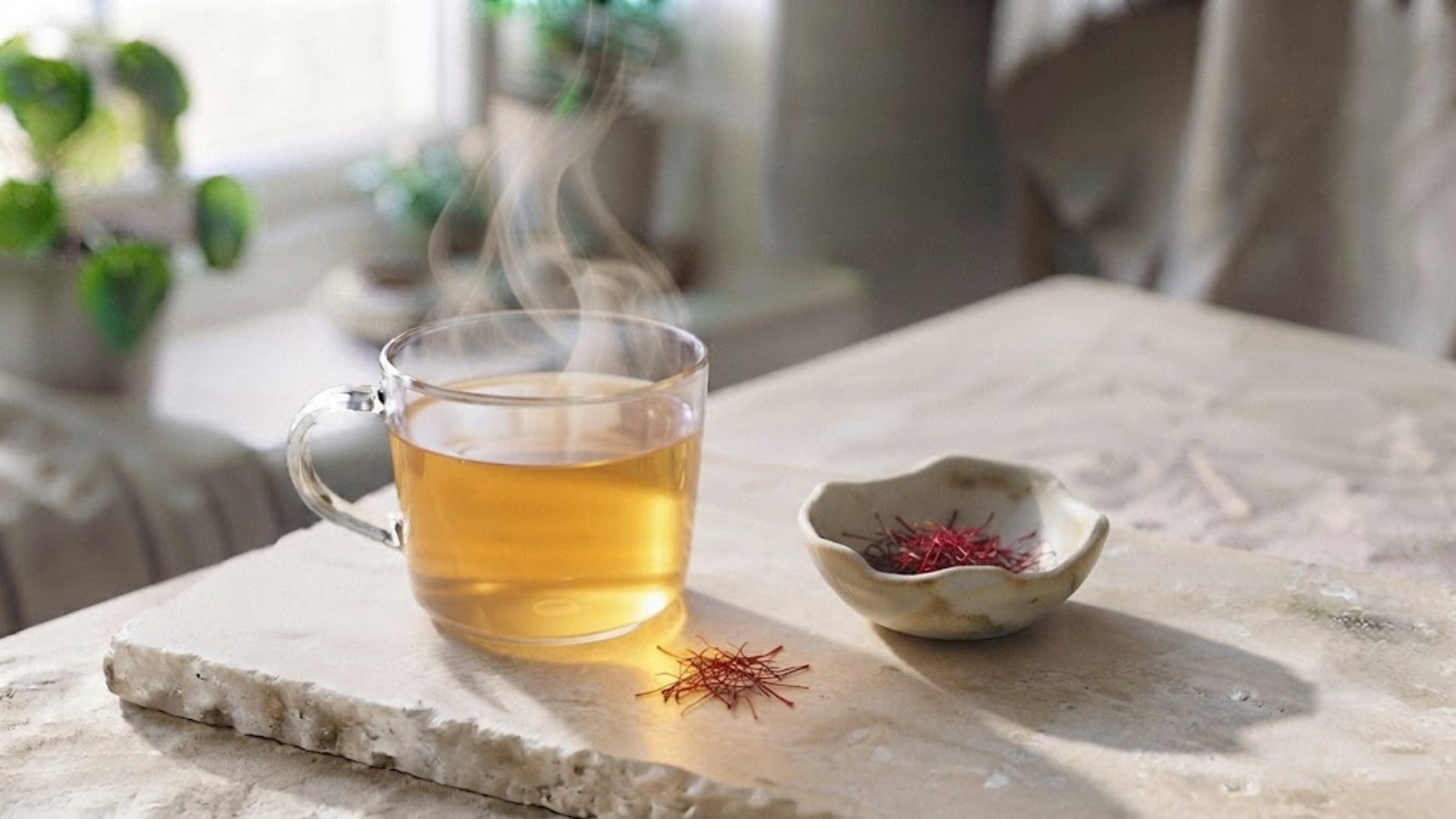
Apricot Herbal Tea: Soft Sweetness for Midday

Across cultures, apricot has appeared not as a fruit of excess but as one of moderation and balance, valued for its ability to soften without weakening. In regions where fruit was dried and stored for seasonal continuity, apricot became associated with foresight and provision, its preservation requiring attentiveness, timing, and restraint. Rather than acting as a focal element, it served as a stabilizing presence, holding sharper, more assertive elements in balance.
That quiet, structural role is what earns apricot its place among the afternoon botanical collection. Its mellow sweetness does not command attention. Instead it rounds the edges of more volatile components, and in the cup that translates into a note that supports containment and steadiness rather than expression.
How Apricot Supports a Balanced Midday Cup
Apricot works as a regulating element rather than a focal one. Its role is to moderate transitions, especially through stretches of sustained activity where sharpness and repetition can accumulate. By contributing a gentle rounding within the cup, it helps hold a composed, settled center through the day.

It smooths contrast rather than heightening it, reducing internal noise without dulling the cup. That subdued sweetness is what makes it easy to return to, a note that holds the blend together without introducing distraction or intensity, cumulative rather than emphatic, felt through repetition rather than in any single sip.
The Sensory Profile: Soft Sweetness, Mellow Warmth, and Smooth Finish
Apricot plays a unifying role in a blend. It operates between brightness and depth, helping disparate elements settle into a coherent whole. Rather than asserting itself, it provides internal continuity, letting sharper citrus notes and grounding roots coexist without friction.

Aromatic Character
Apricot brings a restrained, fruit-based aroma that stays close to the infusion rather than lifting outward. It does not perfume the cup. Instead it adds a subtle softness that tempers more assertive herbal and citrus aromatics.
Color in the Cup
In the brewed infusion, apricot contributes a warm, muted tone that gently deepens the cup without darkening it. The color signals cohesion rather than contrast, supporting a calm, settled appearance.
Flavor Profile
Apricot offers a mild, rounded sweetness that works as a buffer rather than a highlight. It softens the sharp edges of citrus and mint without adding richness or indulgence, staying integrated rather than stepping forward.
Weight and Presence
Apricot adds subtle weight to the mid-palate. That presence anchors the lighter notes and gives the blend a composed center, so the cup feels held and complete, neither thin nor heavy.
Mouthfeel and Finish
The mouthfeel is smooth and even, resolving into a clean finish. There is no lingering sweetness or pull toward indulgence, an ending that stays composed and makes the cup easy to return to.
Apricot in Blending: Fruit Softness and Structural Balance
Apricot's role in a blend is defined by its ability to mediate contrast. It sits at the intersection of cool and warm, absorbing sharpness from mint and citrus while easing the transition toward warmer roots and spice. Its presence lets the blend hold tension without escalation.

With Fruit
Paired with lemon peel, apricot provides counterbalance rather than amplifying sweetness. Lemon brings clarity and directional brightness, while apricot softens its edges, keeping the sharpness from turning abrasive and holding the fruit layer composed and restrained.
With Flowers
With osmanthus, apricot contributes structure rather than fragrance. Osmanthus brings a light floral presence that can drift if unsupported, and apricot anchors it, keeping the floral character integrated and atmospheric rather than expressive.
With Herbs
Herbs such as spearmint, lemon verbena, and tulsi set the directional clarity of the blend. Apricot moderates their edges, keeping the herbal profile from turning sharp or drying, so the core stays clear without becoming austere.
With Roots
Paired with dandelion root and licorice root, apricot serves as a transition point between lift and depth. The roots bring grounding and warmth, and apricot eases entry into that layer without adding heaviness.
With Spices
Ceylon cinnamon brings controlled warmth and structure. Apricot keeps that warmth measured, holding the spice back from richness so the two settle into a contained warmth rather than an escalating one.
Taken as a whole, apricot's harmonizing function comes clear. It does not lead, but it enables coherence across fruit, herb, flower, root, and spice.
Apricot in Guardian Spirit's Mint Citrus Lane
Apricot's soft, rounding sweetness is a defining star ingredient in one of the two midday blends, the one built for bright, clear lift. If a gentle fruit softness is what you want under the citrus, this is where to meet it in the cup.
Guardian Spirit™ is mint and citrus, and it is caffeine-free. Spearmint and lemon come up first and bright, cool across the top of the cup, with apricot rounding the edges underneath and enough herbal structure from lemon verbena, tulsi, and roots to keep it from thinning out by mid-afternoon. It is the one to reach for when your head feels crowded and you want to clear the noise without adding anything heavy.
Apricot's Quiet Place in a Midday Reset
Apricot's contribution is not meant to be noticed in isolation. It works quietly, shaping the cup from within, tempering brightness so clarity stays usable rather than sharp and refreshing notes read as resets rather than disruptions. Its value emerges through repetition, one thread in the wider practice of drinking tea in the afternoon, where the cup becomes a steadying structure rather than a moment of escape.
Editorial Disclaimer
This content is for informational and educational purposes only. It reflects general perspectives on herbal tea, daily rituals, and related lifestyle practices. It is not intended to provide medical advice, diagnose conditions, or recommend treatments. Always consult a qualified healthcare professional with any questions about wellness or health-related matters.