Best Herbal Tea After Dinner (Caffeine-Free)

Dinner's finished, and you want something to round out the meal and ease into the evening. For a lot of people that used to mean an after-dinner coffee or a drink, but neither one really fits when the goal is to wind down: coffee brings caffeine you don't want this late, and alcohol tends to work against a calm evening. A warm cup of herbal tea does the job better. It gives you that same satisfying close to the meal, caffeine-free and gentle, so the evening can actually settle. Here are the best herbal teas to drink after dinner, and how to choose the right one. This is one part of a complete guide to dessert herbal tea for evening sweet cravings.
Why Herbal Tea Is the Best After-Dinner Drink
The after-dinner drink is an old ritual. The nightcap, the digestif, the little cup of coffee after the plates are cleared, all of them are ways to mark the end of the meal and shift into the slower part of the evening. It's a good instinct. That small, warm pause is a real part of closing the day well.

The trouble is what's usually in the cup. An after-dinner coffee brings caffeine at exactly the hour you're trying to wind down, and a drink, however pleasant, tends to work against a calm, clear evening. Both give you the ritual but undercut the wind-down.
A warm cup of herbal tea keeps the ritual and drops the downside. It's the same deliberate, satisfying close to the meal, warm and unhurried, but caffeine-free, so it eases you into the evening instead of pulling against it. One thing to watch: not every tea works here. Green tea, black tea, and pu-erh are often suggested after dinner, but they all contain caffeine. Herbal blends, made from real botanicals rather than the tea plant, are naturally caffeine-free, which is what makes them the right choice for the evening.
The Best Herbal Teas to Drink After Dinner
The right after-dinner tea depends on how you want to finish the meal. Here are three good directions, and the Purely blends that fit each one.
Soft and Calming: Chamomile and Lemon Balm
When dinner is done and you just want to settle, gentle botanicals like chamomile and lemon balm make a soft, quiet cup. Chamomile brings a mellow, apple-like sweetness and a faint floral warmth, while lemon balm adds a light, citrusy brightness that keeps the cup from feeling heavy. Together they make an easy, unhurried brew for easing out of the meal and into the evening.
Naturally Sweet: Red Rooibos and Honeybush.
For an everyday after-dinner cup that's warm and rounded without being a full dessert, naturally sweet bases like red rooibos and honeybush are the answer. Both brew caffeine-free with a smooth, honeyed body, rooibos leaning slightly earthy and honeybush a touch sweeter and more floral. It's the kind of comforting, familiar cup that makes finishing the meal with tea feel like a habit worth keeping.
Dessert-Inspired Comfort: Purely's Evening Blends
Sometimes the meal isn't quite complete without something sweet. Instead of dessert, a naturally sweet dessert tea gives you that satisfying finish without the heaviness.
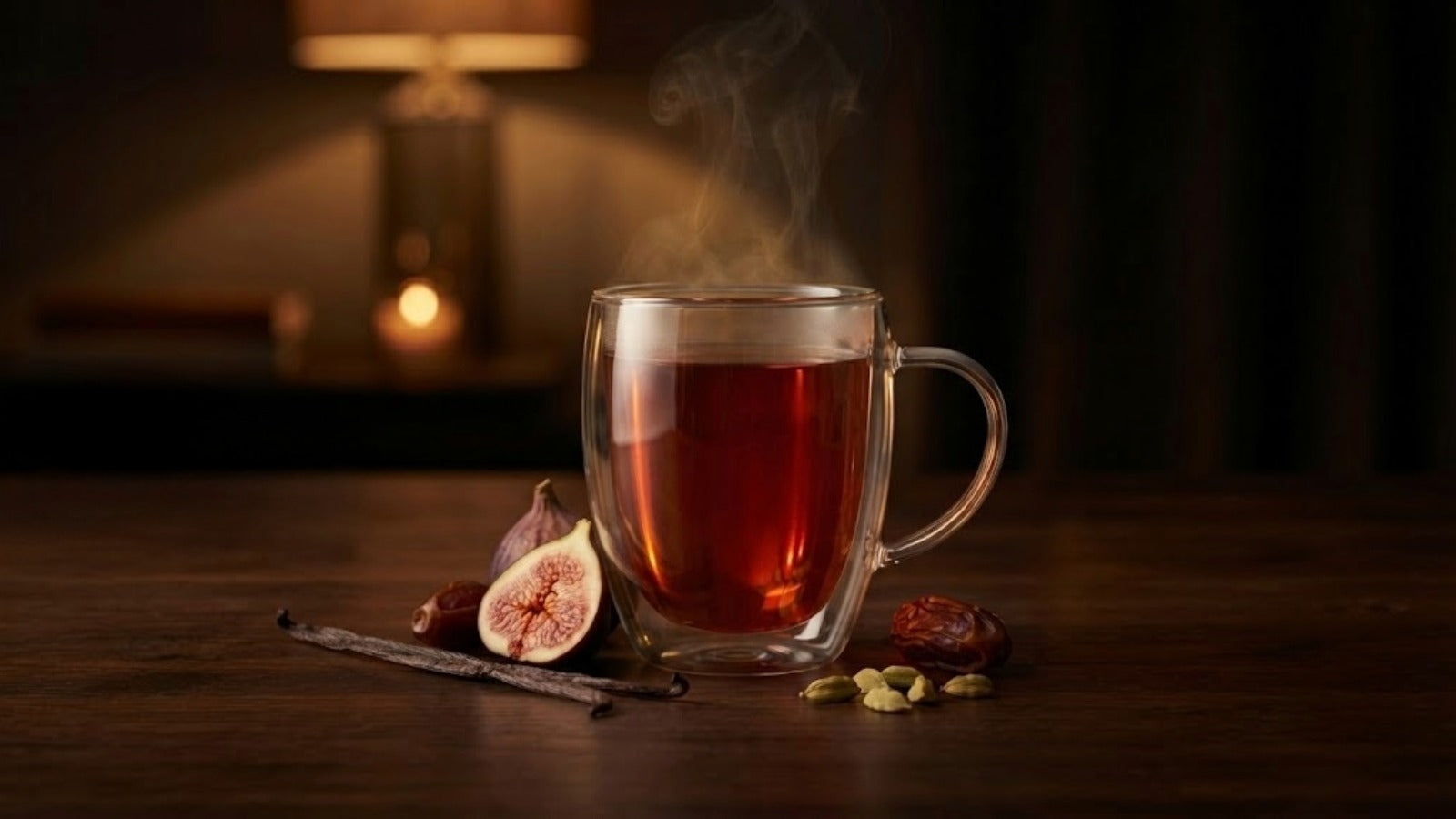
Sacred Sanctuary™ is Purely's fig and pear evening blend, and it's the closest thing to a warm fruit dessert in a mug. Ripe fig and mellow pear give it a soft, jammy sweetness, real vanilla adds a creamy, dessert-like roundness, and carob and marshmallow root bring a velvety weight that makes the cup feel indulgent. The sweetness comes entirely from the botanicals themselves, real fig, real pear, real vanilla, no added sugar and no flavoring, which is why it tastes like fruit and cream.
Moonlight Stillness™ is the pick for nights when only something deep and dessert-like will do. Date gives it a natural caramel-like warmth, real vanilla lends a smooth, creamy sweetness, and a whisper of cardamom adds the kind of warm, baked-spice aroma you'd find in an actual dessert. Because the richness comes from whole date, real vanilla, and real cardamom rather than added flavoring, the cup has genuine body and depth instead of a thin, sugary imitation.
Both are caffeine-free and sweetened entirely by real botanicals. If you want to try them side by side, the Evening Ritual Sampler has both for $19, a simple way to find whether a fruit-sweet or a deeper, dessert-like finish closes your meal best.
When to Drink Herbal Tea: After Dinner vs. Before Bed
It's worth knowing that an after-dinner cup and a before-bed cup aren't quite the same thing.

The after-dinner tea comes earlier, right as the meal ends, when you're closing out dinner and easing into the evening. You might still have a few hours ahead of you: a book, a show, a slower conversation. Its job is to mark the shift from the meal into the evening, not to send you straight to sleep.
The before-bed cup comes later, when you're genuinely winding down for the night. Both can be a warm, caffeine-free herbal tea, and the same blend can work for either. But if you're specifically looking for that last cup before sleep, that's its own moment worth choosing for. After dinner, the goal is simpler: a warm, satisfying finish that opens the evening rather than ending it.
The After-Dinner Cup Worth Keeping
The after-dinner ritual is worth holding onto. It is the small, warm pause that marks the end of the meal and eases you into the slower part of the evening. The only thing worth changing is what fills the cup, a caffeine-free herbal tea that gives you the same satisfying close without the coffee or the drink that works against a calm night. Whether you finish soft and calming, naturally sweet, or with something dessert-like, the cup opens the evening rather than ending it, part of the wider practice of tea in evening rituals.
Editorial Disclaimer
This content is for informational and educational purposes only. It reflects general perspectives on herbal tea, daily rituals, and related lifestyle practices. It is not intended to provide medical advice, diagnose conditions, or recommend treatments. Always consult a qualified healthcare professional with any questions about wellness or health-related matters.