Skip to content

Cart

Your cart is empty

Taste Purely First

Freshly dehydrated fruit. Aged vanilla, split by hand. Cardamom cracked in a mortar. Nothing artificial nothing like the tea you know. Claim your complimentary sample and taste what you’ve been missing.

Article: Does Dessert Tea Actually Satisfy Sweet Cravings?

Does Dessert Tea Actually Satisfy Sweet Cravings?

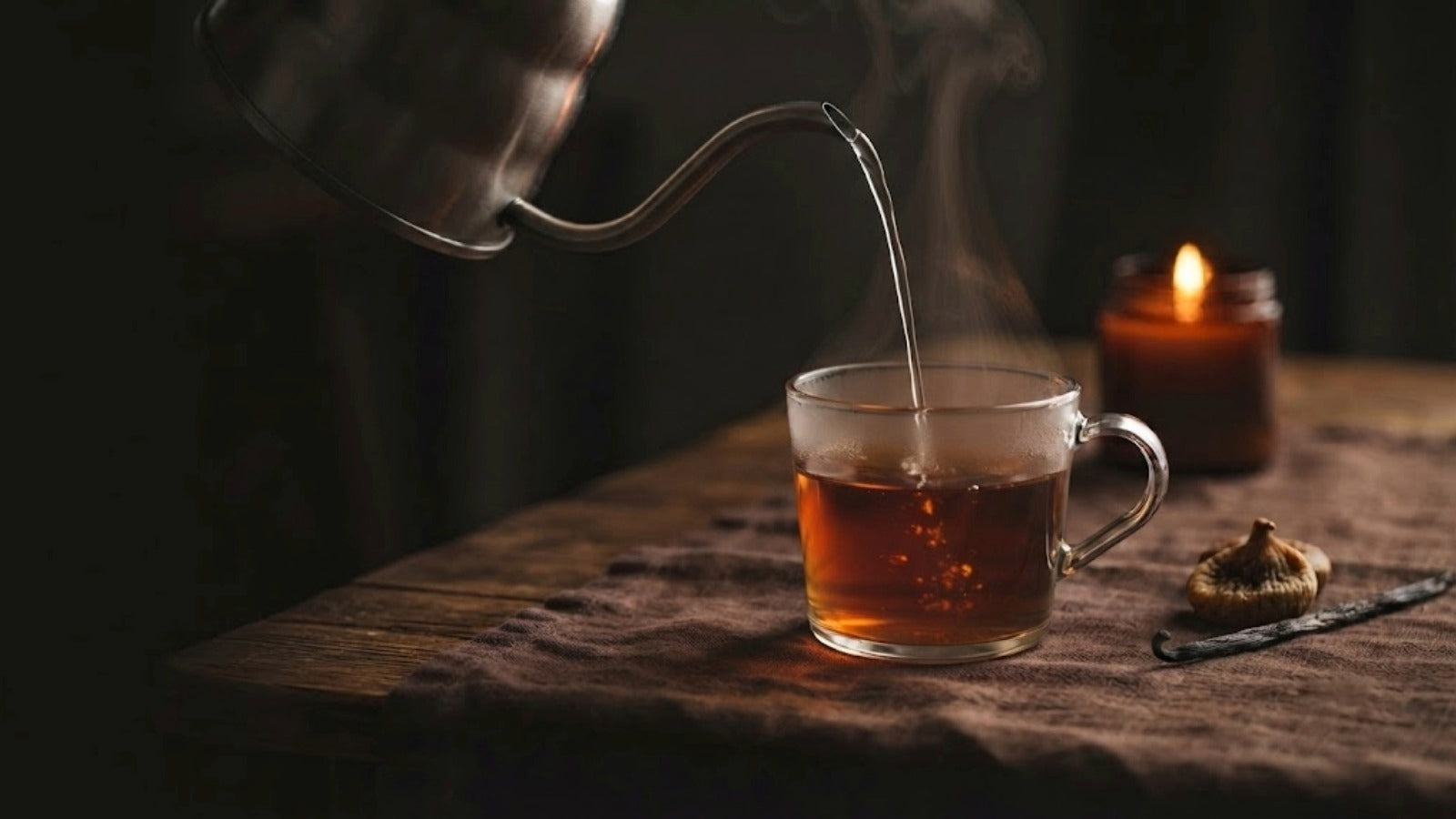
Steaming glass cup of amber herbal tea on a dark wooden surface with deep evening shadows.
A simple caffeine-free cup can create a quiet pause before bed without turning the evening into a routine.

Let's be honest about something first: a cup of tea is not a slice of cake. If you have ever been told to "just have some tea instead" when a sweet craving hits at night, you already know the advice usually falls flat. You drink the tea, the craving sits there unmoved, and twenty minutes later you are in the kitchen anyway. So it is fair to be skeptical that dessert tea can do anything real about a nighttime sweet craving.

But that skepticism usually rests on a hidden assumption: that the only way to satisfy a craving is to eat the exact thing you are picturing. That is worth questioning. A late-night sweet craving is rarely a simple demand for sugar. It is a mix of things, some of them physical and some of them behavioral, and it turns out that a warm, genuinely sweet-tasting cup can meet more of that mix than you would expect. Not all of it. But more than "just have some tea instead" ever gave it credit for.

So the real question is not whether dessert tea can impersonate dessert. It cannot, and it should not try. The question is what a sweet craving at night actually is, and how much of it a well-made dessert tea can genuinely satisfy. That is what the rest of this comes down to. This is one part of a complete guide to dessert herbal tea for evening sweet cravings.

What a Nighttime Sweet Craving Actually Is

The reason "just have some tea instead" fails so often is that it treats a sweet craving as one simple thing: you want sugar, so eat sugar or go without. But an evening craving is rarely that clean. It usually shows up as a bundle of different wants that all arrive at once, and untangling them is the key to understanding what a cup of tea can and cannot do.

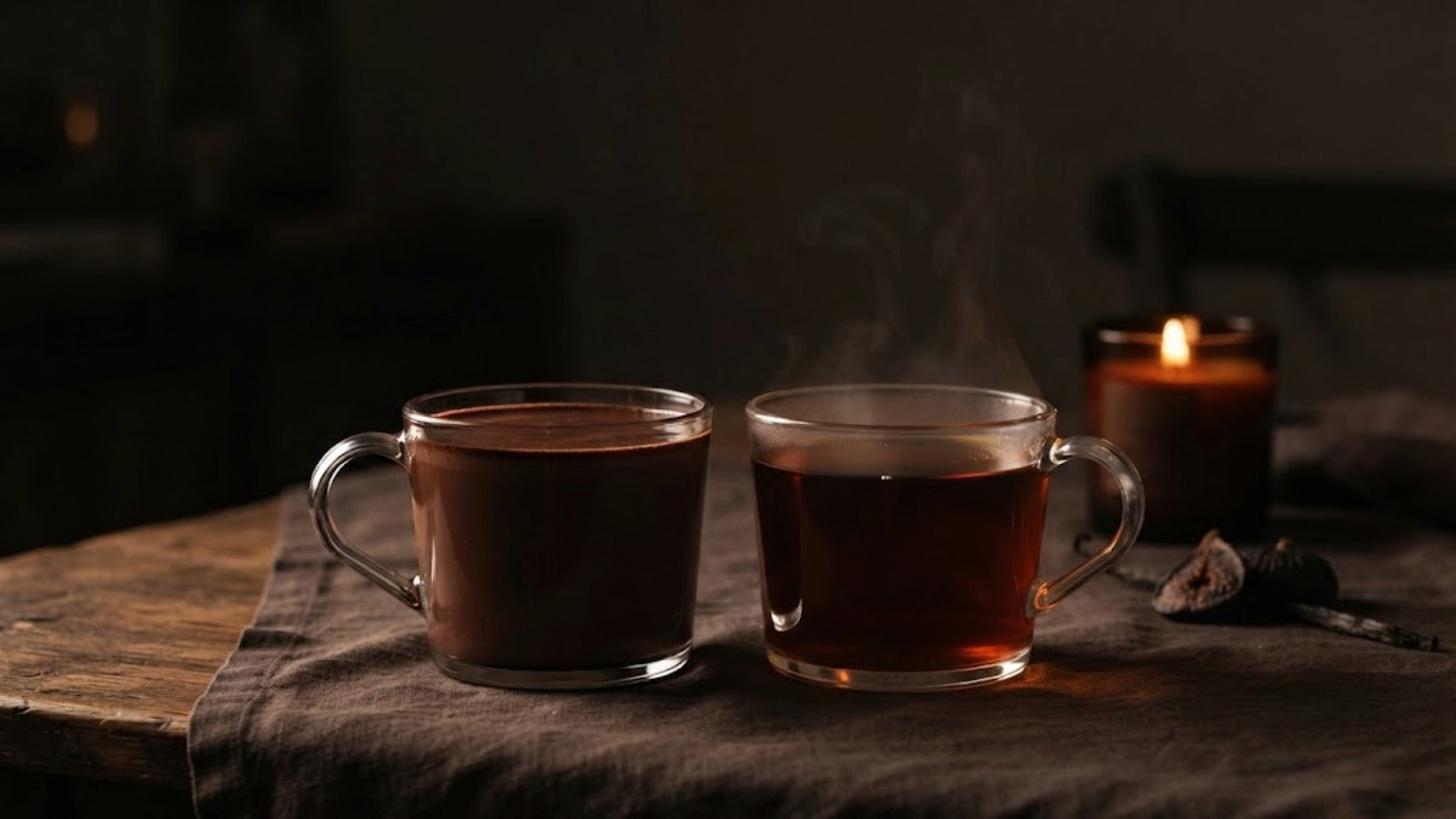
Steaming glass cup of amber herbal tea in soft evening light with a darker coffee mug blurred in the background.
A caffeine-free herbal cup offers a simple evening replacement when you want to wind down without added stimulation.

Part of it is the taste itself. You want something sweet on your tongue, and there is no talking your way out of that. But notice how often the craving is also about warmth, about having something to hold, about the small ceremony of preparing something and settling in with it. The evening craving is frequently less "I need sugar" and more "I want the thing I do at the end of the day," and for a lot of people that thing has quietly become a bowl of ice cream or a handful of cookies on the couch.

There is also the timing. Sweet cravings tend to spike at night for ordinary reasons: the day's structure falls away, you are finally sitting still, and the absence of anything else to do leaves room for the craving to get loud. It is the same hour you would reach for a glass of wine or start scrolling. The craving is real, but it is also occupying a slot in your evening that used to belong to a ritual, and now belongs to whatever is easiest.

Split the craving into those parts and something useful emerges. The pure sugar-and-texture demand is one piece. But the wanting-something-sweet-to-taste, the warmth, the something-to-hold, the end-of-day ceremony, and the slot the habit occupies are all separate pieces, and none of them actually require eating a dessert. That is the gap a good dessert tea steps into. Not the whole craving. But more of it than you would think.

So Does Dessert Tea Satisfy It? The Honest Answer

Yes, mostly. Not entirely, and the honest answer depends on which craving you are actually having. But for the ordinary end-of-day version, the "I want something sweet and warm to close out the night" version, a good dessert tea satisfies more of it than most people expect before they try.

Steaming glass cup of amber herbal tea in soft evening light with a darker coffee mug blurred in the background.
A caffeine-free herbal cup offers a simple evening replacement when you want to wind down without added stimulation.

Start with what it does well. A real dessert tea tastes sweet, so it meets the part of the craving that wants sweetness on your tongue. It is warm and you hold it and it takes a few minutes to drink, so it meets the warmth, the something-to-hold, and the slow-down. And it drops neatly into the slot the craving occupies, giving you a thing to do at the end of the day that is not opening the freezer. For a craving that is mostly about taste and ritual, that is most of the battle, and it is why people who expected nothing are often surprised.

Now the honest part. Dessert tea does not replicate the density of eating. It does not give you something to chew, and it does not deliver the heavy, full feeling of a real dessert sitting in your stomach. If your craving is really hunger wearing a sweet-tooth costume, or if what you want specifically is the act of eating something substantial, tea will come up short, and no amount of good flavor changes that. It is a drink, not a meal, and pretending otherwise is exactly the overselling that makes people distrust the whole idea.

So the verdict is a real yes with a clear edge to it. Dessert tea satisfies the sweetness and the ritual, which for most evening cravings is the larger share. It does not satisfy hunger or the physical act of eating, and it is not trying to. Knowing which craving you are having tells you, in advance, whether the cup will land. The rest of this explains why the sweetness works as well as it does, and how to tell the two kinds of craving apart.

Why Real-Botanical Sweetness Works Differently Than You'd Expect

Here is the part that surprises people. A good dessert tea can taste distinctly sweet while containing no added sugar at all. The sweetness does not come from sugar poured into the blend. It comes from the botanicals themselves, and from the way sweetness is as much about aroma as it is about taste.

Steaming glass cup of amber herbal tea in soft evening light with a darker coffee mug blurred in the background.
A caffeine-free herbal cup offers a simple evening replacement when you want to wind down without added stimulation.

Certain botanicals carry their own natural sweetness. Fig and date bring a deep, almost caramel-like sweetness. Pear adds a soft, light-fruit sweetness. Carob has a roasted, cocoa-adjacent sweetness without any cocoa. And then there are the aromatics: vanilla, cardamom, cinnamon, and warm spices that your brain reads as sweet the moment you smell them, before the liquid even reaches your tongue. This is why a warm, aromatic cup can satisfy a sweet craving in a way that plain warm water never could. A large part of what you experience as "sweet" is actually scent, and these blends are built to lead with it.

There is a reason warmth matters here too. Heat lifts aroma out of the cup, so a hot dessert tea smells sweeter and more dessert-like than the same blend would cold. The steam carries the vanilla and the spice up to you while you drink, which is a good part of why the warm version of this craving is so much easier to satisfy than a cold one. The cup is working on two senses at once.

The practical upshot is that "sweet" and "sugary" are not the same thing, and a craving usually wants the first more than the second. A blend built from figs, dates, vanilla, and warm spice can deliver a genuinely sweet experience, taste and aroma together, without the sugar load of an actual dessert. That is the mechanism doing the work. It is not a trick and it is not a compromise you have to talk yourself into. It is just sweetness arriving by a different route than you are used to.

When It Works, and When It Doesn't

The single most useful thing you can do with a nighttime sweet craving is figure out which kind you are having before you decide how to answer it. Dessert tea is a genuinely good answer to one kind and a poor answer to another, and the difference is easy to spot once you know to look.

Steaming glass cup of amber herbal tea in soft evening light with a darker coffee mug blurred in the background.
A caffeine-free herbal cup offers a simple evening replacement when you want to wind down without added stimulation.

It works best when the craving is about taste and ritual. You are not actually hungry, dinner was a while ago but you are not running on empty, and what you want is something sweet and warm to mark the end of the day. You want the ritual of making something and settling in with it. You want the taste, not a meal. This is the most common evening craving, and it is the one a dessert tea meets almost completely. If that is the craving you recognize, the cup will land.

It works less well in a few specific cases, and it is worth being straight about them. If you are actually hungry, tea is not food and will not pretend to be; eat something. If what you want is specifically to chew, the physical act of eating, a drink will not scratch that itch. And if you are chasing the exact dense, heavy hit of a particular dessert, the cup will not be a carbon copy of it, because it is not trying to be. In those cases, dessert tea is the wrong tool, and knowing that is part of using it well.

Most nights, though, the craving is the first kind. It is the taste, the warmth, and the end-of-day ritual arriving together, wanting something to fill the slot. That is exactly where a well-made dessert tea does its best work: it gives the craving something real to land on, sweet and warm and worth slowing down for, without the snack you did not actually need. Satisfaction, it turns out, was never the same thing as imitation.

Two Dessert Teas Built for the Craving

If the craving you have been reading about sounds familiar, the taste-and-ritual kind that wants something sweet and warm to close the night, this is where two blends earn their place. Both are caffeine-free, both get their sweetness from real botanicals rather than added sugar, and both are built to taste like dessert rather than like a health substitute you have to settle for.

Sacred Sanctuary™ is the fruit-forward one, the closest thing to a warm fruit dessert in a mug. Fig, pear, and vanilla lead, with carob and marshmallow root rounding it into something soft and jammy. If your craving leans toward baked fruit, something warm and gently sweet, this is the one to reach for.

Moonlight Stillness™ is the deeper, richer one. Date and vanilla give it a caramel-like sweetness, and cardamom brings a warm baked-spice note that reads as dessert the moment you smell it. If your craving leans toward something dark and spiced, closer to caramel than to fruit, this is the one that lands.

The easiest way to find out which one answers your craving is to try both. The Evening Ritual Sampler includes both blends so you can taste them side by side and see which one your evening actually wants. Most people lean one way or the other, and the only reliable way to know is to have both in the cupboard when the craving shows up.

The Bottom Line on Dessert Tea and Sweet Cravings

So the skepticism you started with was half right. Dessert tea cannot be dessert, and anyone who tells you it can is setting you up to feel cheated. But the craving that sends you to the freezer at night was never purely about the dessert. It was about wanting something sweet, something warm, something to hold, and something to do at the end of the day, and a well-made cup meets far more of that than "just have some tea instead" ever suggested.

The next time the craving shows up, the useful question is not whether tea can replace the cookie. It is what you are actually reaching for. If it is hunger, eat. If it is the taste and the ritual and the close of the day, a warm, genuinely sweet cup will answer it, no snack required. That is not settling for less. It is just meeting the craving where it actually lives, part of the wider practice of tea in evening rituals.


Editorial Disclaimer

This content is for informational and educational purposes only. It reflects general perspectives on herbal tea, daily rituals, and related lifestyle practices. It is not intended to provide medical advice, diagnose conditions, or recommend treatments. Always consult a qualified healthcare professional with any questions about wellness or health-related matters.
Continue Exploring

What to Do When You Crave Something Sweet at Night
after dinner tea

What to Do When You Crave Something Sweet at Night

It's late, the day is winding down, and out of nowhere you want something sweet, and you're standing at the freezer deciding whether to give in. The craving is real and it can be satisfied, so this...

Read more
Dessert Tea vs Hot Chocolate: Which Fits Better at Night?
after dinner tea

Dessert Tea vs Hot Chocolate: Which Fits Better at Night?

Hot chocolate is a genuinely good nighttime drink, so this isn't about talking you out of it. But both hot chocolate and dessert tea are warm, sweet cups you might reach for at the end of the day, ...

Read more