How to Create Stillness: Simple Rituals for Pause and Presence
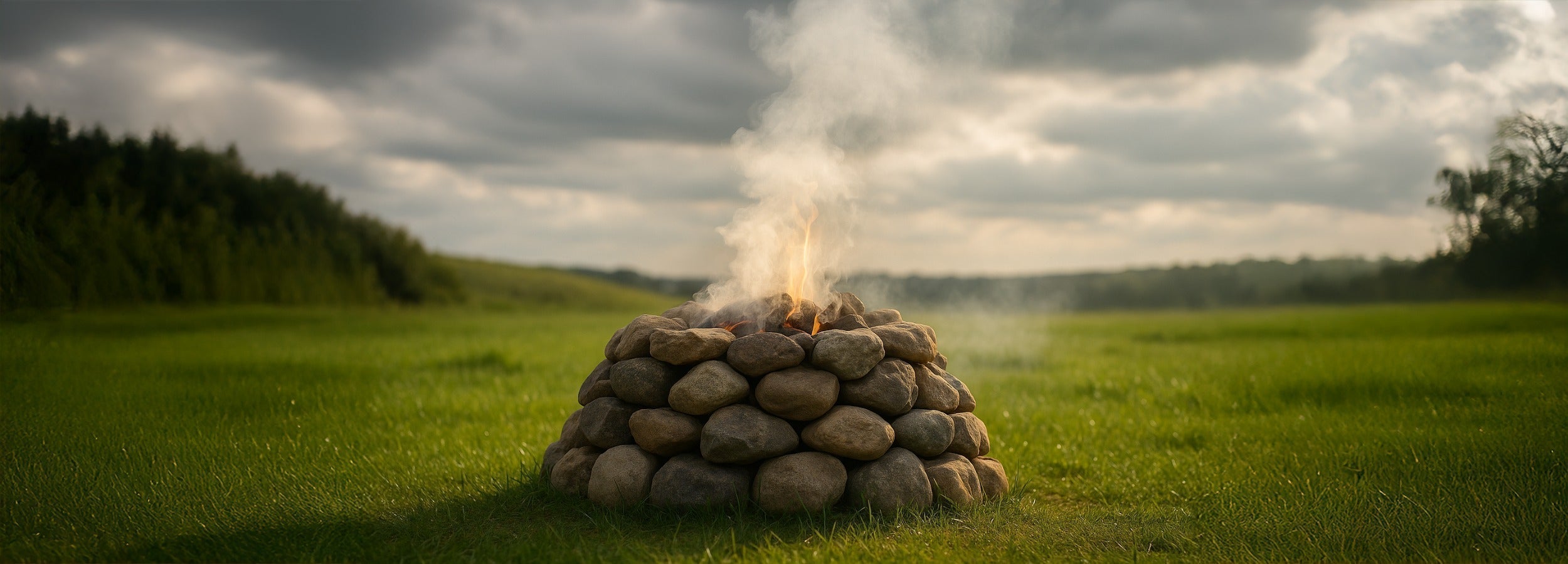
 Moon and water in stillness, the world held in a single breath between motion and rest.
Before sound, there was listening. Before movement, there was rest. Every culture carries a memory of this pause, the first gesture of stillness. It is the moment between inhale and exhale when the body remembers that to be alive is also to be quiet. In ancient ritual, stillness marked the threshold between the ordinary and the sacred. Anthropologist Mircea Eliade called it a return to sacred time, the pause that renews the rhythm of the world1.

Stillness has never meant emptiness. In the Tao Te Ching, Lao Tzu describes the nature of stillness as alignment with the flow of heaven and earth2. When nothing is forced, all things find their balance. The ancient masters recognized that stillness is not withdrawal from the world but participation in its deeper rhythm. A lake mirrors the sky not because it strives to, but because it is calm enough to reflect.
In this way, stillness becomes humanity’s oldest ritual. Across millennia, before temples or songs, there was always the quiet that gathered at the edges of light. To be still is to listen for what moves beneath movement itself. It is not the end of sound but the beginning of meaning.
Stillness in Cultural Rituals
Across traditions, stillness has always carried the weight of reverence. It is the silence before prayer, the breath between chants, the shared quiet that binds the human and the divine. In Benedictine monasteries, silence was not an act of suppression but of rhythm. The Rule of St. Benedict instructed that speaking and stillness must alternate like the tides, for the heart cannot hear while the tongue is moving3.

In the deserts of early Christianity, the monks of Egypt and Syria practiced stillness as purification. Evagrius Ponticus wrote that when the soul becomes quiet, it mirrors the image of God4. To be still was not to withdraw from the world but to dwell within it differently. The desert fathers understood that silence is not emptiness but depth, the still well from which wisdom rises.

In Indigenous traditions, stillness is not separation from the living world but conversation with it. Among the teachings Robin Wall Kimmerer describes, listening is the first form of gratitude5. When one pauses before taking from the earth, the pause itself becomes prayer. In these moments of listening, humans remember that silence is not the absence of sound but the presence of relationship.

Stillness has therefore never belonged to a single faith or people. It is a rhythm remembered in every heart, carried in every ritual that honors the interval between one breath and the next.
The Inner Landscape
Every ritual of stillness eventually turns inward. The silence that once filled the temple becomes the quiet within the heart. To practice stillness is to return to the interior world, where thought and breath find their rhythm again. Thomas Merton wrote that the soul meets God not in noise or striving, but in the still point of attention where all motion ends in rest6. Here, silence is not retreat but communion, a listening so complete that it becomes presence itself.
Zen teachings speak of the same awareness through another language. Shunryu Suzuki described the mind as a clear sky that reveals its vastness only when the winds settle7. When thought subsides, the mind reflects reality without distortion. In that clarity, the world is no longer something to grasp, but something to dwell within. Stillness becomes the moment where perception and being merge into one.
In the Tao Te Ching, Lao Tzu writes that those who are still find the rhythm of the heavens2. This rhythm is not learned but remembered. When the heart grows quiet, it begins to move in time with the greater pulse of life. Stillness is the teacher that needs no speech. It does not instruct through effort, but through alignment.

In this inner landscape, stillness is not something one performs but something one receives. It is the posture of openness that allows the sacred to enter. To become still is to let the heart mirror the sky, vast, clear, and quietly alive.
The Art of Pause
Stillness is not only felt within; it is also shaped by how we move through the world. Every culture that values rhythm also values pause. In Japan, the aesthetic of Ma teaches that beauty does not exist in the object itself, but in the space that surrounds it8. The empty interval between gestures, the silence between notes, the moment before a door slides open, these are all the forms through which stillness becomes visible.
In the same way, mindfulness practice turns awareness into art. Jon Kabat-Zinn describes mindfulness as the act of paying attention, on purpose, in the present moment9. To pause is to attend fully, to inhabit time without rushing past it. The simple act of breathing or lifting a cup of tea becomes a ceremony of presence. Each motion, carried out without haste, reveals the grace that lives in slowness.

The ancient Taoists called this alignment wu wei, action through stillness2. They believed the world moves most freely when nothing is forced. The art of pause is therefore not a rejection of motion but its refinement. When movement arises from quiet intention, life flows without friction.
In this way, every deliberate pause becomes its own small ritual. Whether one stands before an altar or waits for water to boil, stillness teaches the same lesson, that presence is not found in doing more, but in doing with awareness.
The Body at Rest
The need for stillness is written into the body. Long before it was a practice of the mind, it was a rhythm of the flesh. To rest is not to abandon life, but to join its deeper pulse. In sleep, breath slows, muscles loosen, and the body returns to its quiet intelligence. Neuroscientists remind us that rest is not an interruption of progress but the foundation of it. As Matthew Walker writes, sleep is the single most effective thing we can do to reset the health of the brain and body10.

Yet long before modern science measured rest, spiritual traditions honored it as sacred necessity. In his writings on silence, Thich Nhat Hanh calls stillness a refuge where we can touch the wonders of life11. Silence feeds the spirit as sleep restores the body. Both are forms of returning. Both remind us that renewal is not something we achieve but something that happens when we yield.
The earth itself practices stillness. Forests slow their breathing in winter. Lakes freeze to mirror the sky. In the language of Robin Wall Kimmerer, nature rests not in absence but in balance5. Each pause in the natural world prepares the way for renewal. When we rest, we align ourselves again with this rhythm that holds all living things.
Stillness, then, is the body’s way of keeping faith with the world. Each time we rest, we join a continuity larger than our own lives, the stillness of water before dawn, of trees waiting for spring, of breath resting quietly between its rise and fall.
The Return to Silence
All things return to silence. The river quiets as it reaches the sea, the voice fades after prayer, the body softens into sleep. In these endings, stillness waits, not as emptiness but as continuation. It is the ground from which life renews itself. Thomas Merton once wrote that there is greater comfort in the substance of silence than in the answer to a question6. Silence, then, is not the absence of meaning but its most complete form.
Philosophers and poets have long sought this quiet harmony with the world. Alan Watts observed that peace is not found through control, but through surrender12. When the self ceases to struggle, it moves with the same effortless rhythm as the tide. In stillness, we discover that belonging is not something we earn; it is something we remember.
For environmental philosopher Arne Naess, stillness was the doorway to ecological awareness. He wrote that true balance begins when humans listen again to the living world13. Silence restores relationship. It teaches that every being, from stone to stream, carries a quiet intelligence. To be still is to acknowledge this shared breath of existence.
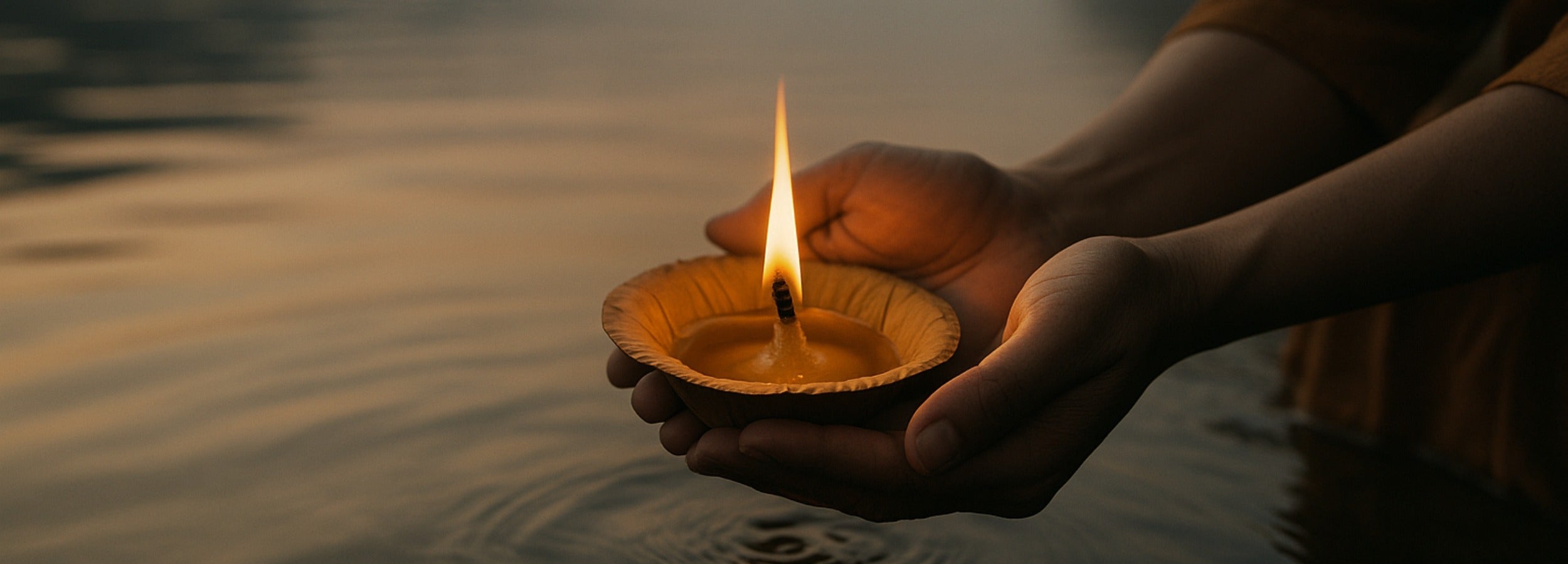
And so, the cycle closes. Stillness, like the last flame of a candle, gathers all that has come before it into light. It does not vanish; it softens, casting warmth on what remains. In returning to silence, we do not leave the world behind. We become its quiet glow.

Continue Exploring
References
- Eliade, M. (1959). The Sacred and the Profane: The Nature of Religion. New York: Harcourt.
- Lao Tzu. (trans. D. C. Lau). (1963). Tao Te Ching. London: Penguin Classics.
- The Rule of St. Benedict. (trans. Timothy Fry). (1981). Collegeville, MN: Liturgical Press.
- Evagrius Ponticus. (4th century). Praktikos: Chapters on Prayer.
- Kimmerer, R. W. (2013). Braiding Sweetgrass: Indigenous Wisdom, Scientific Knowledge, and the Teachings of Plants. Minneapolis: Milkweed Editions.
- Merton, T. (1958). Thoughts in Solitude. New York: Farrar, Straus and Giroux.
- Suzuki, S. (1970). Zen Mind, Beginner’s Mind. New York: Weatherhill.
- Isozaki, A. (1978). Ma: Space-Time in Japan. New York: Cooper-Hewitt Museum.
- Kabat-Zinn, J. (1994). Wherever You Go, There You Are: Mindfulness Meditation in Everyday Life. New York: Hyperion.
- Walker, M. (2017). Why We Sleep: Unlocking the Power of Sleep and Dreams. New York: Scribner.
- Thich Nhat Hanh. (2015). Silence: The Power of Quiet in a World Full of Noise. New York: HarperOne.
- Watts, A. W. (1951). The Wisdom of Insecurity: A Message for an Age of Anxiety. New York: Pantheon.
- Naess, A. (1989). Ecology, Community and Lifestyle: Outline of an Ecosophy. Cambridge: Cambridge University Press.
Editorial Disclaimer
This content is for informational and educational purposes only. It reflects general perspectives on herbal tea, daily rituals, and related lifestyle practices. It is not intended to provide medical advice, diagnose conditions, or recommend treatments. Always consult a qualified healthcare professional with any questions about wellness or health-related matters.