Carob Tea: Cocoa-Like Depth for Evening Unwind

Carob is the plant people reach for when they want chocolate and cannot have it. That is its whole reputation, and it is the reason carob has spent forty years being quietly resented in health-food aisles. Sold as a chocolate replacement, it disappoints. It is drier than cocoa, more toasted, more malt than fudge. Anyone who has bitten into a carob bar expecting chocolate remembers the moment.
Which is a shame, because in an evening tea it is close to perfect. Treated as its own flavor rather than a stand-in for another, carob is one of the most useful of the botanicals used in evening blends: dark, toasted, faintly cocoa-ish, and entirely at home at ten at night in a way real chocolate never is.
The Sensory Profile: Cocoa-Like Warmth and Deep Amber Color
Carob comes from the dense pods of a Mediterranean tree, roasted and ground much the way cacao is. The processing is similar and the result is not. What you get is warmth and depth without richness, a flavor that stays low in the cup and reads as toasted rather than decadent.

Aromatic Character
Carob releases a subdued, rounded aroma marked by toasted grain, soft cocoa warmth, and faint earthiness. The scent stays close to the cup and low to the surface, more like the smell of a bakery than a chocolate shop.
Color in the Cup
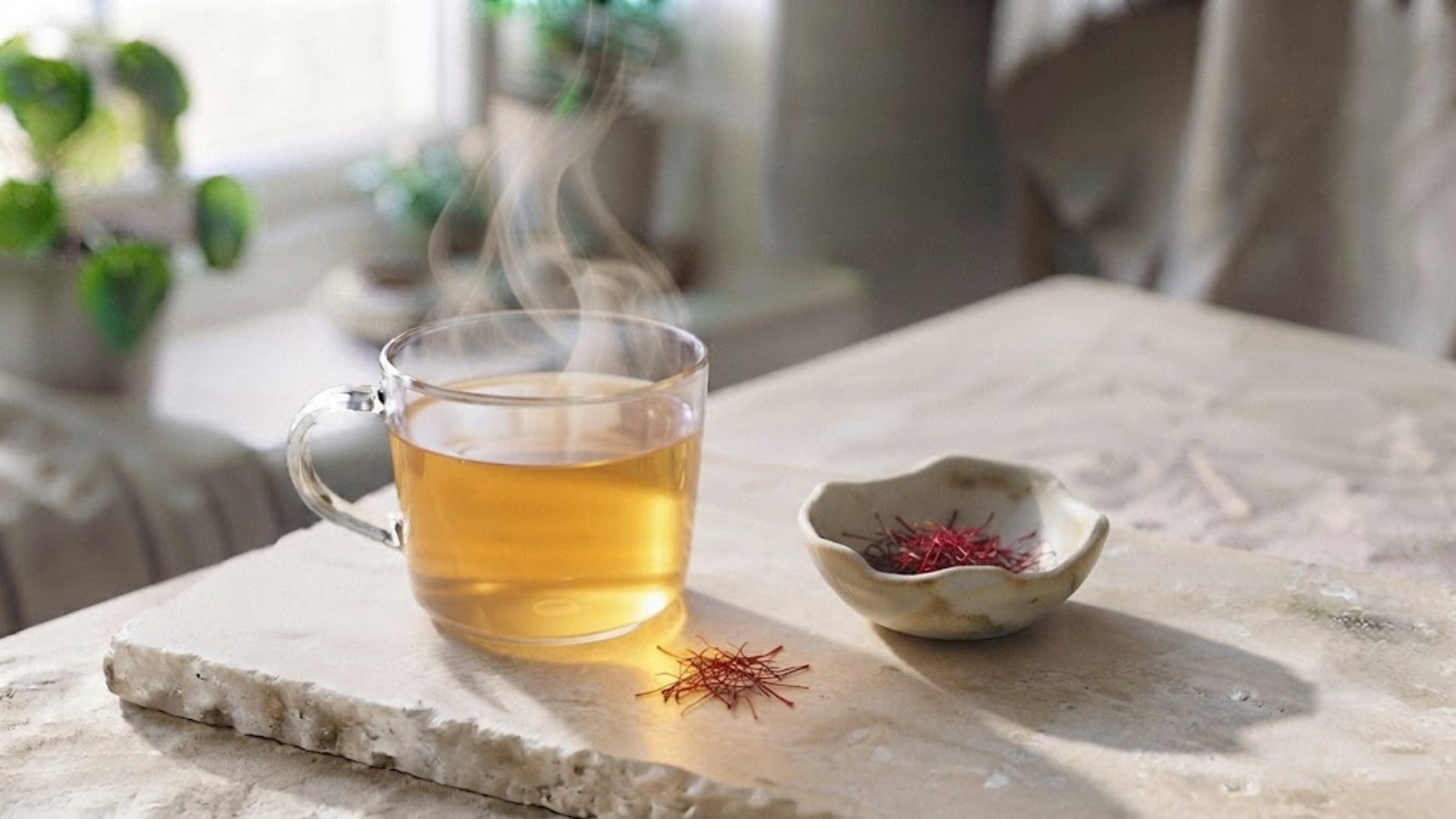
The infusion develops a deep amber-brown tone with muted golden undertones. In evening light the color reads as warm and absorptive, holding light rather than passing it through, and giving the cup a visual weight that matches how it tastes.
Flavor Profile
On the palate, carob is toasted malt, cocoa husk, and mild earth with a soft natural sweetness folded in. There is no bitterness, no spice heat, and no sharp edge. It is chocolate’s shape without chocolate’s richness, and it works far better in a cup than it ever did in a bar.
Weight & Presence
Carob carries a medium, steady presence. It adds body without heaviness and depth without intensity, sitting low in a blend and staying there from first sip to last.
Mouthfeel & Finish
The mouthfeel is smooth and softly rounded, with a gentle coating on the palate and no residue. Carob finishes slowly, with warmth outlasting flavor and the aftertaste fading quietly rather than cutting off.
Everything about the profile stays inside the cup. Carob is one of the few evening botanicals that contributes nothing at all to the air of a room, and that turns out to be a strength.
How Carob Creates Depth in an Evening Unwind Cup
The real case for carob has nothing to do with chocolate nostalgia. It is that carob delivers a dark, roasted, cocoa-adjacent depth to a cup you can drink at ten at night, and cacao cannot do that. Cacao brings caffeine and theobromine along with its richness. Carob brings neither. Same flavor family, different hour of the day.

That distinction is what makes carob genuinely useful rather than merely virtuous. A cacao blend belongs in the middle of the day, where its lift is the point. Carob belongs at the end of it, where the same toasted darkness arrives with nothing attached. The flavor idea is the same. Only the timing changes.
And carob has a second habit that suits the hour. It never leaves the cup. Lavender fills a room. Cardamom perfumes the air above the steam. Carob stays entirely in the liquid, contributing depth you can taste and almost nothing you can smell from across the table. In a blend meant to be held rather than announced, that interiority is exactly right.
Carob in Blending: Cocoa-Like Depth and Natural Sweetness
Carob is a bottom note, and bottom notes are the hardest thing to get right in a caffeine-free blend. Without one, a herbal tea floats. Carob supplies darkness and weight at the base of a cup without bringing any of the bitterness that would normally come with it.

With Fruits
When paired with fruits such as fig or pear, carob turns the fruit dark. Bright dried fruit reads as jammy on its own; put a toasted base underneath it and the same sweetness reads as baked, closer to a tart out of the oven than a bowl of fruit.
With Flowers
Alongside evening florals such as lavender, carob changes where the flower sits rather than competing with it. Lavender keeps shaping the air above the cup, and carob pulls the floral note downward, giving it something dark to be measured against.
With Herbs
Gentle herbs gain gravity from carob. Green or vegetal notes can sit exposed in a light-bodied tea, and the toasted base absorbs that edge, keeping herbal character present but folded into the body of the cup.
With Bases
Carob and red rooibos are both dark, dry, and low, and together they build a serious floor. Rooibos brings the woody structure and the red color. Carob brings the roast. Honeybush then supplies the sweetness neither one has, and between the three of them an evening blend has everything it needs before a single fruit or spice is added.
With Spices
Warm spices such as vanilla sit naturally inside carob’s roundness. The pairing is old and obvious for a reason: vanilla over a toasted base is the flavor of baking, and carob is what turns a sweet evening tea into something that tastes like it came out of an oven.
The role is consistent. Carob is the dark at the bottom of a cup, and everything sweeter and brighter above it is easier to taste because it is there.
Carob in Sacred Sanctuary
Carob is in one blend, and it is the reason that blend tastes baked rather than merely fruity.
Sacred Sanctuary™ tastes like warm baked fruit lifted straight from the oven: ripe fig and soft pear folded into vanilla, jammy and rounded, sweet without weight. The carob is the oven. It sits underneath the fruit as a dark, toasted floor, and it is what turns figs and pears into something closer to a tart.
A Cocoa-Like Finish for Evening Unwind
Carob spent decades being judged against a plant it was never going to beat. Set the comparison aside and what is left is a dark, toasted, quietly sweet botanical that gives an evening cup a floor to stand on, and gives it that floor without a milligram of anything that would keep you up.
It is the closest thing to chocolate you can reasonably drink at the end of the day. If you are working out what belongs in your own cup, drinking tea at night is worth thinking through properly, and carob is the answer to a question most people gave up on years ago.
Editorial Disclaimer
This content is for informational and educational purposes only. It reflects general perspectives on herbal tea, daily rituals, and related lifestyle practices. It is not intended to provide medical advice, diagnose conditions, or recommend treatments. Always consult a qualified healthcare professional with any questions about wellness or health-related matters.