Licorice Root Tea: Smooth Herbal Balance for Midday

Licorice root works not as a focal note but as a structural one. Its role emerges quietly within the moments meant to reset perception rather than escalate sensation, contributing to how a cup holds together and how clarity is maintained rather than sharpened, something sustained through rhythm and consistency instead of intensity.
That structural quality is what earns licorice root its place among the afternoon botanical collection. It does not draw attention to itself. It reinforces the cup as a steady reference point, helping define where a moment begins and ends by making the cup feel complete enough to close cleanly.
Licorice Root Botany, Tradition, and Herbal Tea Culture
Licorice root comes from Glycyrrhiza glabra, a perennial plant whose long, fibrous roots are harvested only after several years of growth. Unlike leaves or blossoms, the root is hidden from view, developing slowly beneath the surface. That subterranean origin has long shaped how it is understood: associated with depth, patience, and the quiet accumulation of substance rather than immediacy or display.

Across historical traditions, licorice root appears not as a ceremonial centerpiece but as a supporting element woven into daily practice. It was commonly sliced, dried, and stored alongside other roots and barks, prepared in simple infusions or combined with herbs meant to balance a blend rather than dominate it, preparations often tied to repeated, habitual use. Roots have often been linked to grounding through density and continuity, and licorice root's historical pairing with resins, woods, and dark botanicals places it within that same material language of weight and enclosure.
Preparation of space has always been central to how it is used. Whether simmered gently or steeped alongside other botanicals, its inclusion marks an intention to create a contained environment. Working with a root requires time and attention, from harvesting to drying to infusion, and that lineage of slow preparation and deliberate use carries forward into a midday cup built on maintenance and quiet order.
How Licorice Root Supports a Steady Midday Reset
Licorice root works as a stabilizing presence that supports returning to the cup without demanding attention. It suits a rhythm of continuity rather than interruption, the kind of cup you come back to deliberately, often when focus needs reinforcement rather than redirection.

Its renewal is recalibration rather than change or uplift. By contributing balance to the cup, it lets the moment reset without signaling a shift in direction, quiet and functional, rooted in maintenance rather than momentum. It helps the cup feel complete and self-contained, so attention returns smoothly to the day at hand.
The Sensory Profile: Smooth Sweetness, Grounded Depth, and Clean Finish
Licorice root contributes through structure rather than emphasis. It works beneath the more expressive notes, shaping how a blend holds together from first sip to final impression. The goal is not contrast or stimulation but cohesion, supporting the internal architecture of the cup through alignment rather than dominance.

Aromatic Character
Aromatically, licorice root is restrained and grounded. The scent does not rise sharply but settles close to the steam, a mild sweetness with earthy undertones. It feels rounded and contained, contributing depth without introducing distraction.
Color in the Cup
In infusion, licorice root deepens color rather than defining it, lending warmth and density to the liquor and often enriching golden or amber tones without darkening the cup excessively. The visual effect is one of steadiness and substance.
Flavor Profile
Licorice root introduces a smooth, natural sweetness that unfolds gradually. It is not sugary or pronounced but integrated, rounding the sharper edges from citrus, herbs, or spices and creating continuity across the palate, a unifying layer rather than a featured taste.
Weight and Presence
Licorice root adds perceptible weight, a sense of presence that feels anchored and deliberate. That added body makes the cup feel substantial enough to mark a pause without becoming heavy or indulgent.
Mouthfeel and Finish
The mouthfeel is smooth and cohesive, contributing to a finish that lingers gently without clinging. It leaves the palate clear rather than coated, letting the cup conclude cleanly, closure without overstaying its moment.
How Licorice Root Holds a Cup Steady as It Cools
The experience of licorice root unfolds gradually. At first pour it is not immediately identifiable as a distinct note. It registers as balance, the cup composed from the outset with no single element pulling attention forward, a tone of steadiness rather than anticipation.

As the tea settles and the temperature shifts, licorice root asserts its role more clearly, supporting the interplay between cooler and warmer elements so the cup holds coherence as it moves through different phases of warmth. Alongside mint-forward or lightly floral components, it shapes the atmosphere without altering direction, keeping the florals and mint grounded so the experience never turns overly airy or sharp.
By the final sips, licorice root contributes a sense of closure. The cup resolves smoothly, with a finish that feels intentional and contained, ending without residue or pull, marking a pause rather than a departure.
Licorice Root in Blending: Smooth Sweetness and Herbal Cohesion
Licorice root works as a connective element among the other botanicals, helping a blend hold balance across contrast rather than collapsing into sweetness or sharpness. Its role is clearest when cool and warm notes coexist, smoothing the transitions between them through moderation rather than opposition.

With Fruit
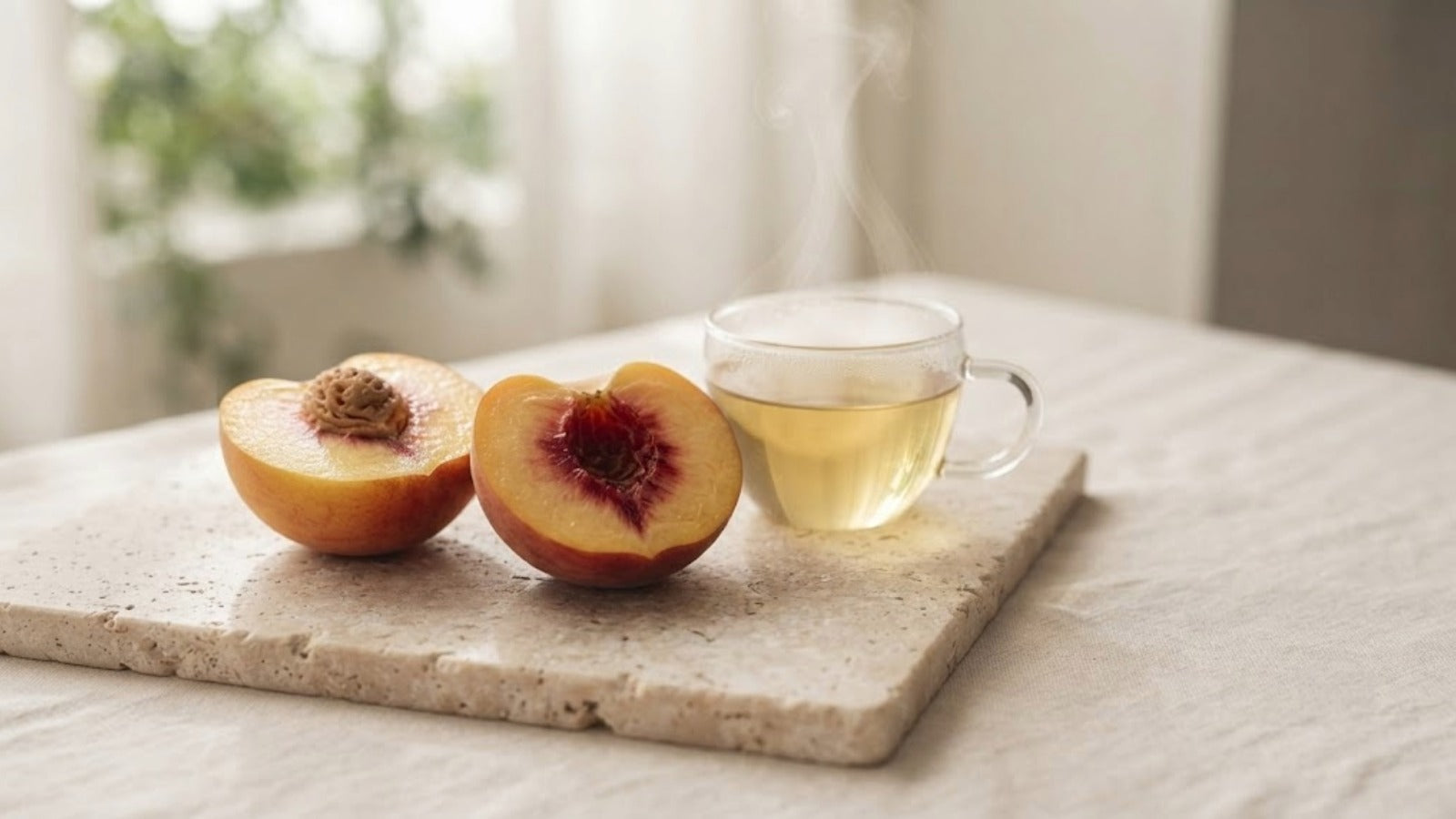
With fruit, licorice root tempers brightness and acidity. It rounds citrus edges and softens stone-fruit notes without masking their character, letting sweetness read as depth instead of emphasis so the fruit feels integrated rather than forward.
With Flowers
With florals, licorice root acts as an anchor. Floral notes lift the aromatic profile, adding air and atmosphere, and licorice root grounds them, keeping them from becoming diffuse or overly perfumed so they contribute to structure rather than distraction.
With Herbs
Herbal pairings show licorice root's balancing role most clearly. Placed alongside mint, tulsi, or lemon verbena, it smooths the sharper herbal edges and reinforces continuity across sips. The herbs keep their defining qualities while the overall cup stays composed and steady.
With Roots
Licorice root deepens its presence when paired with other roots such as dandelion or galangal. Together they create a grounded warmth that feels stable and contained, a layered foundation where warmth is expressed through density and depth rather than heat.
With Spices
With spices like cinnamon, licorice root moderates sharpness and extends warmth without amplifying it. It lets the spice notes feel rounded and continuous, contributing to a blend that holds its shape over time rather than letting the spice dominate.
Taken together, these interactions show how licorice root operates within the whole. Its value lies not in isolation but in relationship, in how it binds the other notes into one continuous cup.
Licorice Root in Both Midday Blends
Licorice root is the quiet binding note shared across both midday blends, smoothing and connecting each one from underneath. It works differently in each: tempering the bright citrus of one, binding the mint and cacao of the other. Which cup it belongs in depends on what you reach for in the afternoon.
Guardian Spirit™ is mint and citrus, and it is caffeine-free. Spearmint and lemon come up first and bright, cool across the top of the cup, with licorice root tempering the contrast underneath so the citrus and mint stay crisp without turning sharp and the warmer notes feel contained. It is the one to reach for when your head feels crowded and you want to clear the noise without adding anything heavy.
Celestial Renewal™ runs deeper, mint and cacao. Peppermint keeps it cool at the front while the cacao gives it a warm, rounded base, and licorice root binds the two together, smoothing the transitions between cool mint, floral lift, and grounded warmth so the cup settles you into a task rather than jolting you into one. The cacao carries a small trace of natural caffeine, just enough to put a little behind the cup on the afternoons you want it, without tipping into the wired edge of an energy drink. It is the blend for a long work session, something to stay with.
If you are not sure which one belongs in your afternoon, the Midday Ritual Sampler carries both. A few afternoons with each tells you more than any description can, and one of them will turn out to be the cup you reach for without thinking.
Licorice Root as a Smooth Midday Ritual Anchor
Licorice root rarely announces itself, and that restraint is precisely why it belongs. Its contribution is felt in the way a cup holds together, how the flavors align rather than compete, and how the moment concludes without residue. Paired with brighter or more refreshing notes, it lets them stay clean and structured rather than tipping into sharpness. It is one thread in the wider practice of drinking tea in the afternoon, where the cup becomes a steadying structure rather than a moment of escape.
Editorial Disclaimer
This content is for informational and educational purposes only. It reflects general perspectives on herbal tea, daily rituals, and related lifestyle practices. It is not intended to provide medical advice, diagnose conditions, or recommend treatments. Always consult a qualified healthcare professional with any questions about wellness or health-related matters.