Skip to content

Cart

Your cart is empty

Article: Pear in Herbal Tea: Gentle Sweetness for Evening Rituals

Calming Tea

Pear in Herbal Tea: Gentle Sweetness for Evening Rituals

Warm evening still life of sliced pear on a dark surface with soft golden light, styled as a calming ingredient for herbal tea.
A warm evening portrait of ripe pear, highlighting its gentle sweetness and soft fruit depth in herbal tea blends.

Pear as Evening Softness

Pear, as used in herbal tea, typically comes from dried pear fruit, valued for its gentle sweetness, high water content, and naturally clean profile rather than depth or intensity. Pear enters the evening cup as softness with clarity. Not brightness, not weight, and not a flavor that asks to linger. Its presence is light and immediately recognizable, carried through freshness, subtle sweetness, and a sense of openness that feels calm rather than stimulating. In a ritual context, pear often feels like easing rather than arrival, the moment when the day begins to loosen without fully closing.

Pear develops its sweetness through ripeness rather than concentration. Even when dried, it retains a sense of juiciness that shapes how it behaves in tea. The sweetness feels translucent rather than dense, and the flavor registers quickly without pressing forward. This gives pear a distinctive role in evening blends, where the goal is not fullness, but gentle release from daytime tension.

As daylight fades, flavor shifts away from stimulation and toward comfort, but not all evening cups aim for depth or closure. Within The Role of Tea in Evening Rituals, the evening cup is understood as a gesture of softening rather than stopping, a way of marking the transition out of effort without immediately entering rest. Pear aligns with this role because it lightens the experience without lifting it. It keeps the cup calm, familiar, and approachable while allowing attention to remain gently present.

This quality becomes especially clear during the gradual movement from day to night. Evening does not always ask to be sealed. Often, it asks to be opened into. In Evening Rituals and the Transition from Day to Night, tea is described as a companion to this in between space, offering warmth and continuity without finality. Pear supports this transition by keeping the cup clear and breathable, allowing the senses to settle without becoming heavy or closed.

Pear is often associated with sweetness, but in evening tea it functions less as a dessert note and more as a soft release. It creates space between richer elements, prevents blends from becoming dense too early, and allows warmth to remain light rather than enveloping. When used well, pear does not anchor the cup. It keeps it open.

This article explores pear as a star ingredient in evening tea through its gentle sweetness, its ability to introduce clarity without stimulation, and the way it supports the transition from day into rest without forcing closure.

Aroma as Atmosphere

Pear announces itself gently and briefly. Its aroma rises close to the cup and then softens, never traveling far or lingering heavily in the air. The effect is immediate but light, a quiet suggestion rather than a shift in the room. Pear does not settle into the space the way warmer botanicals do. It touches the moment and then recedes.

In the evening, aroma often moves away from stimulation toward ease. Pear supports this transition differently than vanilla or fig. Its scent feels open and clean rather than rounded or dense. There is no enclosure and no sense of buildup. The aroma does not draw attention inward or encourage stillness. Instead, it keeps the atmosphere breathable, allowing the evening to loosen without closing in.

As warm water meets dried pear, the fragrance releases quickly and then fades. The scent remains tied to warmth rather than air, appearing most clearly during pouring and the first moments of the cup. Pear’s aroma does not separate into layers or develop over time. It remains simple and restrained, offering clarity without persistence.

As steam lifts, pear’s fragrance blends quietly with the act of drinking rather than shaping the room itself. This way of experiencing scent as a light atmospheric cue reflects the patterns explored in How Aroma Contributes to Evening Atmosphere, where aroma can influence a moment without defining it. Pear’s scent does not signal completion or rest. It signals ease, creating space for the evening to continue unfolding naturally.

Sensory Presence in the Cup

Pear’s presence in the cup is expressed through lightness and clarity rather than warmth or density. The infusion often appears pale and luminous, even as aroma rises. There is little visual weight. Instead of settling the cup, pear keeps it open, giving the impression of transparency and ease rather than fullness. This visual lightness prepares the senses for an experience that feels gentle and unobtrusive.

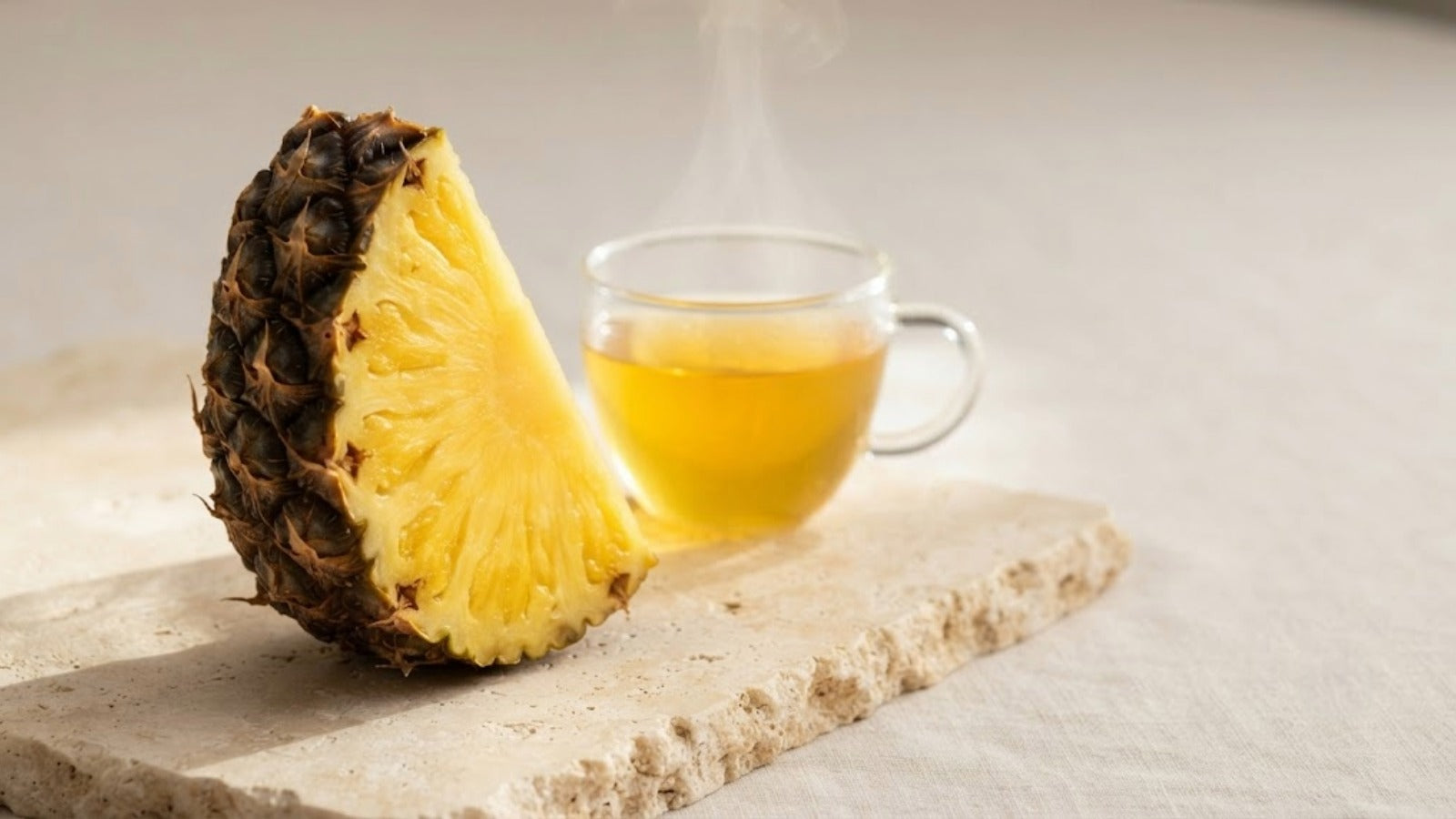
As warm pear tea releases its aroma, rising steam shapes the perception of freshness before the first sip.

Unlike ingredients that deepen or soften the cup, pear subtly brightens it. Light passes cleanly through the liquid, remaining clear and reflective rather than absorbed. In glass vessels, the tea tends to hold a soft glow without darkening or muting. This restrained clarity mirrors pear’s role in the evening, where flavor does not build toward intensity but offers a brief moment of lift. This way of understanding lightness as a visual and spatial quality rather than stimulation reflects the ideas explored in How Warm Tea Shapes the Atmosphere of the Evening, where warmth and clarity shape perception before taste arrives.

The first sensory impression is one of openness. Before flavor fully registers, the cup already feels calm and accessible. The liquid appears still, with no sense of movement or weight. This creates a feeling of readiness that is not anticipatory or settling. The cup does not suggest completion. It suggests ease.

This visual and sensory clarity is part of what makes pear effective as an evening star ingredient. It signals that the tea is meant to accompany rather than anchor. The experience begins without density or progression, offering a moment of softness that feels present but never insistent.

Flavor Architecture and Mouthfeel

Pear shapes the flavor of evening tea through clarity rather than rounding. It arrives gently at the front of the sip, offering a soft, recognizable sweetness that registers quickly and then eases back. The flavor does not spread across the palate or gather other elements into itself. Instead, it creates a light opening that allows the rest of the blend to be perceived without resistance. Pear’s presence feels intentional but brief, establishing tone rather than structure.

In herbal tea, pear is rarely used as a dominant flavor on its own. Its role is to introduce familiarity and ease at the beginning of the sip, creating a sense of approachability before deeper or grounding elements emerge. The sweetness feels immediate but not forceful, and it does not build or linger. Pear enters, registers, and makes space.

On the palate, pear carries a clean, fruit-forward sweetness that reads as fresh rather than rich. Its character is perceived more as brightness softened by ripeness than as depth or warmth. Unlike vanilla, pear does not smooth edges or reduce friction between ingredients. Instead, it clarifies them. When paired with heavier fruits, pear lightens their presence. When paired with florals or herbs, it provides a gentle frame that keeps those notes from feeling sharp without weighing them down. This role reflects the principles described in The Structure of an Evening Tea Blend, where certain ingredients function as entry points rather than anchors, shaping how the sip begins rather than how it resolves.

Mouthfeel is where pear’s restraint becomes most apparent. The tea feels light and fluid, with no added thickness or coating sensation. The liquid moves easily across the palate, encouraging a natural, unforced sip. There is no sense of density accumulating as the tea is held in the mouth. Instead, the experience remains clean and open, allowing the drinker to remain aware of the cup without being held by it.

After the sip, pear recedes quickly. The finish is soft and fleeting, leaving behind a faint impression of sweetness that fades without persistence. This brief finish is essential to pear’s role in evening tea. It does not aim to complete the experience or draw it out. It allows other elements, or the quiet that follows, to take precedence.

In this way, pear functions as a tonal element within the cup. It does not unify or anchor the blend. It sets a gentle opening and then steps aside. The result is an evening tea that feels light, familiar, and unobtrusive, offering sweetness without weight and presence without demand.

Role in Daily Ritual

Within Purely Rituals, evening practices are understood as moments of easing rather than culmination, times when the body and attention begin to soften without needing to arrive anywhere in particular. Pear fits naturally into this phase of the evening because it does not signal closure. It signals gentleness. Its role is not to end the day, but to make the transition into evening feel approachable and unforced.

Pear supports the evening by lowering the threshold of engagement. Its familiar sweetness and clean fruit character reduce resistance at the beginning of the ritual, making the first sip feel welcoming rather than weighty. Evening rituals often depend on this kind of ease. Before the body is ready for stillness or depth, it needs permission to slow down without effort. Pear provides that permission through familiarity rather than repetition.

What distinguishes pear in this role is its lack of demand. Nothing in its character encourages holding, lingering, or inward focus. The cup feels open rather than contained. Sipping becomes gentle not because the tea settles heavily, but because it offers no reason to rush or analyze. Attention is allowed to soften gradually, a pattern that aligns with the easing mechanisms described in The Psychology of Nighttime Rituals, where predictability and gentle sensory cues help the mind disengage from alertness without abrupt shifts.

Across cultures, the early evening has often been treated as a threshold rather than an ending. Reflections on pause and transition, such as those explored in The Rest Between Worlds: Rituals of Presence and Pause Across Cultures, describe practices that honor the space between activity and rest without rushing toward stillness. Pear functions within this threshold space. It does not close the day. It creates a gentle middle ground where the body can stop striving without yet needing to settle.

Repetition still plays a role, but differently than it does with grounding or anchoring ingredients. Pear contributes to ritual continuity by being consistently recognizable rather than consistently present. Its sweetness, clarity, and light finish remain stable from cup to cup, supporting the small, repeatable gestures described in Micro-Rituals: Simple Evening Practices, where ease and familiarity help establish rhythm without structure.

Within the broader ritual framework of evening tea, pear reflects the role described in The Role of Tea in Evening Rituals, not as a boundary or conclusion, but as an invitation. The cup does not hold the evening in place. It opens it gently, creating space for what comes next without directing it.

In nightly practice, pear becomes a companion to unwinding rather than completion. Its role is light, familiar, and unobtrusive. The ritual does not end with pear. It begins to slow with it, allowing the evening to unfold naturally, one quiet sip at a time.

Harmony With Other Botanicals

Pear’s role within an evening blend becomes most apparent when viewed alongside the fruit, floral, herb, and base botanicals that surround it within the broader landscape of the Purely Herbarium. Each ingredient contributes its own sensory function, and pear’s gentle sweetness allows these elements to remain distinct while still feeling unified. Rather than anchoring or smoothing the cup, pear creates space, giving the blend a sense of openness without pulling it toward daytime clarity.

This way of understanding botanical harmony reflects the principles explored in Choosing Botanicals for Your Evening Ritual, where evening blends favor familiarity, balance, and ease over contrast or intensity. Pear supports this structure by keeping flavors accessible and softly connected, allowing the cup to feel coherent without becoming dense or directive.

Fig pairs with pear by providing depth beneath its gentle sweetness. Where pear lifts the fruit profile, fig gives it weight, preventing the blend from feeling thin or fleeting. Together, they create a fruit foundation that feels complete without heaviness, balancing openness with substance.

Vanilla rounds pear’s sweetness and helps extend it across the sip. Vanilla does not obscure pear’s clarity. Instead, it softens transitions and keeps pear’s orchard notes from feeling exposed, allowing the fruit character to remain warm and familiar rather than bright or pointed.

Carob provides depth beneath pear’s light sweetness, introducing cocoa-like warmth without bitterness. Where pear keeps the cup open and approachable, carob adds quiet gravity, preventing the blend from drifting upward or feeling incomplete. 

Among florals, lavender benefits from pear’s gentle lift. Pear keeps the floral notes approachable and grounded, preventing fragrance from drifting too far above the cup. The pairing feels airy without becoming diffuse, preserving calm without introducing sharp contrast.

Linden blossom rests easily alongside pear, contributing soft floral warmth that mirrors pear’s natural sweetness. Together, they create a sense of light continuity, where neither element dominates and the blend remains quietly cohesive.

With base botanicals such as Honeybush, pear’s sweetness becomes more rounded and settled. Honeybush deepens the cup while allowing pear to remain present, reinforcing warmth without closing the blend inward.

Red rooibos provides structure beneath pear’s lightness. Its amber depth grounds the fruit profile, ensuring the cup feels steady from first sip to finish while preserving pear’s open, approachable character.

Marshmallow root enhances the physical experience of the cup, giving pear’s sweetness a soft landing. The texture becomes smoother and more cohesive, allowing the blend to feel gently held without becoming heavy or enclosing.

Carob adds quiet body beneath pear’s brightness, softening its edges and allowing the flavor to feel complete rather than fleeting. The pairing creates a smooth, familiar profile that feels comforting and settled.

Across these pairings, pear functions as a connective element rather than an anchor. It does not hold the cup in place or draw flavors inward. It allows them to meet gently, creating an evening blend that feels open, familiar, and quietly unified. The result is a cup that eases the transition into night without closing it off, well suited to repetition and return.

Lineage and Meaning

Pear is shaped less by time than by timing. Unlike ingredients that deepen through curing or prolonged transformation, pear reaches its character through ripeness, a narrow window where softness, sweetness, and structure briefly align. Harvested too early, it remains closed and austere. Left too long, it collapses. Its meaning is inseparable from attentiveness to readiness rather than endurance.

Across cultures, pear has often been associated with gentleness and refinement rather than excess. It appears in preparations meant to be eaten at their moment of perfection, where subtlety matters more than intensity. Pear does not reward haste or neglect. It asks for care in recognition, for the ability to notice when something has arrived quietly and will not announce itself again.

In tea, these qualities translate directly. Pear does not impose itself on the cup. It offers sweetness without insistence and softness without weight. Its presence feels light but intentional, familiar without becoming heavy. Pear carries meaning not through depth or longevity, but through balance, the meeting point where fruit becomes fully itself without tipping into excess.

This lineage makes pear especially suited to evening rituals shaped by attentiveness rather than completion. The hours that follow daylight often ask not for resolution, but for quiet recognition of when activity can be set aside. Reflections on stillness, such as those explored in The Meaning of Stillness in Evening Rituals, describe the evening not as an endpoint to be forced, but as a space that opens when effort pauses naturally. Pear reflects this understanding through its character. It does not deepen through waiting or insist on closure. It arrives briefly, softly, and fully, offering a form of stillness rooted in readiness rather than rest. In this way, pear gives meaning to the evening not by slowing it down, but by showing when it is already enough.

Pear Within Purely’s Evening Rituals

Within the Purely Palette, evening blends are understood through the atmospheres they create rather than through individual ingredients alone. Pear functions within this framework as a gentle easing presence. Where some botanicals ground the cup through depth or hold it through cohesion, pear introduces approachability and quiet familiarity. It appears where the goal of the blend is not closure or intensity, but softness, openness, and a sense of ease.

In Sacred Sanctuary™, part of the Fig & Pear Lane, pear plays a complementary but distinct role alongside fig. Where fig anchors the blend with richness and weight, pear lightens the experience without lifting it out of the evening register. Its orchard sweetness feels rounded and calm, offering a gentle brightness that keeps the cup from feeling heavy while still remaining contained. This balance reflects the dessert-leaning warmth explored in Fig & Pear Flavor Lane: Why These Flavors Belong to Evening Rituals, where sweetness is familiar and comforting rather than indulgent or stimulating.

Within the Evening Ritual Collection, pear functions as a gesture of gentleness rather than completion. It does not signal the end of the day, nor does it prepare the body for what follows. Instead, it supports rituals that ease the transition into rest by softening the emotional tone of the moment. Pear allows the evening to feel welcoming rather than resolved, making space for stillness without insisting upon it.

Closing Reflection

Pear belongs to the evening because it makes space rather than filling it. Its sweetness does not settle heavily or linger with weight. It softens. What it offers the cup is a sense of gentleness, a feeling that the moment can be approached without effort or expectation.

As the final sips pass, pear fades quietly. Its impression lifts rather than anchors, leaving behind a light orchard warmth that feels familiar but unobtrusive. The experience does not conclude through satisfaction or resolution. It tapers naturally, allowing the evening to continue without interruption. This quality reflects The Role of Tea in Evening Rituals, where the cup is not always a point of closure, but sometimes a gesture of ease that allows the day to loosen without being formally ended.

In this way, pear becomes more than a note of sweetness in evening tea. It becomes a companion to unwinding. The ritual does not close firmly around it. It relaxes, opening gently into stillness rather than arriving there decisively. This orientation aligns with reflections in Ritual Hour Before Bed: How to End Your Day with Intention, where not every evening gesture is meant to conclude the day, but to make resting within it feel natural.

This is the role pear plays in the evening. Not completion, not containment, but quiet approachability. A flavor that eases the ritual into rest, leaving the night open, unpressured, and softly held.


Editorial Disclaimer

This content is for informational and educational purposes only. It reflects general perspectives on herbal tea, daily rituals, and related lifestyle practices. It is not intended to provide medical advice, diagnose conditions, or recommend treatments. Always consult a qualified healthcare professional with any questions about wellness or health-related matters.

Read more

Fig in Herbal Tea: Warmth, Sweetness, and the Evening Cup
Botanical Spotlight

Fig in Herbal Tea: Warmth, Sweetness, and the Evening Cup

Fig brings natural fullness to evening tea, offering deep fruit sweetness and grounded presence. Rather than lifting or brightening the cup, fig anchors it, creating a sense of completeness that fe...

Read more
Ritual Hour Before Bed: How to End Your Day with Intention
Aroma and Mood

Ritual Hour Before Bed: How to End Your Day with Intention

A gentle final hour creates a clear boundary between day and night. With simple sensory cues and predictable steps, you can end the day feeling calmer, softer, and more grounded.

Read more