Linden Blossom Tea: Soft Floral Warmth Before Bed

Linden blossom is the botanical you are least likely to notice and the one a blend can least afford to lose. On its own it is faint, honeyed, barely there. Put it into a composition and something happens that is difficult to describe until you taste a blend without it: the other ingredients stop standing apart from one another and start reading as a single cup. Linden is not a flavor so much as a joiner.
That is why it appears more often than almost any of the other botanicals used in evening blends, and why it rarely gets named when people describe what they are drinking. Its pale golden infusion glows gently in low light. Its faint honeyed scent drifts without urgency. It does its work in the gaps.
The Sensory Profile: Soft Floral Warmth and Honeyed Aroma
Linden blossom, harvested from the delicate flowers of the linden tree, brings light floral sweetness and gentle warmth to the evening cup. Its flavor is soft and subtly honeyed, with no bitterness and no sharp edges. Tasted alone it is almost too mild to hold your attention, which turns out to be exactly the quality that makes it useful.

Aromatic Character
Linden’s aroma is light and diffuse, carrying a faint honeyed floral note that stays close to the cup rather than filling the room.
Color in the Cup
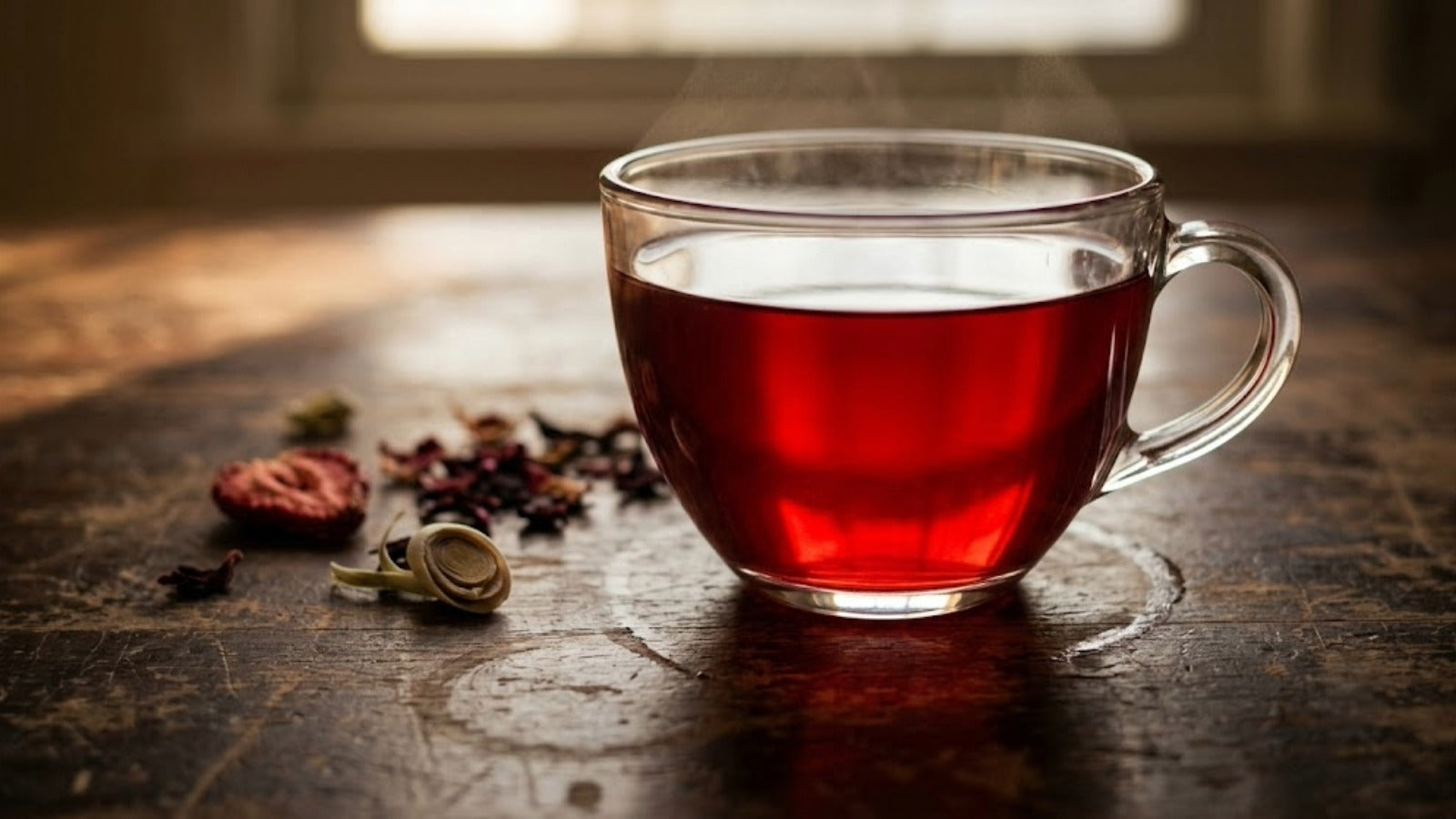
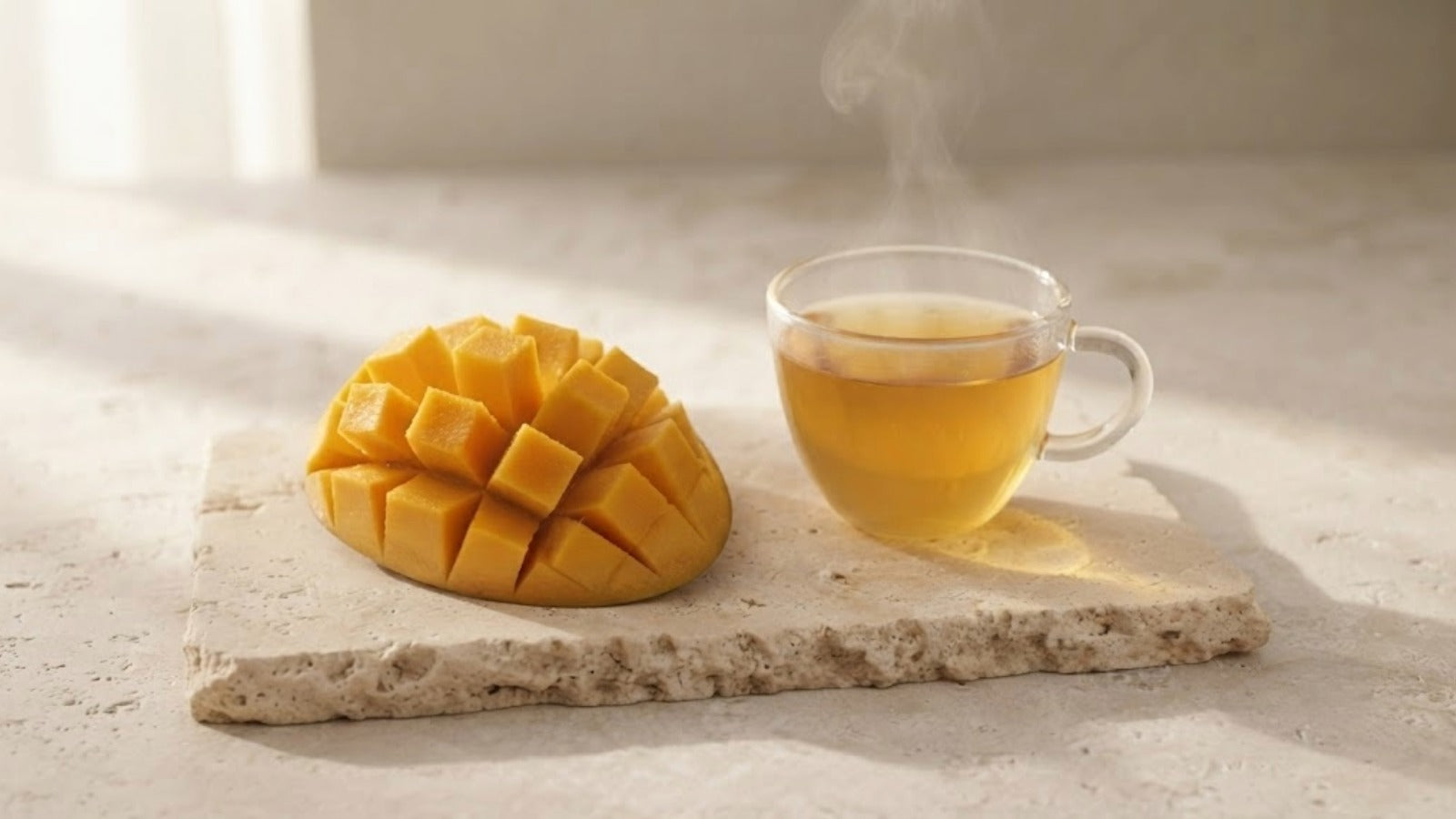
The infusion appears pale gold, catching low light gently and adding warmth without brightness or visual intensity.
Flavor Profile
On the palate, linden is mild and lightly sweet, with a soft floral impression that stays restrained and even from first sip to finish.
Weight & Presence
Linden produces a light-bodied infusion. It contributes a soft, honeyed continuity across the middle of a blend and holds that position without adding density.
Mouthfeel & Finish
Its mouthfeel is smooth and even, letting the tea move easily across the tongue with no dryness or coating.
Read as a list, this is the profile of a botanical with nothing to say. Read as a set of tools, it is the profile of a botanical designed to disappear into other things: sweet enough to bridge fruit, floral enough to bridge flowers, light enough to bridge anything at all.
How Linden Blossom Fits the Before-Bed Tea Moment
Most evening botanicals are additions. Fig brings jam, cardamom brings spice, lavender brings air, and each one arrives as a distinct voice that the blender then has to balance against the others. Linden works the other way around. It is the only common evening botanical whose job is to reduce the distance between the voices rather than add another.

The mechanism is its honeyed floral note, which sits at almost the exact midpoint between sweet and aromatic. Fruit is sweet. Flowers are aromatic. Spice is aromatic and warm. Linden touches all three, and because it touches all three it can be tasted as continuous with any of them. Sweetness leads into floral, floral leads into spice, and the seams that would otherwise show between them close up.
The effect is easiest to observe by its absence. A blend without linden tends to taste like a list of ingredients: you can name each one, and each one arrives on its own. Add linden and the same ingredients become a single flavor with several dimensions. Nothing has been added that you can point to. The cup has simply become whole.
Linden Blossom in Blending: Floral Warmth and Gentle Cohesion
Every good evening blend has a problem to solve, and it is almost always the same one: the ingredients are individually excellent and collectively disconnected. Linden is the standard answer. It has no strong preference for any one part of a composition, and it will sit between any two of them.

With Fruits
When paired with fruits such as fig or pear, linden extends the sweetness upward into something floral. The fruit stays mellow and rounded, and linden carries its top edge into the aroma, so the cup smells the way it tastes.
With Flowers
Alongside other evening florals like chamomile or lavender, linden fills the space between them. Each flower keeps its own character, and linden’s honeyed tone runs underneath as a common floor, so the floral layers read as one register rather than several competing notes.
With Herbs
Herbal botanicals gain roundness from linden. When paired with gentle herbs such as lemon balm, linden softens the green edge and slows the sensory pace, folding the herb into the sweetness rather than leaving it exposed on top of it.
With Roots
Grounding botanicals like marshmallow root gain lift from linden’s light floral warmth. The root supplies body and a cushioning finish while linden works above it, connecting that weight to the brighter notes so the blend holds together from top to bottom.
With Spices
This is where linden earns its place. Sweetness and spice are the hardest pair in an evening cup to reconcile, and warm spices such as vanilla or cardamom can easily sit apart from the fruit around them. Linden bridges them directly, sweet enough to meet the fruit and aromatic enough to meet the spice.
The role holds across all five. Linden is the connective tissue of an evening blend, and its contribution is measured entirely in how well everything else gets along. It is the ingredient nobody tastes and every good blend needs.
Linden Blossom in the Evening Blends
Two evening blends, both built-on linden, and it pulls each one in a different direction. One tastes like fruit lifted out of the oven. The other tastes like a room with the lights down. The blossom is what makes each of them hold.
Sacred Sanctuary™ tastes like warm baked fruit lifted straight from the oven: ripe fig and soft pear folded into vanilla, jammy and rounded, sweet without weight. Linden runs through the top of it, carrying the fruit up into the aroma so the cup smells like what it is.
Moonlight Stillness™ goes dark and slow: honeyed date, vanilla, and a thread of warm cardamom, a cup that tastes the way a candlelit room feels. Here linden does the harder job, sitting between the sweetness and the spice and closing the gap that would otherwise open between them.
Some nights call for one, other nights the other. The Evening Ritual Sampler carries both, so the evening never waits on a decision, whichever way you happen to be leaning.
A Soft Floral Blossom for the Before-Bed Cup
Linden is the quietest thing in the cup and the first thing you would miss. Its pale floral warmth does not compete for attention, and that restraint is what allows it to move freely between the fruit, the flowers, and the spice, closing the distances that would otherwise leave a blend sounding like a list.
It is the ingredient you learn to appreciate last. If you are working out what belongs in your own cup at the end of the day, drinking tea at night is worth thinking through properly, and linden is the answer to a question most people never think to ask.
Editorial Disclaimer
This content is for informational and educational purposes only. It reflects general perspectives on aroma, daily rituals, and related lifestyle practices. It is not intended to provide medical advice, diagnose conditions, or recommend treatments. Always consult a qualified healthcare professional with any questions about wellness or health-related matters.