Warm Tea at Night: How It Shapes the Atmosphere of Your Evening

People have always reached for something warm at the end of the day. A cup held between the hands, steam drifting upward, soft light over a table. What is easy to miss is that the warmth is not really doing anything to you. It is doing something to the room. A hot cup changes the temperature of a space, the way light moves through it, and the speed at which a person is willing to move within it, and those changes are what make the evening feel like the evening.
That is worth taking seriously, because it explains why the gesture has survived everywhere without anyone needing to justify it. Warmth is one of the few tools that shapes atmosphere without asking for attention, and it is a quiet cornerstone of the wider practice of winding down at night. What follows is how it actually works.
Why Warm Tea Feels Different at Night
A hot drink in the middle of the afternoon is barely noticeable. The same cup at nine at night is a different object entirely, and the reason is contrast. Evening arrives in layers: the light goes, the air cools, the house quiets. As the surroundings withdraw their warmth, whatever heat remains becomes conspicuous. The mug in your hands is the warmest thing in the room, and the body knows it.

This is why the gesture feels natural at the end of the day and slightly odd at the start of it. The cup is not doing anything unusual. It is simply the only warm point in a space that has spent the last few hours giving up its heat, and that makes it a natural place for attention to gather. Cool air on the face, heat in the palms. The two together mark the hour more precisely than a clock does.
Repeated often enough, the contrast stops being merely noticeable and starts being expected. You come to associate that particular pairing, the cool room and the hot cup, with the end of the day, and the association does the rest. The warmth no longer announces the evening. It confirms it.
How a Warm Drink Slows the Pace of the Evening
Here is the most practical thing warmth does: it makes speed impossible. A hot drink refuses to be finished quickly. Every sip has to wait for the temperature to allow it, and the waiting is not optional, which means the cup imposes a tempo whether or not you were planning to slow down. Lift, sip, set down, wait. Breathe. Lift again.

Almost nothing else in a modern evening works this way. A glass of water can be drained in seconds. A screen offers no natural stopping point at all. But the cup builds pauses into itself, and those pauses are the whole thing. Between each sip there is a small stretch of time with nothing in it, and you did not have to plan for it or protect it. The temperature handed it to you.
This is why a warm drink can make an evening feel unhurried even when the day was not. The room does not slow down because you decided it should. It slows down because you are holding something that will not let you move faster than it does, and after fifteen minutes of that, the pace has settled into the room and stayed there.
How Warm Tea Shapes the Atmosphere of a Room
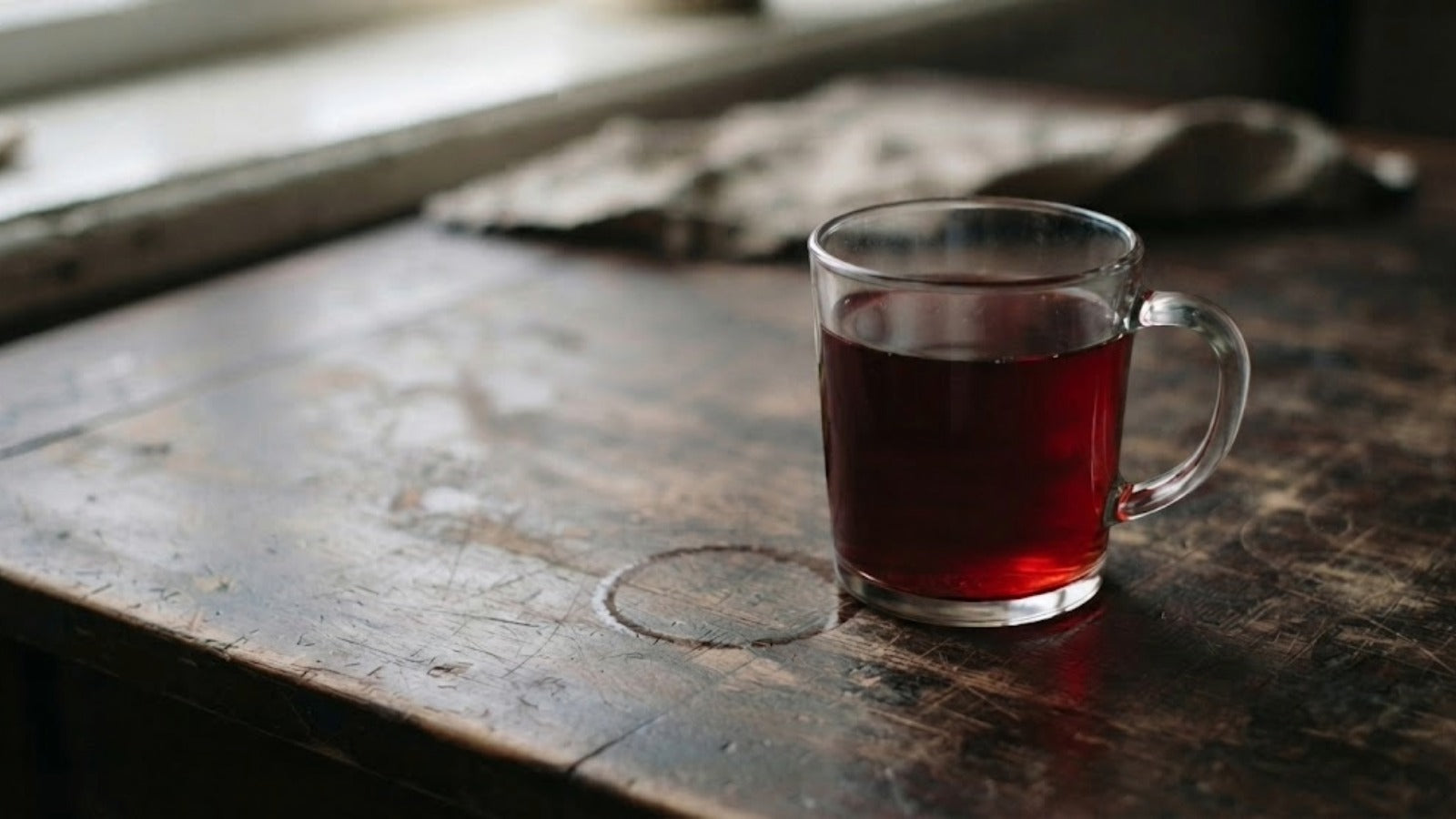
Look at a room late in the evening. The light has been lowered, the movement has stopped, everything has settled into place. And then there is the cup, with steam lifting off it in slow currents that never repeat, catching whatever light there is. In a room that has gone completely still, a hot drink is very often the only thing in it that is actually moving.

That matters more than it sounds like it should. A still room can feel empty or it can feel inhabited, and the difference is often just one small sign of life. Steam provides it. So does the light sitting on the surface of the liquid, the shifting color as the infusion deepens, the shadow the mug throws across the table. None of these are dramatic. Together they are enough to make a space feel lived in rather than merely unoccupied.
This is the part that has nothing to do with drinking at all. A cup left on a table, still steaming, changes the character of the room around it before anyone picks it up. It is the visual evidence that someone has stopped, sat down, and decided to stay a while, and a room reads that immediately, even when nobody is looking directly at it.
Choosing a Warm Tea for the Evening
None of this depends on what you fill it with. Hot water would do most of the work. But since the cup is going to sit there steaming for fifteen minutes and set the pace of the whole hour, it may as well be something you actively want to be drinking. Purely's evening blends are made for that stretch of the night, caffeine-free and slow to finish.
Sacred Sanctuary™ tastes like warm baked fruit lifted straight from the oven: ripe fig and soft pear folded into vanilla, jammy and rounded, sweet without weight. It suits an evening you want to feel light and open.
Moonlight Stillness™ goes darker and slower: honeyed date, vanilla, and a thread of warm cardamom, a cup that tastes the way a candlelit room feels. It suits an evening you want rich and enclosed.
Some nights call for one, other nights the other. The Evening Ritual Sampler carries both, so the evening never waits on a decision, whichever way you happen to be leaning.
What Warm Tea Actually Does at Night
None of it is dramatic. A cup makes the room a degree warmer, gives the eye something to follow, and refuses to be finished quickly. That is the entire mechanism, and it is enough. The evening feels unhurried not because the warmth has worked on you, but because it has quietly rearranged the space you are sitting in, and you have followed the room's lead without noticing you did.
Which is why the gesture has lasted. Jobs, homes, and seasons change, and the cup stays. Water, heat, and fifteen minutes of not being able to rush, all of it part of the wider practice of drinking tea at night.
Editorial Disclaimer
This content is for informational and educational purposes only. It reflects general perspectives on herbal tea, daily rituals, and related lifestyle practices. It is not intended to provide medical advice, diagnose conditions, or recommend treatments. Always consult a qualified healthcare professional with any questions about wellness or health-related matters.