Why Evening Dessert Teas Are Replacing Nighttime Snacks

Evenings used to end with something sweet, a bowl of ice cream from the freezer, a square of chocolate, a small dessert to land the day. But across countless homes, something quieter is happening now: instead of reaching for sugar, more people are reaching for a mug. Warm, aromatic dessert teas are taking the place of nighttime snacks.
Part of it is practical. Research has associated eating most of one's calories late in the evening with less regular sleep and more irregular snacking, a cycle of tiredness and craving that repeats day after day. But part of it is emotional. After a long day, people are craving comfort, not heaviness, and dessert teas are not replacing dessert because they are "healthier." They are replacing it because they feel better, a different kind of sweetness that settles the senses instead of stirring them. This is one part of a complete guide to dessert herbal tea for evening sweet cravings.
Why We Reach for Something Sweet at Night
The late-night craving usually is not hunger. It gathers quietly through the day, the small stresses, the unfinished thoughts, the sense of carrying more than you meant to, and by evening it arrives as a pull toward something sweet. But notice what the pull is actually for. The hand drifts toward the pantry not because the body needs food, but because it wants softness, reward, a moment that feels like yours after a day that belonged to everyone else.

That is why willpower rarely settles it. You are not really after the cookie. You are after the feeling of closing the day gently, and the snack became the way to mark it, the small gesture that says the work is over and you are allowed to soften now.
Once you see the craving for what it is, something shifts. If it is the ritual you want more than the sugar, then what you reach for can change. A warm, quietly sweet cup can hold that same moment, the pause, the reward, the sense of an ending, and give you the comfort you were actually reaching for without the heaviness that follows a late-night snack.
Warmth and Aroma: Why a Cup Tastes Sweet Without Sugar
Here is the part that surprises people. A good dessert tea can taste distinctly sweet while containing no sugar at all, and the reason comes down to two things working together: warmth and aroma.

Start with warmth, because it does more than raise the temperature of the drink. A warm mug in your hands is read as comfort, the same softness people once looked for in a bowl of something sweet, and it arrives before you have taken a sip. But warmth is also doing something mechanical: heat lifts aroma out of the cup. The steam rising toward you carries the vanilla, the fruit, the warm spice up to your nose, which is why a hot cup smells far sweeter and more dessert-like than the same blend would cold. The warmth and the scent reach you together.
And aroma is where most of the sweetness actually lives. A large share of what we experience as sweet is not taste at all, it is smell. Long before flavor reaches the tongue, the nose is already shaping the experience, and the brain learns over time to read certain scents as sweet, vanilla, caramel-like notes, ripe fruit, warm spice. When those aromas drift up from a warm cup, the mind interprets them as comforting and dessert-like and registers sweetness, even with no sugar present. This is why a warm, aromatic tea can satisfy a sweet craving in a way that plain warm water never could.
So a dessert tea does not imitate dessert. It evokes it. The comforting scent, the soft fruit, the warm spice, carried up through the steam, are read by the brain as the sweetness it was looking for. The craving that once sent you to the pantry gets a real answer, sweet and warm and worth slowing down for, without a spoonful of sugar in the cup.
The Two Dessert Teas Built for the Swap
This is exactly what a dessert-forward evening blend is built to do: suggest sweetness through aroma and warmth rather than deliver it through sugar. Both of Purely's evening blends are made from whole botanicals that carry their own natural sweetness, so the cup tastes and smells like dessert with nothing added. Which one you reach for depends on the kind of sweetness you are after.
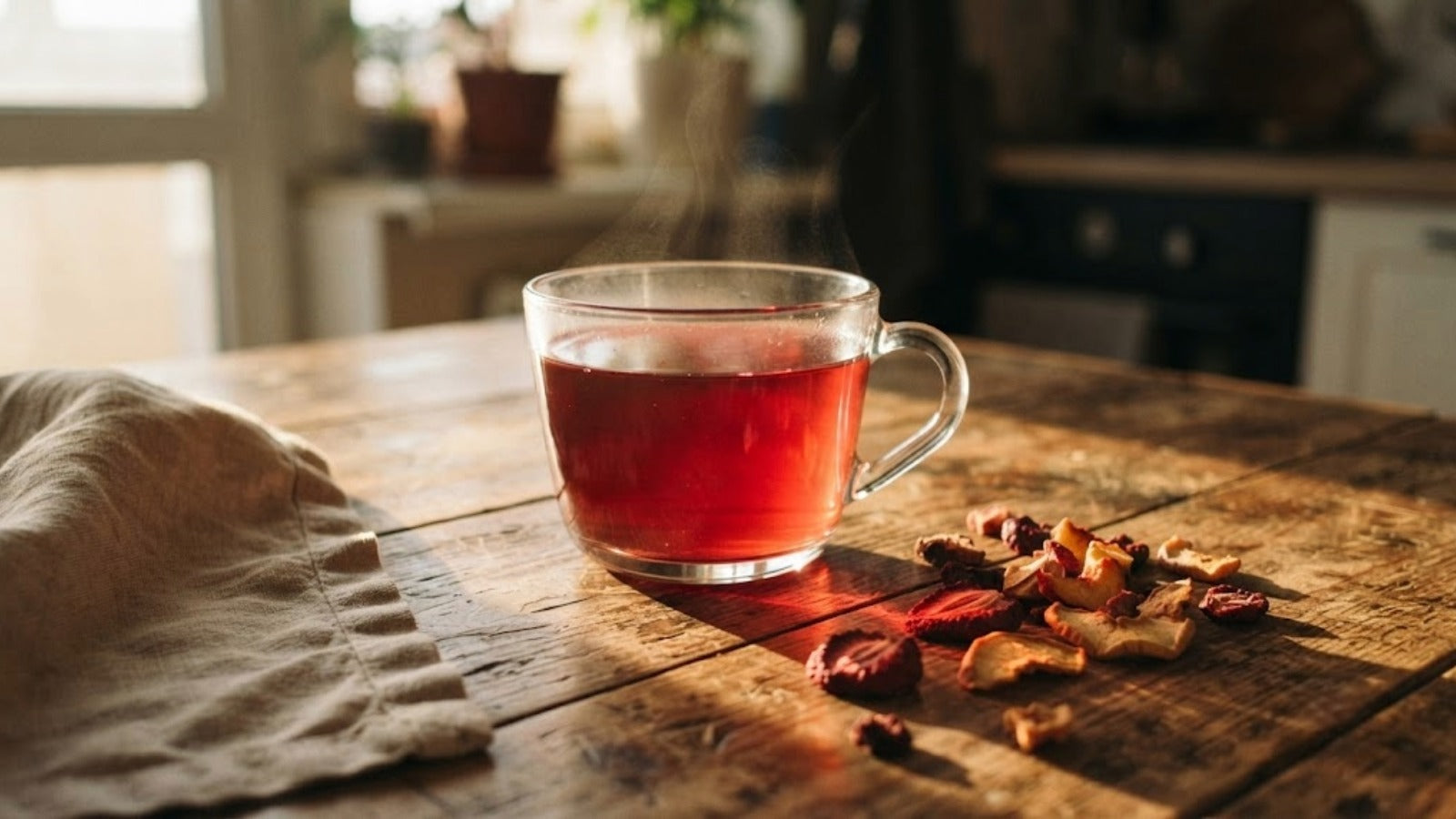
Sacred Sanctuary™ is the fruit-forward one, the closest thing to a warm fruit dessert in a mug. Ripe fig and mellow pear open with a soft, jammy sweetness, real vanilla rounds it into something creamy, and carob adds a gentle cocoa-like depth beneath the fruit. It is the one to reach for when the craving leans toward something warm and gently sweet, like baked fruit without the plate.
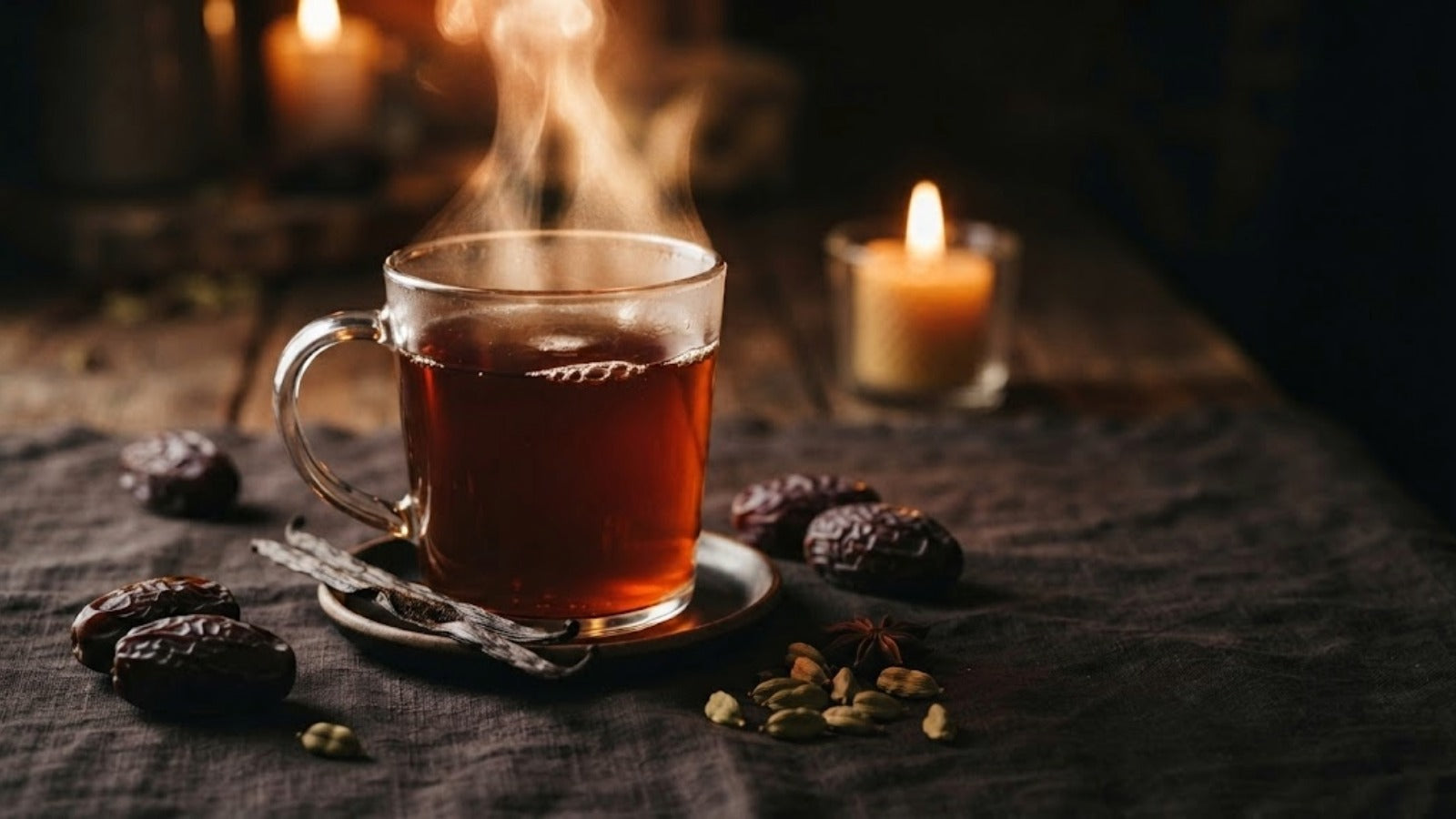
Moonlight Stillness™ is the deeper, richer one. Date gives it a natural caramel-like warmth, real vanilla lends a smooth creaminess, and a whisper of cardamom brings the warm, baked-spice aroma you would find in an actual dessert. It is the one for nights the craving wants something darker and more indulgent, closer to caramel and spice than to fruit.
Both are caffeine-free and sweetened entirely by real botanicals. If you are not sure which kind of sweetness answers your craving, the Evening Ritual Sampler has both for $19, a simple way to keep the two on hand and reach for whichever fits the night, all without the sugar, the caffeine, or the heaviness of an actual dessert.
A Softer Way to Close the Day
This is why dessert teas are quietly taking the place of nighttime snacks. Not because they are "better," but because they are truer to what people actually want at the end of the day: sweetness without the sugar, comfort without the heaviness, a small ritual instead of an impulse. A warm, aromatic cup answers the craving the snack was standing in for, and it does it without leaving you weighed down.
Choosing tea over a late-night snack becomes a small act of care, a way of marking that the day is done. What once showed up as a craving turns into a ritual, impulse into intention, and the end of the day gets a gentler close. It is one warm, dessert-like expression of the wider practice of tea in evening rituals.
References
- Peuhkuri, K., Sihvola, N., & Korpela, R. (2012). Diet promotes sleep duration and quality. Nutrition Research, 32(5), 309–319. https://doi.org/10.1016/j.nutres.2012.03.009
- Williams, L. E., & Bargh, J. A. (2008). Experiencing physical warmth promotes interpersonal warmth. Science, 322(5901), 606–607. https://doi.org/10.1126/science.1162548
- Wang, Q. J., Wang, S., & Spence, C. (2019). “A sweet smile”: The modulatory role of emotion in how extrinsic factors influence taste evaluation. Foods, 8(7), 211. (Sweetness perception and multisensory influences review.)
- Tournier, C., Sulmont-Rossé, C., & Guichard, E. (2007). Flavour perception: Aroma, taste and texture interactions. Food, 1(2), 246–257.
Editorial Disclaimer
This content is for informational and educational purposes only. It reflects general perspectives on herbal tea, daily rituals, and related lifestyle practices. It is not intended to provide medical advice, diagnose conditions, or recommend treatments. Always consult a qualified healthcare professional with any questions about wellness or health-related matters.