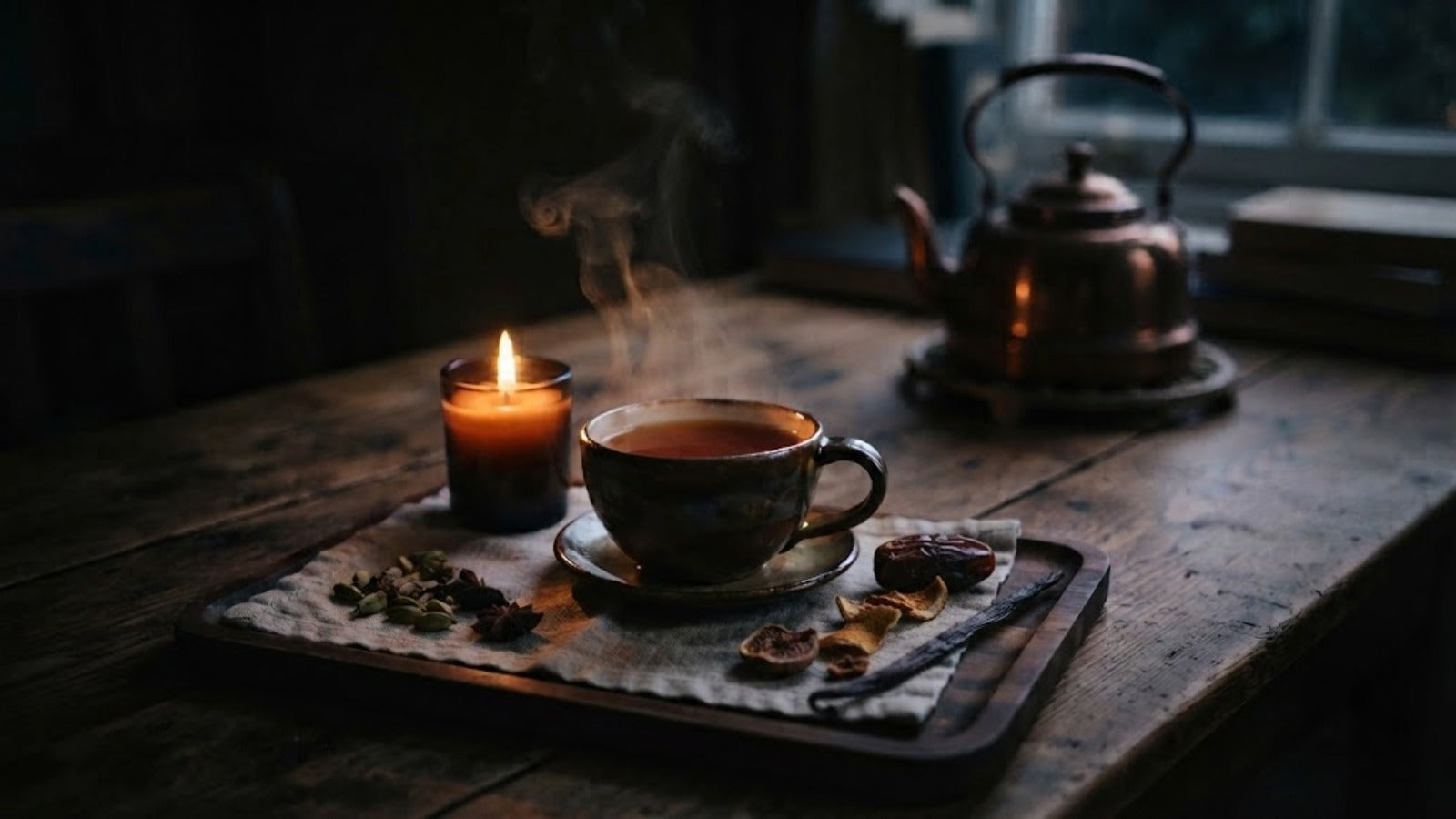
Morning Tea Ritual: Watch the Cup, Not the Clock

Most of what you have read about the morning tea ritual involves equipment. A thermometer, so the water lands at 175 degrees and not a degree above. A timer, because thirty seconds is right and sixty is ruined. A whisk, a strainer, a vessel warmed before the tea ever touches it. The instructions arrive with the weight of ceremony, as though precision were a form of respect. It is not. Every one of those rules exists to stop something from going wrong.
Tea leaves scorch in water that is too hot. They release tannin when they sit too long, and tannin is what turns a cup dry and bitter and unfixable. The thermometer protects against the first. The timer protects against the second. A cup with no tea leaf in it has neither problem. Nothing to scorch, no tannin to release, and so no rule worth following. The way a morning blend is built assumes the long steep rather than defending against it, and none of the rules you were taught apply here. There is nothing to guard against. There is the cup, and the color already bleeding into the water.
Why Does Tea Have So Many Rules?
The rules are not superstition. A green tea leaf held in water at a full boil will taste of scorched grass, and no amount of sugar will save it. Left in the water past about four minutes, a black tea leaf gives up its tannin, and tannin is the thing that dries the back of your mouth and turns a cup sharp. Neither failure is subtle. Both are permanent. Anyone who has poured a mug, forgotten it on the counter, and come back to something undrinkable has experienced this already.

So the ceremony grew up around the problem. Water below boiling, because the leaf scorches. Thirty seconds for some leaves, three minutes for others, because the window closes. A timer on the counter. A strainer within reach. Warm the vessel first so the temperature does not drop and the steep does not stretch. Every instruction in every guide traces back to the same two facts. The whole apparatus makes sense once you see them. None of it is reverence. It is a defense against a leaf that will turn on you.
Why Herbal Tea Has No Rules to Follow
A fruit-forward herbal blend has no tea leaf in it. No green leaf to scorch, no black leaf to turn sharp, and no tannin anywhere in the cup. Both failures the ceremony was built to prevent are simply absent, and the instructions that grew up around them have nothing left to protect.

What that leaves is a set of numbers so forgiving they hardly qualify as rules. Water at a full boil, around 205 degrees, poured straight over the blend. Five to seven minutes. No thermometer, because the water cannot be too hot. No timer, because there is no moment at which the cup goes wrong. Ten minutes will not hurt it. Neither will fifteen, if the phone rings and the mug sits there while you take the call. You will come back to a cup that is stronger and darker and entirely drinkable, which is not something a black or green tea leaf will ever do for you.
Which means the mistake people make with herbal tea is the opposite of the one they were trained to avoid. They pull the cup at three minutes, because three minutes is what the box of black tea told them, and the fruit has barely started. The apple has not softened. The rooibos has not given up its color. The cup tastes thin and they decide herbal tea is thin, when what they have actually done is stop the steep before it began. Nobody warns you about this, because every warning ever written about steeping was written about black and green tea.
What Is There to Watch in a Morning Tea Ritual?
Which raises the obvious question. If there is no timer and no window and nothing to prevent, what exactly are you doing for those seven minutes? The honest answer is that you are watching, and that the cup gives you something to watch, on a schedule you can follow without being told.

Hibiscus moves first. Before the first minute is out the water has gone red, and it keeps going, deepening while everything else in the cup is still getting started. The fruit takes longer. Strawberry and peach need real time in the water before they soften and begin to give, which is exactly the stretch most people cut short. Green rooibos comes in underneath, late and low and quiet, and the apple is the last thing to show up at all. Seven minutes in, the cup you are holding is not the cup you had at three, and the difference is not subtle.
Then it keeps going. A cup of black tea cooling on the counter is a cup of black tea going stale. Herbal tea is still arriving. As the temperature drops the sharpness of the hibiscus settles back and the fruit comes forward, so that the last mouthful is rounder and sweeter than the first. Nothing has gone wrong. The cup has simply carried on doing what it was doing while you drank it.
That is the practice. Not something you perform on top of the tea, and not a stillness you have to manufacture before you are allowed to enjoy it. The seven minutes were never a gap to fill or a danger to manage. They were the only thing happening in the kitchen worth looking at, and the ritual is nothing more complicated than being present for the moment.
Tea Meditation: How to Practice the Open-Eyed Steep
Search for a tea meditation and you will be handed a checklist. Light a candle. Set an intention. Breathe in for four and out for six. Notice the steam. The steps are gentle and well meant, and every one of them is something you are asked to bring to the tea, as though the cup on its own were not enough to hold you.

The practice here is shorter than that. A scoop of the blend, water straight from the kettle, and then nothing. No setup, because the thing you would be setting up for is already happening in front of you. The hibiscus is going. The fruit is on its way. Whatever a candle was supposed to do for your attention, the cup is doing better, and it does not ask you to close your eyes to manage it.
What makes it a practice is that you do it again. The first morning you will mostly notice the color. The second, you will catch the apple showing up late, and by the end of the week you will be waiting for it, the way you wait for a step you know is coming on a staircase in the dark. Nothing has been added to your morning. You have simply started watching something that was happening anyway, in a kitchen you were standing in regardless, for the seven minutes the cup was always going to take.
Which Morning Blend Should You Watch?
The practice is the same either way. What changes is what the cup does while you are standing there, and the two morning blends do very different things.
Sunrise Clarity™ shows its color early, and most of what happens in it happens in the first two minutes. Hibiscus and strawberry go almost immediately, so the water is red before you have put the kettle down, and still deepening after that. Peach comes through the middle, rounder and slower. Elderflower and lemongrass sit on top of the whole thing, and the apple is the last to arrive, low and crisp underneath everything else, with ginger and green rooibos holding the base. If you want a cup that shows its hand fast and then keeps building, this is the one to watch.
Radiant Awakening™ takes longer to show itself, and the payoff is at the bottom of the mug rather than the top. The color comes up gold and slowly. Pineapple sharpens as it steeps, mango takes its time and arrives sweet and heavy in the middle, and coconut settles in at the end, rounding the cup out as it cools. Rose petals and hibiscus give it lift, saffron threads underneath. The last mouthful of this one is noticeably different from the first, which makes it the more interesting cup to sit with and the easier one to under-steep.
If you do not know yet which cup you would rather watch, the Morning Ritual Sampler carries both. Seven minutes with each of them, on different mornings, tells you more than any tasting note can. One of them will turn out to be the cup you reach for without thinking, and that is the only test that matters.
What a Morning Tea Ritual Actually Asks of You
The morning tea ritual was never the equipment. Not the timer, not the thermometer, not the thirty seconds you were told not to overshoot. All of it was built to keep a fragile leaf from turning on you, and none of it has anything to say to a cup that cannot turn.
What is left is the tea, doing what it does whether you are watching or not. The color moves through the water. The fruit softens and gives. The cup goes on changing after you have started drinking it. That is the whole case for a morning that starts with tea, and it only needs someone in the room.
Editorial Disclaimer
This content is for informational and educational purposes only. It reflects general perspectives on herbal tea, daily rituals, and related lifestyle practices. It is not intended to provide medical advice, diagnose conditions, or recommend treatments. Always consult a qualified healthcare professional with any questions about wellness or health related matters.