Drinking Tea in the Morning: A Simple Ritual to Begin Your Day

Most mornings are not decided. The alarm goes, the phone is in your hand before your feet are on the floor, and somewhere between the shower and the door the day is already underway. By the time you notice, it is ten o'clock and the morning has been spent without anybody having chosen how.
There is a small correction available, and it is smaller than most people expect. It is not a routine and it is not a productivity system. What follows is what it actually is, what to put in the cup, why it holds up better than coffee once you look at what coffee was really doing for you, and what a few quiet minutes at the start of the day are worth.
What is a Morning Ritual?
A ritual is not defined by complexity. It is defined by repetition. Any small act, done in the same window of the day, with some attention paid to it, will do the job. The act itself matters far less than the fact that it keeps happening, because repetition is what turns a thing you did into a thing you do, and eventually into a marker the body recognizes without being told.

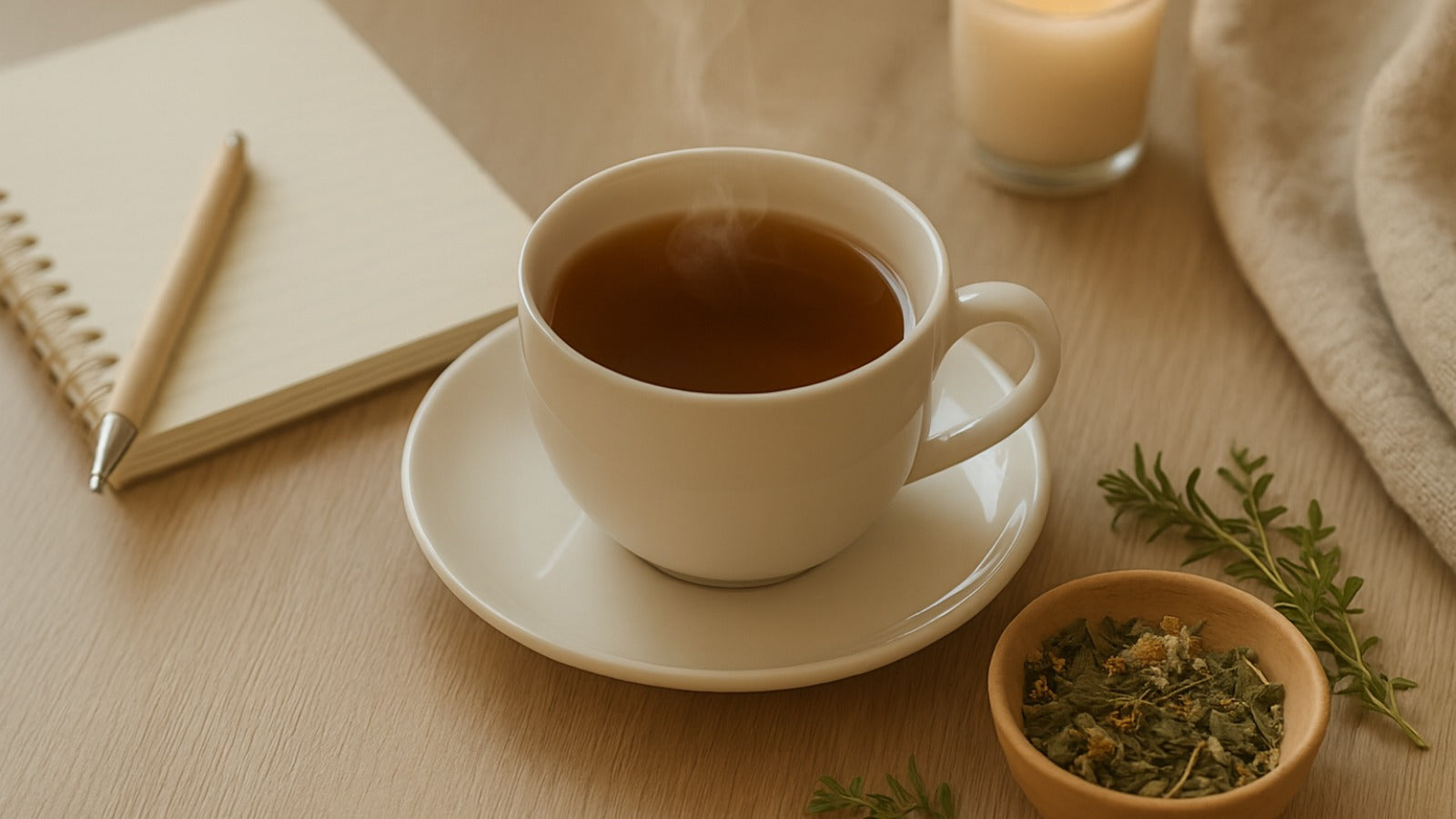
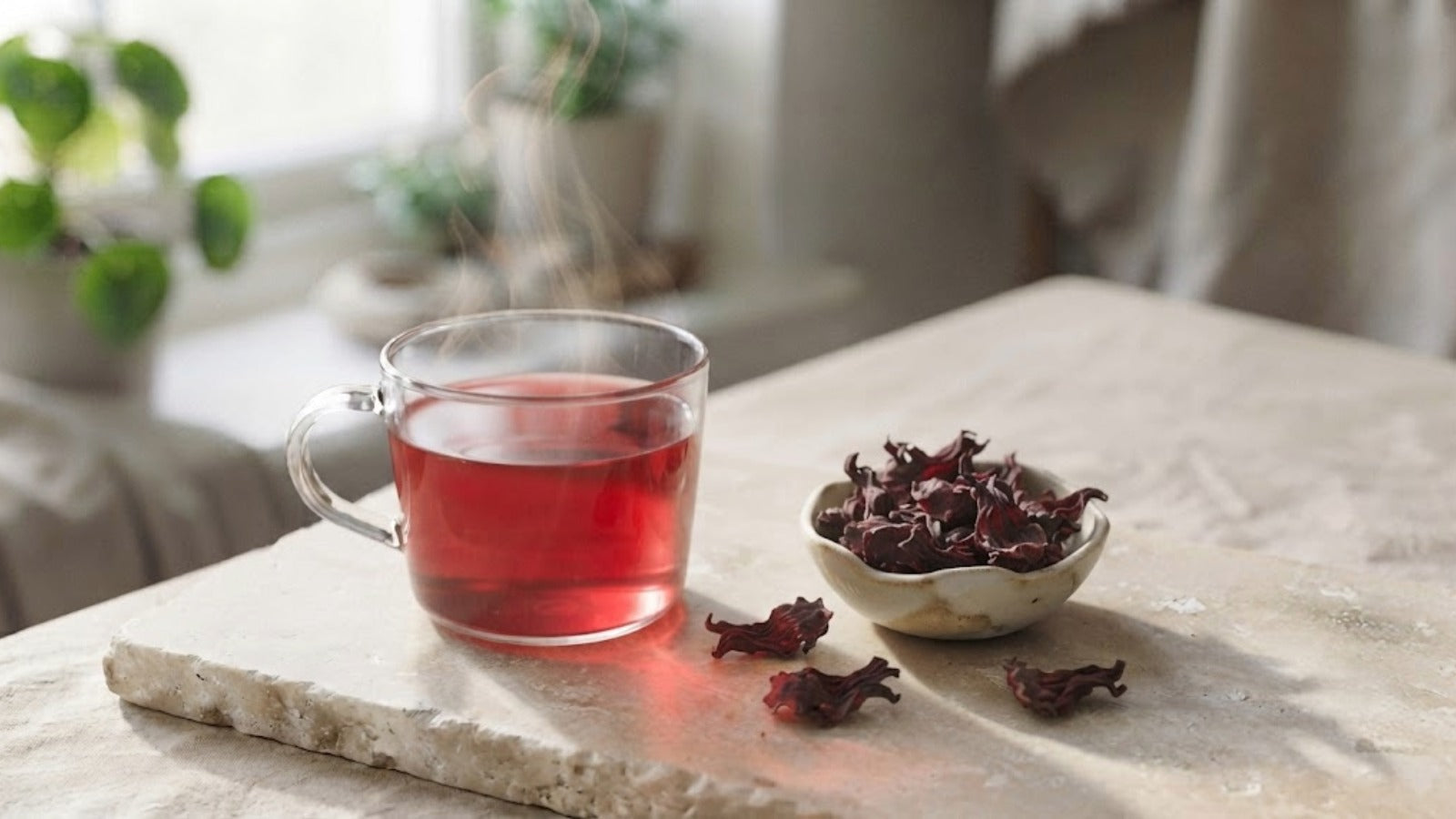
Tea turns out to be unusually good at this. It takes a few minutes and it cannot be hurried, which is most of the point. It gives your hands something warm to hold at an hour when the room is still cool. It gives you something to watch while the water goes from clear to deep red, and something to smell before there is anything to taste. None of that is profound. It is simply enough to occupy the first few minutes of the day, which is all a ritual has ever needed to do.
What it gives you in return is a threshold. The kettle, the pour, the color deepening in the glass, the first sip taken standing at the counter or sitting by a window. The morning now has a beginning rather than merely an arrival, and the difference is not small. A day that starts because you decided it should tends to run differently from one that simply began without you.
Moving Away from Coffee in the Morning
For a lot of people, the harder question is not which tea to drink but whether they can step away from coffee at all. And the reason it feels so difficult is that coffee was never one thing. It was four, stacked in the same cup: a warm drink in the hands first thing, a routine so repeated it stopped being a decision, a few quiet minutes before the day started asking for anything, and caffeine. Only the last one is what anyone actually wants to remove.

But that is not how most people go about it. They stop making coffee and lose all four at once, and the morning goes hollow. What pulls them back a week later is rarely a craving. It is the gap where a routine used to be, and it tends to arrive on the tired, rushed mornings when a familiar warm cup would have helped most. That is not a failure of willpower. It is a plan that only held on the good days.
The way through is simply to swap rather than subtract. The warmth, the repetition, and the quiet few minutes have nothing to do with coffee, and any decent replacement can carry all three. You hand back one thing and keep the other three, which is why the changes that last never feel like deprivation. They feel like a trade. Whether that means cutting back gradually or leaving caffeine entirely, and which drinks are honest enough to hold the space every morning, is the subject of our full guide on what to drink in the morning instead of coffee.
Morning Tea and the Question of Energy
Once coffee is out of the picture, a different question surfaces, and it is the one most people never get around to asking. We ask how to get more energy in the morning. The better question is what kind of energy we actually want.

Not all morning energy feels the same. Some of it arrives fast and announces itself, and some of it builds slowly and holds. One produces a morning that starts at speed and has to be sustained. The other produces a morning that opens gradually and stays level. Neither is wrong, but they are not the same experience, and the cup you choose is most of the difference.
Herbal tea belongs to the second kind. There is no stimulant in it, so there is no spike and nothing to come down from. What it offers instead is a steady line: warmth, brightness, and a cup you can drink at seven in the morning on an empty stomach without bracing for anything. The energy is quieter, and it is also more even, which is why people who make the switch rarely describe it as a compromise once they have lived with it for a few weeks.
That steadiness is the whole point. The morning sets a tone, and the tone tends to carry. A sharp, urgent beginning often produces a sharp, urgent day. A steadier one invites a steadier rhythm. That is the real reason the morning drink matters: not the caffeine numbers, but the shape it gives the hours that follow. If you want the practical version of this question answered properly, our full guide covers what to drink in the morning for energy without caffeine.
What's Actually in a Morning Blend
All of that brightness comes from somewhere. The color in the glass, the aroma rising through the cool air, the warmth that spreads rather than strikes, none of it is decoration. It is thirteen botanicals, each one doing a job the others cannot do, arranged so that the cup opens rather than announces itself. That broader botanical range is what makes herbal tea so different from true tea and allows it to change character across the day, which we explore in What Is Herbal Tea? How It Works and When to Drink It.

Six of them are fruit, and that is what makes a morning blend a morning blend. Strawberry, peach, apple, pineapple, mango, and coconut carry the cup, and they are the reason it tastes bright and lands sweet without a grain of sugar anywhere in it. Every one of them is dehydrated in our own kitchen, in small trays, at low heat, one fruit at a time, with nothing added. It is slower than buying fruit already dried, and it is the entire reason the strawberry still smells like a strawberry when the tin is opened.
Seven more botanicals build everything around the fruit. Hibiscus gives the cup its ruby color and the tartness that keeps sweetness honest. Green rooibos is the quiet floor the fruit stands on. Lemongrass runs a clean citrus line through the middle without a trace of lemon in the blend. Elderflower meets you in the steam before the first sip, rose rounds the sweetness at its edges, ginger brings a warmth you feel rather than see, and saffron colors, scents, and flavors all at once, from a quantity you could hold between two fingers.
None of it is doing anything alone. That is the part worth understanding, and it is a longer story than a morning has room for. If you want to know what each plant is for and how the whole thing fits together, the full account is in our guide to morning herbal tea ingredients.
Fruit Herbal Tea in the Morning
Fruit is what makes a morning blend a morning blend, and there are two honest ways to build one. Both are caffeine-free, both are sweet without sugar, and both are still developing in the cup ten minutes after you poured them. What separates them is what you want the morning to feel like.

Strawberry, peach, and apple is the comfort cup. The glass goes deep red inside a minute and the smell that comes up is warm strawberry, closer to jam than to fruit eaten cold. Peach fills in behind it, soft and golden. Apple cuts the finish clean so it never turns syrupy. It is the familiar one, and familiarity is worth a great deal at six in the morning.
Pineapple, mango, and coconut is the escape. Sharp bright pineapple in the steam, mango behind it with the weight of fruit that sat too long in the sun, coconut softening the close. For the four minutes it takes to drink, the kitchen smells like somewhere considerably warmer than wherever you are actually standing. Which of the two belongs in your morning is worth thinking about properly, and our full guide to fruit herbal tea lays out the whole case for both.
How a Morning Blend is Built
Turn a tin of herbal tea over and you will find nine ingredients, maybe eleven. Anyone can read that list. Anyone can buy those things, put them in a bowl, and pour hot water on them, and what they would get is a bowl of hot fruit water. The list is printed on the back. The tea is not.

What separates one cup from another is proportion, and the order things reach you once the water goes in. Fruit releases its flavor early and is spent within a minute or two. Flowers take longer to start and arrive as the fruit is running out. Roots and the rooibos base are slower still, and they are the last thing you can taste. Get that sequence wrong and the cup goes quiet halfway through: the flavor simply stops, and you are left holding warm water without being able to say what went missing.
None of that is written on the tin. Two blenders handed the same nine ingredients would produce teas nobody would guess came from the same list, and everything separating them is quantity. Hibiscus at two percent is color and a light tartness. At five it takes the cup over, and the fruit disappears underneath it. That is where the craft actually sits, and it is worth understanding how a morning blend is built before you decide which one belongs in your morning.
Caffeine-Free Morning Tea Blends
Everything above narrows to a fairly short list. A morning blend has to be bright rather than heavy, because the palate is at its most sensitive first thing. It has to be genuinely caffeine-free, so it can be drunk at six without borrowing against the afternoon. And the fruit has to be real fruit, because sprayed flavoring gives you the smell in the tin and nothing at all in the cup. Two blends, two directions, and the difference between them is mood rather than quality.
Sunrise Clarity™ — Ripe strawberry, peach, and apple at the center, jammy and full. Hibiscus and elderflower add a soft floral lift; lemongrass keeps it clean. Underneath, ginger root and a thread of saffron give the cup a warm, golden finish, with green rooibos as a smooth, caffeine-free base. The comfort cup, and the one most people reach for first.
Radiant Awakening™ — Pineapple and mango come in vivid and sun-sweet, then coconut softens the edges. Rose petals and hibiscus add a floral glow; lemongrass brings a citrus snap. Green rooibos holds a clean, light, caffeine-free base. Brighter and warmer, and it makes the kitchen smell like somewhere else entirely.
Morning Ritual Sampler — Which of the two suits your morning is not a question anyone can answer for you at checkout. The sampler puts both in front of you, so the cup you keep is the one you chose across a few real mornings rather than in a single guess. Genuinely caffeine-free, and the simplest place to start.
Beginning the Day with Intention
None of this changes the day. The email is still coming, the traffic is still there, and a cup of tea has never once fixed a difficult morning. What it changes is where the morning starts. A day that begins because you decided it should tends to run differently from one that simply arrived, and the difference is not in the tea. It is in the fact that you stopped for four minutes and chose something, before anything else was allowed to choose for you.
The morning is only the beginning. As the day moves into its long middle hours, attention has to be sustained rather than begun, and the cup can change with it. That next part of the rhythm is the subject of drinking tea in the middle of the day.
Editorial Disclaimer
This content is for informational and educational purposes only. It reflects general perspectives on herbal tea, daily rituals, and related lifestyle practices. It is not intended to provide medical advice, diagnose conditions, or recommend treatments. Always consult a qualified healthcare professional with any questions about wellness or health related matters.