What Is Herbal Tea? How It Works and When to Drink It

Herbal tea is not actually tea in the botanical sense. True tea, including green, black, white, and oolong, comes from a single plant, Camellia sinensis. Herbal tea comes from somewhere much broader: herbs, flowers, fruits, roots, spices, and other botanicals steeped in water. That difference is why herbal tea can look, taste, and behave so differently from one blend to the next. A cup built from mint and citrus has very little in common with one built from fig, vanilla, and rooibos, even though both belong to the same category.
Once you understand how different herbal tea is from true tea, the category becomes easier to navigate. The usual rules of tea do not always apply because the ingredients themselves are different. Brewing changes. Flavor changes. Even the role the drink can play across the day changes. A bright, fruit-forward blend can belong naturally to the morning, something cool and mint-composed can suit the middle of the day, and a rounder, dessert-inspired blend can close the evening. Herbal tea is not one flavor or one moment. It is a botanical category broad enough to move with the rhythm of the day.
What Is Herbal Tea?
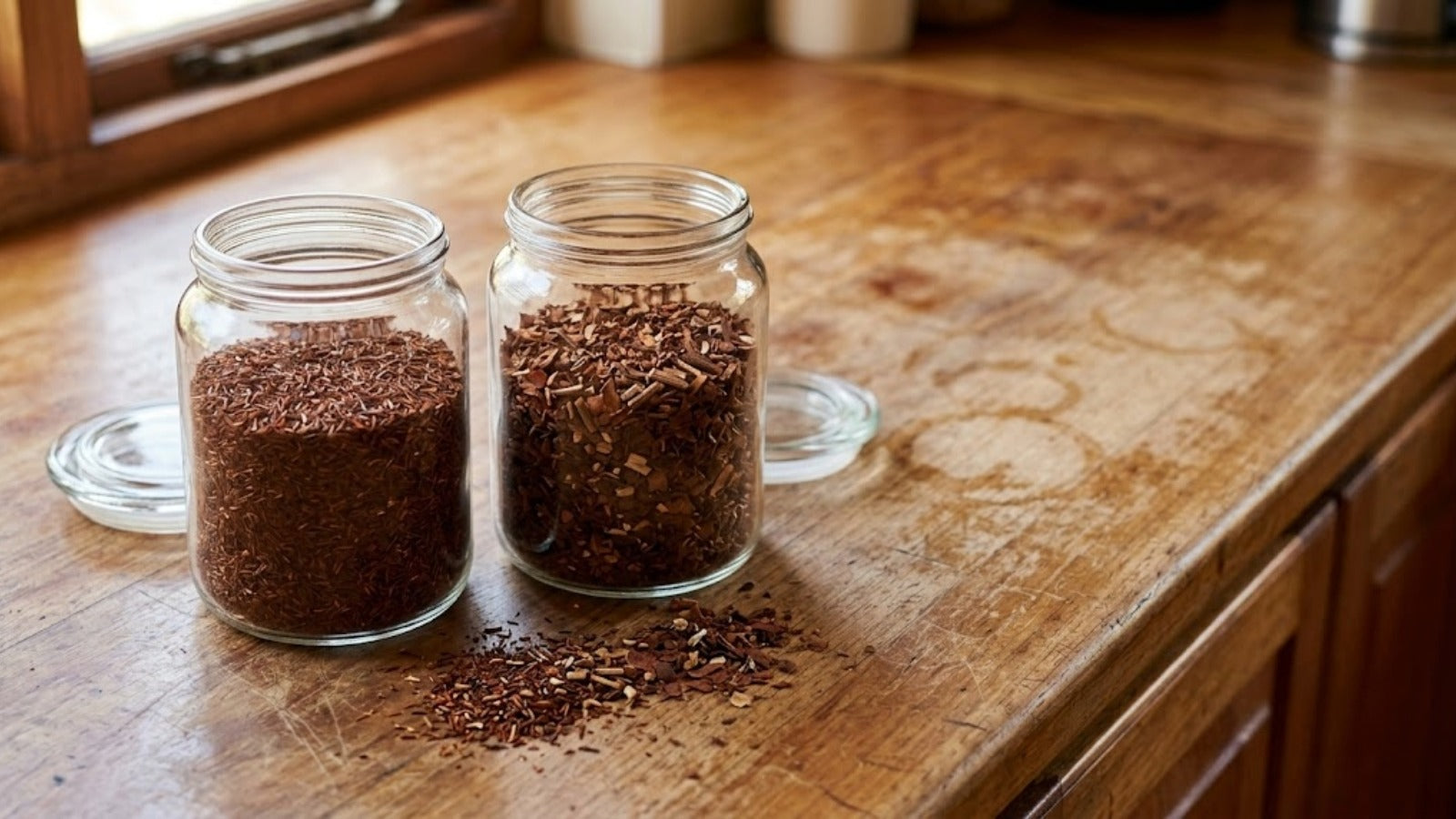
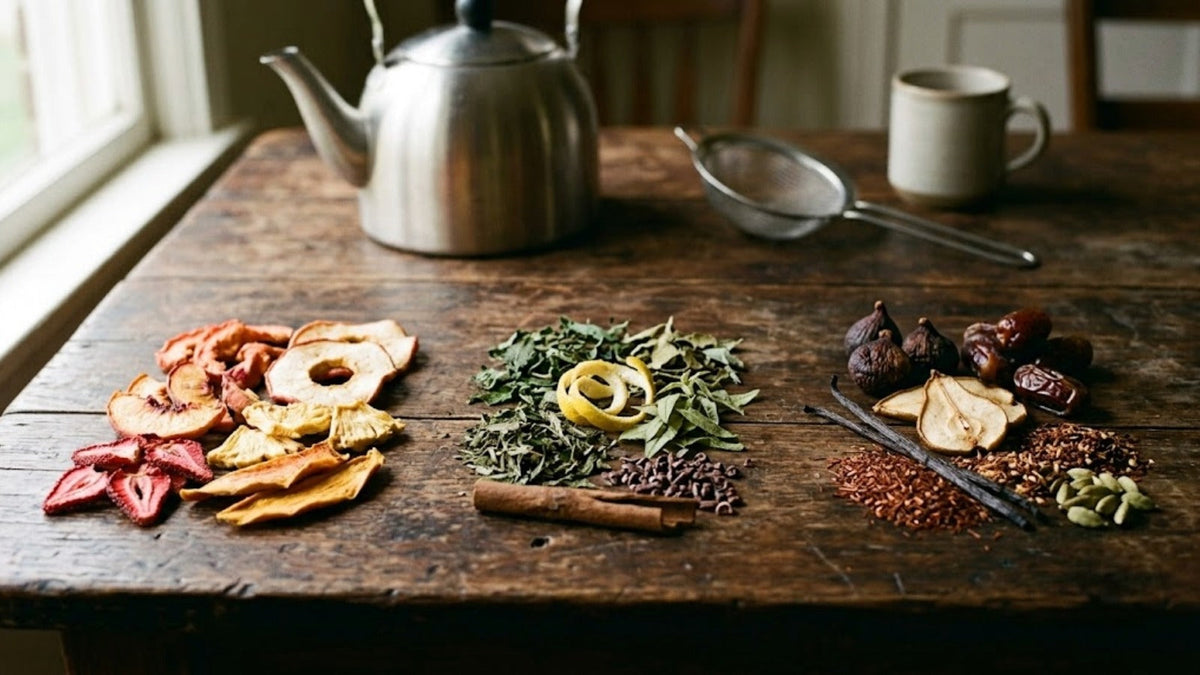
Herbal tea, sometimes called a tisane, is an infusion made from botanicals other than the leaves of Camellia sinensis, the plant behind every true tea. Green tea, black tea, white tea, oolong, and matcha may look and taste remarkably different, but they all begin with that same plant. Herbal tea begins almost everywhere else. Peppermint leaves, chamomile flowers, ginger root, dried fruit, rooibos, hibiscus, cinnamon bark, and countless other botanicals can all become the starting point. So herbal tea is not another variation of traditional tea. It is a much broader botanical category.

That breadth explains why herbal tea resists a single definition based on flavor or appearance. A pale chamomile infusion and a dark rooibos blend may have almost nothing in common in the cup. A fruit-heavy blend can be bright and tart, while roots and spices can produce something deeper and warmer. Even the materials themselves differ in weight, density, and structure. What holds the category together is not how these infusions taste. It is what they are made from.
| Herbal Tea | True Tea | |
|---|---|---|
| Source | Herbs, flowers, fruits, roots, spices, and other botanicals | Camellia sinensis |
| Variety | Many unrelated plants and plant parts | One plant expressed through different processing methods |
| Caffeine | Usually naturally caffeine-free, depending on the botanicals used | Naturally contains caffeine |
| Flavor | Changes widely with the botanicals in the blend | Changes with cultivar, origin, and processing |
The distinction matters because it changes what you should expect from the drink. Herbal tea does not have one characteristic flavor, one brewing behavior, or one natural place in the day. The category is simply too broad for that. If you want to go deeper into the botanical line between the two, Herbal Tea vs Tea: Why They’re Not the Same Plant explains how one tea plant produces the familiar true teas and why herbal infusions sit outside that family entirely.
Why Herbal Tea Plays by Different Rules
Most tea advice was written for tea leaves. Herbal tea may contain mint leaves, chamomile flowers, dense pieces of root, dried fruit, bark, and whole spices in the same blend. Those materials do not weigh the same, absorb water the same way, or release their flavor at the same pace. Yet they are often given the same instructions: measure a spoonful, steep for a few minutes, remove the leaves. The problem is not that herbal tea has too many rules. Most of the wrong rules were borrowed from tea.

A better starting point is simply to look at what is actually in the blend. Light flowers and leaves give themselves up differently from dense roots. Dried fruit needs time in the water before its character fully develops. Spices may carry a great deal of aroma in very little material. Once the ingredients become the starting point, herbal tea stops looking unpredictable. The method follows the botanicals instead of forcing every botanical to behave like a tea leaf.
Starting with the botanicals rather than traditional tea rules changes almost every practical question a beginner eventually asks, from how much to use and how long to steep to whether milk belongs in the cup or why a blend tastes weak. Herbal Tea for Beginners: Why the Usual Tea Rules Do Not Apply takes those questions one by one and shows how to approach herbal tea on its own terms.
When Should You Drink Herbal Tea?
There is no single best time to drink herbal tea because there is no single kind of herbal tea. A blend built from strawberry, peach, and lemongrass belongs to a very different sensory world from one built around mint and citrus, and both are different again from fig, vanilla, rooibos, and cardamom. That range makes the clock less useful than the moment itself. Instead of asking which herb belongs at which hour, it makes more sense to ask what kind of cup fits the part of the day you are in.

Morning. The opening of the day naturally favors brighter flavors. Strawberry, peach, apple, pineapple, hibiscus, elderflower, and lemongrass can build a cup that feels light, colorful, and fruit-forward rather than heavy. The point is not that these botanicals belong exclusively to breakfast. Together, they create the kind of sensory profile that makes sense at the beginning.
Midday. The center of the day calls for contrast. Mint and citrus can arrive cool and bright, while roots, cacao, or gentle spice add something warmer underneath. That tension gives a midday blend more structure than plain mint alone. Spearmint, peppermint, lemon peel, lemon verbena, tulsi, dandelion root, and Ceylon cinnamon can all contribute to that cool-over-warm character.
Evening. As the day closes, the profile can become rounder and less tart. Fig, pear, date, vanilla, red rooibos, honeybush, chamomile, lavender, carob, and cardamom move the cup toward warmth, softness, and the familiar character of dessert without requiring it to become sugary. Evening herbal tea does not need to promise sleep to belong at the end of the day. The sensory shift is enough.
This is not a scientific classification, and no botanical belongs to only one phase. The blend matters more than any single ingredient. What the rhythm gives you is a simple way to navigate the category: begin with the moment, decide what kind of experience fits it, and let the botanicals follow. Drinking Herbal Tea Throughout the Day develops that idea into the full Purely Botanical Rhythm Framework.
From Herbal Tea to a Daily Ritual
Once herbal tea stops looking like a shelf of unrelated plants, a larger pattern becomes visible. Different moments call for different kinds of cup, and the breadth of the botanical world gives herbal tea enough range to follow those moments across the day.
Repeat those moments often enough and they become something more than individual cups. They become a ritual. That is the idea behind Purely: a bright beginning, a balanced center, and a softer close, expressed through real herbs, flowers, fruits, roots, and spices. Herbal tea gives us the range to move with the day. Ritual gives that range a shape we can return to.
Editorial Disclaimer
This content is for informational and educational purposes only. It reflects general perspectives on herbal tea, daily rituals, and related lifestyle practices. It is not intended to provide medical advice, diagnose conditions, or recommend treatments. Always consult a qualified healthcare professional with any questions about wellness or health-related matters.