Herbal Tea for Beginners: Why the Usual Tea Rules Do Not Apply

Nearly every rule you have been given about brewing tea was written for a single plant, Camellia sinensis, and herbal tea is not that plant. You have probably heard most of them: steep for two to four minutes, use one teaspoon per cup, take it out before it turns bitter, buy the little metal ball to hold it. All of that guidance was built around the tea leaf, which is one material with one density that behaves the same way every time it meets hot water. Open an herbal blend and you are looking at chamomile flowers, mint leaves, cut dandelion root, cinnamon bark, and pieces of dried fig, which have almost nothing in common with each other. The rules do not transfer, and what replaces them is not a longer list of rules. It is knowing what is actually in the cup. If you are new to the category itself, start with our guide to what herbal tea is, how it works, and when to drink it, then come back here for the practical rules that change once real botanicals enter the cup.
What Is Herbal Tea Made Of?
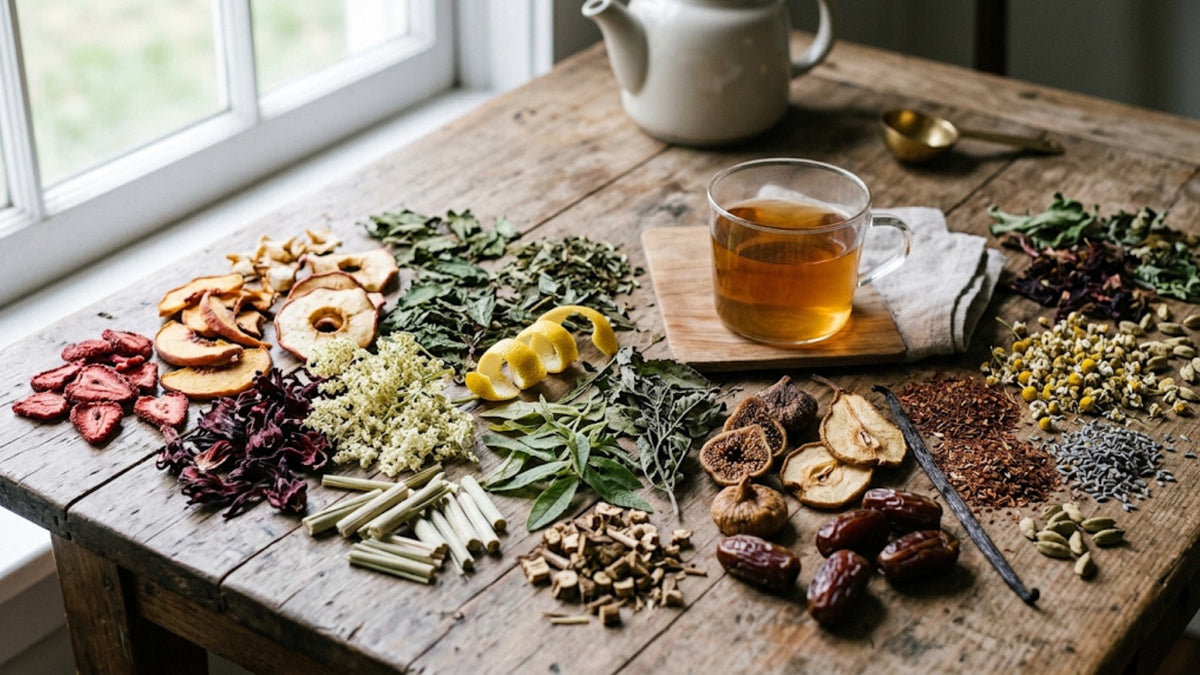
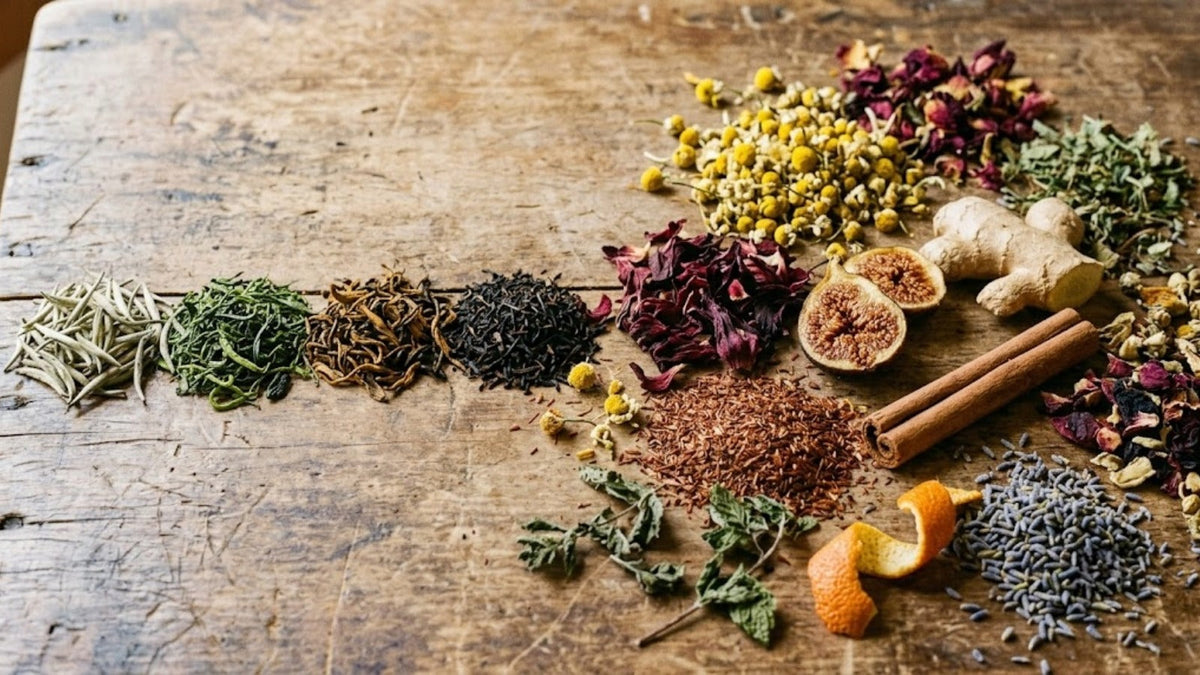
Herbal tea is not one botanical the way tea is. Five different types of botanicals may turn up in herbal tea blends, and no two of them behave the same way in hot water. Most brewing advice fails because it treats them as interchangeable. A spoonful of chamomile weighs a quarter of what a spoonful of dandelion root does. Peppermint you can pull in two minutes and dandelion root needs ten or more. Hibiscus will curdle milk on contact and rooibos will not.

Herbs. Peppermint, spearmint, lemon balm, lemon verbena. These are leaves, usually cut small, and they give up their flavor readily in the first few minutes. Of everything in a blend they are the closest to how a tea leaf behaves, which is why a mug of straight peppermint feels familiar to anyone coming from tea.
Flowers. Chamomile, hibiscus, rose, elderflower, lavender. Light and hollow, so a spoonful of them is mostly the air between the petals. Hibiscus is the exception worth remembering, because it is sharply acidic, and that acid is behind two of the most common complaints people have about herbal tea.
Fruit. Strawberry, apple, peach, fig, date, mango. Dried fruit carries its own sugar, concentrated by the drying, and it is the reason a good blend tastes sweet without anything added. It also has to soak before it releases anything, so it is slower than it looks.
Roots. Licorice, dandelion, chicory, marshmallow. Dense, heavy, and slow. A spoonful of cut dandelion root weighs about four times what a spoonful of chamomile does, and because the pieces are solid the water has to work its way in rather than simply washing over them.
Spices. Cinnamon bark, cardamom, ginger, cloves. A very small amount carries a long way, because what these hold is aromatic oil rather than bulk. This is why a blend can taste distinctly of cinnamon while containing almost none of it.
A blend is usually all five at once, in proportions somebody chose deliberately. That is the whole reason the answers below are not the answers you would expect.
When Should You Drink Herbal Tea?
Here is how we sort it, and it has nothing to do with what a botanical is supposed to do to you. It is about weight. Some cups are light and land easily first thing, and some are heavy and would be wrong at seven in the morning and right at nine at night.

Morning is fruit. Strawberry, peach, apple, pineapple, mango. Fruit is bright and slightly tart and it sits lightly, which is what you want before you have eaten anything. A rich, heavy cup first thing is too much, in the same way that most people want juice at breakfast rather than something dense and sweet.
Midday is cool over warm. Peppermint, spearmint, lemon peel, and lemon verbena on top, with something earthier underneath: cacao, cinnamon, licorice root, dandelion. The mint arrives first and clears whatever you have just eaten, and then the warm base holds the cup up so it does not finish thin the way a plain mint tea does. That contrast is the whole point of a midday blend. Cool at the front to reset, warm underneath so there is still something to drink.
Evening is dessert. Fig, date, pear, vanilla, honeybush, red rooibos, cardamom, a little licorice root. These are round and heavy and low in acid, and they coat the mouth rather than cutting through it, which is why the cup reads as something you would have after dinner rather than instead of breakfast. Chamomile belongs to this end of the day too, though it is the light one in a heavy group. If a blend tastes tart at nine at night it is in the wrong place, and that sharpness is the reason.
None of this would be possible with tea, because tea contains caffeine and caffeine puts a limit on the day. Herbal tea has none, unless someone has put yerba mate or cacao in the blend, and the label will tell you if they have. That is the whole reason a herbal blend can follow you from the first cup to the last one, and it is why we build around the hour rather than the flavor.
How to Brew Herbal Tea
The first habit worth dropping is measuring by spoon. A spoon measures volume, and volume tells you very little here, because a spoonful of chamomile flowers weighs about a quarter of what a spoonful of cut dandelion root does. Whatever your blend is made of, the scoop that seems right is usually holding far less than you think, which is why adding a second one so often changes nothing at all. How to Make Herbal Tea Stronger has the weighed amounts for nine common botanicals, which brewing vessels hold their heat, and the two things people try that never work.

The second is watching the clock. Herbal tea contains none of the compound that turns a forgotten cup of black tea undrinkable, so there is no window to hit and no moment where the cup goes wrong. Most people still pull it out at three or four minutes because that is what they have always done, and a fruit blend at four minutes has barely started. Can You Over-Steep Herbal Tea? explains why the timing rules do not carry over, and how to read the color of the cup instead of the clock.
Both of those assume hot water, and there is a second method worth knowing about. Cold water pulls different parts of the botanicals rather than fewer of them, so a jar left in the fridge overnight comes out cleaner and brighter than the same blend made hot, with almost none of the aroma. It needs more material and far more time, and how much time depends on what is in the jar. How to Cold Brew Herbal Tea has the method, the ratio, and the timings for each type of botanical.
What Tools Should You Buy for Herbal Tea?
Two questions come up here, and both look like questions about quality when neither one is. The first is loose or bagged. If you are buying a single botanical, peppermint or chamomile on its own, either format works and nothing is at stake, because there is nothing in the bag that needs protecting. A blend of nine ingredients is a different case. Those nine sit in proportions somebody chose deliberately, and holding a proportion steady inside a two-gram bag is genuinely hard when the pieces range from a whole fig to a petal. Loose Leaf vs Tea Bags sets out which format suits which kind of tea, and where bags genuinely win.

The second question is what to brew it in, and that turns out to be a question about size. Every piece of equipment sold for loose tea does one of two jobs: it holds the botanicals apart from the water for the whole steep, or it catches them at the pour. Almost all of it was designed around tea leaves, which are small and pack tight, and a blend built from whole fruit and flowers needs several times the room. The little metal ball most people are given first is the clearest example, and What Tools Do You Need to Make Herbal Tea? compares eight of them and names the one worth owning.
Why Does Herbal Tea Curdle Milk or Taste Sour?
Curdled milk is the problem with the cleanest cause, and the cause is acid. Milk breaks apart in an acidic liquid, and a blend heavy with hibiscus or dried sour fruit is acidic enough to do it the moment the two meet, while rooibos, chamomile, and anything built on spices or roasted roots will take milk without any trouble at all. Nothing about how you pour it changes that. Can You Put Milk in Herbal Tea? sorts the botanicals into the ones that take milk and the ones that break it, along with how soy, almond, oat, and coconut each behave differently from dairy.

That same acid is behind the other common complaint, which is a cup that tastes sour rather than sweet. Hibiscus is what most commercial fruit blends use to turn the water red, and past a small proportion it takes the cup over entirely. The other possibility is that there was no real fruit in the bag at all, only flavoring sprayed onto a neutral base. How to Make Herbal Tea Sweeter Without Sugar covers both causes, along with which botanicals carry real sweetness and why the drying decides whether any of it survives.
Is Herbal Tea Hard to Make?
We hope this guide has been useful, and if you take three things from it, take these: use more than you think, leave it longer than you think, and stop watching the clock. Those three between them fix most of what goes wrong, and none of them cost anything. Herbal tea has a reputation for being the fussier drink, which is exactly backwards. Tea is the one with a window you can miss and a compound waiting to turn on you. A blend of fruit and flowers and root has neither. It will sit in the water while you answer the door, and it will still be there when you get back, and it will be better than it was when you left.
Editorial Disclaimer
This content is for informational and educational purposes only. It reflects general perspectives on herbal tea, daily rituals, and related lifestyle practices. It is not intended to provide medical advice, diagnose conditions, or recommend treatments. Always consult a qualified healthcare professional with any questions about wellness or health-related matters.