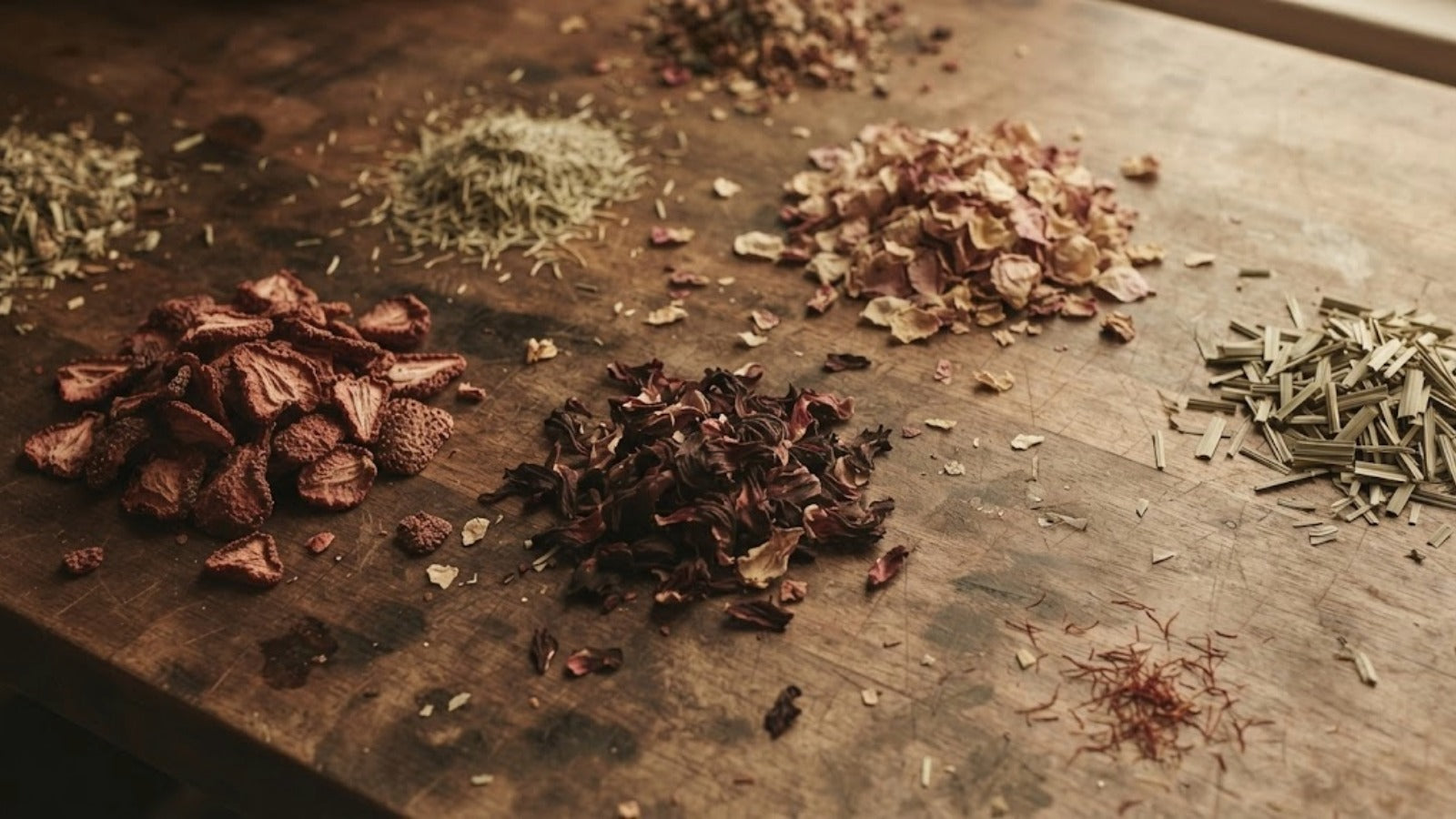
Herbal Tea Blending: How an Afternoon Blend Is Built

A Defense blend carries a distinct sensory identity shaped by freshness, structure, and measured contrast. It stands apart from Morning and Evening blends through its emphasis on brightness paired with composure. Where Morning blends favor lift and progression and Evening blends soften into cohesion, Defense blends establish clarity while maintaining restraint. This structural orientation is explored more fully in The Role of Tea in Defense Rituals, where Defense is framed as an atmospheric category rather than a functional one. Within that framework, Defense blends open with crisp aromatics that feel clean and defined. Mint, citrus, and light florals set the tone, creating a cool, immediate presence at the surface of the cup.

This brightness is intentionally supported by deeper elements that keep the profile rounded and stable. Roots, soft spice, and honeyed botanicals introduce warmth and depth without shifting the blend toward density. Their role is not to dominate the finish, but to contain the brightness and give it continuity. The result is a layered structure in which a cool introduction is balanced by a gentle, grounded base. This movement from top to base is controlled rather than dramatic, reinforcing the sense that the blend is shaped with precision.
Defense blends are also defined by atmosphere. Their identity emerges not only through flavor, but through the environment they create as they steep. Steam carries crisp edges. Color settles with clarity rather than saturation. Aroma lingers with a clean, open presence. The cup feels as though it introduces light and air into the surrounding space. This is not about producing an effect in the drinker. It is about shaping the character of the moment through sensory cues alone.
This structural approach is reflected across the Defense collection. Celestial Renewal expresses radiance through the interplay of mint, cacao warmth, and floral light. Guardian Spirit emphasizes brightness through mint, citrus layers, and gentle fruit. In both cases, the blends demonstrate that Defense is not defined by a single note or ingredient. It is defined by composition. Freshness, contrast, and calm structure work together to create a recognizable atmosphere that feels clear, balanced, and intentional. Clarity emerges through sensory design rather than promised outcome.
Sensory Pillars of a Defense Ritual Blend
A Defense blend is built around a set of sensory pillars that guide its composition from first concept to final cup. These pillars do not describe outcomes or effects. They define the character of the blend itself and the atmosphere it creates through aroma, flavor, and movement during steeping. Together, they form the sensory logic behind Defense blending and align with the structural principles outlined in How Cool and Warm Notes Create Balance in Defense Tea Blends.

Clarity as Brightness and Definition
In Defense blending, clarity is expressed through brightness and definition rather than intensity. It appears as clean edges in aroma and taste that establish the profile immediately. Mint announces itself as steam rises, delivering a cool, precise impression. Citrus contributes outline and articulation, giving the top layer shape without sharpness. This expression of clarity is explored in greater detail through the role of mint as a defining element in Peppermint in Defense Rituals: Crisp Clarity and Refreshing Lift.
This form of clarity is not expansive or forceful. It defines boundaries. The brightness arrives quickly, but it does not surge or scatter. Instead, it establishes the blend’s identity at the surface of the cup and prepares the structure that follows. This immediate definition is one of the clearest markers of a Defense composition.
Atmosphere as Surrounding Presence
Atmosphere forms the second pillar. A Defense blend is not experienced only through the sip. It occupies the space around the cup. Mint, citrus oils, and soft florals generate an aromatic field that feels open and composed. This surrounding presence gives the blend a spatial quality, as though it introduces air and light into the moment without demanding attention.
Atmosphere in this context is a design outcome. It is created through controlled aromatic release and ingredient compatibility rather than through volume or intensity. The blend shapes its environment quietly. It becomes part of the setting rather than a focal point, reinforcing the Defense identity as one of clarity, space, and calm structure.
Sensory Balance as Harmony of Cool and Warm
The third pillar is balance, expressed through the relationship between cool and warm elements. Defense blends do not commit fully to either register. Mint and citrus open the profile with cool clarity, while warmer components such as roots, cacao, licorice, or soft spice remain present beneath the surface. This relationship creates a layered structure that feels grounded without becoming heavy.
The contrast between these registers adds interest, but it is the harmony that sustains the blend. Warm elements are calibrated to support the structure rather than reshape it. They prevent sharpness and extend continuity without shifting the profile toward density. Balance is achieved through proportion and placement, not through dominance, giving Defense blends their characteristic steadiness.
Together, these pillars form the structural foundation of the Defense category. Brightness establishes definition. Atmosphere shapes the surrounding space. Balance maintains internal rhythm. When aligned, they produce a blend that feels spacious, intentional, and finely layered. Defense is expressed not through function or promise, but through sensory architecture that holds its character consistently from first inhale to final sip.
Working With the Cool to Warm Spectrum
A Defense blend is defined by how it operates along the cool to warm spectrum. This spectrum functions as a structural axis within the cup, organizing how ingredients are layered and how the profile holds its shape over time. Rather than relying on a single dominant note, a Defense blend is designed around controlled contrast. Cool and warm elements are positioned so the cup remains clear, balanced, and composed from first inhale through the final sip.

The cool to warm spectrum is not a dramatic progression. It is a regulated movement that provides orientation and stability. Each register contributes within defined limits, preventing sharpness at the top or accumulation at the base. This axis is central to the Defense category and shapes the blend more than any individual ingredient.
Cool Lift through Mint and Citrus
The cool opening is one of the most recognizable signatures of a Defense blend. Mint and citrus establish immediate definition at the surface of the cup, creating the crisp sensory edge that characterizes early contact with the infusion. Peppermint introduces clean, precise coolness as steam rises, while spearmint follows with a softer, rounder freshness that tempers intensity. Lemon peel and lemon verbena add citrus brightness that feels clear and fragrant rather than sharp, reinforcing the blend’s sense of openness.
This pattern of refreshment reflects the broader role that crisp flavors play in shaping moments of clarity and reset, as explored in The Role of Refreshing, Crisp Flavors in Daily Reset Moments. Within Defense blends, freshness is not used for stimulation or contrast alone. It functions as a structural signal, announcing the blend’s identity while remaining contained.
Together, these botanicals create an opening that is spacious and refreshing without volatility. The cool lift defines the upper register of the cup and establishes clear boundaries within which the rest of the structure operates, setting the stage for the layers that follow.
Soft Radiance through Florals and Fruit
As the cool register stabilizes, softer elements begin to shape the center of the cup. Florals such as jasmine, orange blossom, and osmanthus introduce a gentle radiance that rounds the profile without overtaking the opening notes. Their role is not to dominate aroma, but to soften transitions and extend continuity. This atmospheric function is examined more closely in How Florals Shape the Atmosphere of Mint-Forward Blends, where florals are treated as structural modifiers rather than decorative accents.
Fruit elements such as apricot contribute warmth and mellow sweetness that bridge the cool introduction and the deeper base. This middle range prevents the blend from feeling linear or austere. Brightness becomes more dimensional, shifting from crisp definition to a rounded, expressive center while remaining aligned with the Defense structure.
Grounded Warmth through Roots and Subtle Spice
The spectrum settles into grounded warmth at the base. Roots and soft spices provide quiet structure beneath the brighter layers. Dandelion root adds depth without heaviness. Licorice root smooths the finish and integrates the profile. Galangal and Ceylon cinnamon contribute gentle warmth that is perceived more as texture than as assertive flavor.
These elements anchor the blend without competing with the cool opening. Their placement ensures that warmth remains supportive rather than accumulative. This relationship between grounding and restraint reflects the broader principles outlined in Rooted Warmth in Defense Tea Rituals, where warmth is framed as stabilizing presence rather than dominant force.
The cool to warm spectrum is the core design principle behind every Defense blend. It allows the cup to feel fresh at the surface, expressive at the center, and steady at the foundation. Built on controlled contrast rather than dominance, this structure produces a profile that feels both bright and grounded. The regulated movement along this spectrum becomes the defining rhythm of the Defense category and shapes the entire sensory experience.
Layering Flavor: Top, Heart, and Base Notes
A Defense ritual blend is structured through deliberate layering. This approach, often compared to perfumery, provides a precise framework for understanding how botanicals interact within the cup. In Defense blends, layering is not used to dramatize progression or create contrast through separation. It is used to establish clarity, balance, and stability across the sip. Each layer serves a defined role, and together they form a composition that feels intentional, bright, and quietly grounded.

Top Notes: The First Impression of Freshness
Top notes are the most immediately perceptible elements in a Defense blend. They rise quickly with the steam and define the opening impression of aroma and flavor. In Defense compositions, these notes most often come from mint, lemon peel, and lemon verbena. Mint establishes a cool, clean entry that feels precise rather than forceful. Citrus contributes outline and articulation, giving the top layer brightness and definition.
These botanicals are selected and proportioned to create clarity without volatility. The top layer announces the blend’s identity, but it does not dominate the experience. Its role is to establish boundaries and orientation at the surface of the cup, setting the conditions for the layers that follow.
Heart Notes: The Shape and Body of the Sip
Heart notes form the structural center of a Defense blend. They unfold more gradually than top notes and carry the weight of the profile across the steep. In this category, the heart layer is responsible for integration. Tulsi, fruit elements, and soft florals commonly occupy this range. Tulsi introduces gentle herbal warmth and composure. Ceylon adds rounded sweetness and body. Apricot, osmanthus, jasmine, and orange blossom contribute radiance and dimension.
Rather than competing with the cool introduction, these elements soften it and extend continuity. The heart layer absorbs contrast and prevents the profile from feeling sharp or linear. It is here that brightness becomes balanced and expressive while remaining aligned with the Defense structure.
Base Notes: Quiet Structure and Lasting Presence
Base notes provide the underlying structure that allows the blend to hold its shape from entry through finish. In Defense compositions, this layer often includes dandelion root, licorice root, cacao, galangal, and Ceylon cinnamon. These botanicals contribute warmth, depth, and subtle textural richness without asserting dominance.
The base layer in a Defense blend is calibrated for restraint. Its purpose is not to deepen over time or draw attention to itself, but to stabilize the profile and smooth transitions between registers. When properly balanced, the base allows the brighter layers to remain clear while giving the cup a steady, composed finish.
Together, these three layers form the architecture of a Defense blend. The top establishes freshness and definition. The heart maintains continuity and balance. The base provides quiet structure. When layered with intention and proportioned with care, this framework allows the blend to feel airy, luminous, and grounded at once. The Defense category comes into focus through this disciplined approach to layering, expressed through craft rather than claim.
Designing for Atmosphere, Not Outcome
A Defense ritual blend begins with atmosphere. Before any ingredient is selected, the formulator defines the sensory scene the blend is meant to inhabit. This approach anchors the creative process in perception rather than in ideas of effect or improvement. The objective is not to alter how someone feels, but to shape the character of a moment through aroma, texture, and light. Within the Defense category, atmosphere becomes a design constraint that guides composition and structure.

Atmosphere as the Center of the Design Brief
Atmosphere informs the earliest decisions in Defense blend development. The formulator considers settings that suggest openness and clarity, such as cool air, natural light, or transitional pauses during the day. These imagined conditions influence how ingredients are chosen and positioned. Mint may establish the opening register to reflect brightness and air. Citrus may provide outline and definition. Florals or fruit may soften transitions. Roots may steady the profile beneath the surface.
In this way, atmosphere functions as a blueprint rather than an aesthetic afterthought. Each ingredient is evaluated for how it contributes to the intended sensory environment, ensuring that the blend remains coherent and aligned from concept to cup.
Ritual as Framing, Not Fixing
Ritual shapes how the blend is encountered without assigning purpose or outcome. In the Defense category, rituals often occur during moments of transition or pause rather than at the beginning or end of the day. These moments are defined by rhythm and presence rather than by a desire for change. The act of preparing the cup frames the experience, marking a shift in attention without implying improvement or resolution.
This framing reinforces the Defense identity. The ritual does not attempt to fix or transform. It creates space. The blend becomes a companion to the moment, offering structure and clarity through its sensory character alone.
Describing Experience Through the Senses Only
Sensory language keeps the design process rooted in craft. Defense blends are described through what can be observed and perceived rather than through what can be promised. Aroma may rise with cool brightness. Color may settle in a pale or clear gold. Texture may move from crisp to smooth as the sip develops. These descriptions remain grounded in sight, scent, and taste.
By limiting language to sensory experience, the blend retains its integrity as a crafted object rather than a functional tool. This discipline ensures that the Defense category remains defined by atmosphere and presence, which are central to Purely’s approach to ritual and tea.
Designing for atmosphere encourages a deliberate and attentive process. It directs focus toward clarity, space, and layered warmth, allowing the blend to express its character without relying on outcome driven narratives. In doing so, the Defense ritual blend remains true to its purpose as botanical craft and quiet companion.
The Two Defense Lanes as Design Frameworks
Within the Purely Defense Collection, the Purely Palette functions as a flavor map. Its lanes describe how contrast, radiance, warmth, and restraint are arranged within a blend while remaining grounded in the same underlying Defense structure. Within this framework, each lane offers a different method for balancing cool freshness with grounded warmth, allowing variation in expression without departing from the Defense identity.

Mint Cacao Lane: Radiant Depth and Golden Warmth
The Mint Cacao Lane pairs cool clarity with warm, rounded depth. Mint establishes the opening register, giving the blend a clean and defined introduction. Cacao follows with quiet richness, contributing depth without heaviness. Ceylon or similar warm botanicals often support the middle of the cup, smoothing transitions and extending continuity. Florals such as jasmine or orange blossom add gentle radiance, while roots like licorice or galangal settle beneath the profile and complete the structure. This compositional relationship between clarity and warmth is examined further in Mint Cacao Lane: Cool Clarity Meets Warm Depth.
Mint Citrus Lane: Fresh Brightness and Gentle Warmth
The Mint Citrus Lane emphasizes clarity shaped by fruit and floral lift. Spearmint often leads with a smooth, cooling presence. Lemon peel and lemon verbena provide definition and brightness, outlining the profile with clean citrus edges. Apricot acts as a soft bridge between the cool introduction and the deeper notes that follow, adding mellow warmth and body. Osmanthus contributes golden floral light, while roots and soft spice offer quiet support at the base. This balance of freshness, radiance, and restraint is explored in greater detail in Mint Citrus Lane: Bright Freshness and Balanced Radiance.
Choosing a Lane for a New Blend Concept
When developing a new Defense blend, the lane provides an initial orientation. A formulator may consider whether the concept calls for cacao driven warmth or fruit forward brightness. They may evaluate whether a sharper citrus outline or a softer floral glow better suits the intended atmosphere. These early decisions help determine which lane will guide ingredient selection and layering.
Once chosen, the lane functions as a structural framework rather than a constraint. It ensures that ingredients are combined in a way that remains cohesive, balanced, and recognizably Defense in character.
Mint Cacao Lane and Mint Citrus Lane both express clarity, brightness, and structure through different relationships between cool and warm elements. One leans toward warm radiance. The other leans toward cool illumination. Together, they form a complete palette for building blends that belong to the Defense category and reflect its core principles through distinct but aligned expressions.
Translating Design Choices into Daily Ritual
The final step in designing a Defense ritual blend is understanding how its sensory structure fits within the rhythm of daily life. A blend shaped by clarity, brightness, and gentle contrast naturally aligns with moments that feel open, transitional, or lightly framed. These are times when attention shifts, environments change, or a pause creates space before movement continues. The blend does not manufacture these moments. It accompanies them with a defined sensory presence. This relationship between structure, timing, and transition is explored more fully in How Rituals Create Clear Boundaries During the Day.

Moments Where Defense Blends Naturally Belong
Defense blends often feel most at home in settings marked by light, air, and openness. Midday hours, early afternoon transitions, and pauses between tasks provide natural contexts for these compositions. The cool introduction from mint and citrus mirrors familiar sensations such as a window opening or a room filling with daylight. These moments are not organized around outcomes. They are shaped by atmosphere. The blend becomes part of the scene, contributing through aroma, color, and texture rather than through intention or effect.
Simple Serving Patterns That Support the Scene
Preparation choices influence how the blend expresses itself within a given moment. A glass vessel highlights brightness and visual clarity, while a ceramic cup softens edges and emphasizes warmth. Water temperature and steep time shape how quickly top notes appear and how long grounding elements remain present. These variables are not instructions. They are expressive options that allow the drinker to align the cup with its setting and mood.
Inviting Personal Interpretation
A Defense ritual blend is not bound to a single use or purpose. It invites personal interpretation. One person may prepare it during a mid-day pause. Another may enjoy it during a quiet transition between activities. Someone else may brew it beside a workspace as a steady companion to reading or writing. What remains consistent is the sensory world the blend provides. Mint and citrus offer light and definition. Florals contribute gentle radiance. Roots and soft spice establish continuity.
Translating design choices into ritual does not mean directing experience or assigning meaning. It means recognizing where the blend feels most resonant and allowing its sensory identity to support the tone of the moment. In this way, Defense blends become part of the architecture of daily life, offering presence and clarity without promise.
Closing Reflection
A Defense ritual blend invites a different way of understanding protection. Rather than describing what the blend might do, the focus remains on what the blend expresses. Protection is treated as a sensory idea, shaped through brightness, clean edges, and grounded warmth. It appears in the way mint rises from the cup, in the citrus light that frames the opening notes, and in the steady presence of roots and soft spice beneath. These qualities do not act upon the drinker. They shape the moment that surrounds them.

Within this framework, protection becomes a form of atmosphere. It is the sense of space created by clear aromas, balanced layers, and attentive craft. It is the openness suggested by a cool introduction and the quiet reassurance of a grounded finish. This understanding of protection as sensory presence rather than outcome sits at the center of The Role of Tea in Defense Rituals, where Defense blends are positioned as companions to moments of clarity and transition rather than instruments of change.
A Defense ritual blend is not a remedy and not a tool for change. It is a botanical composition that enriches a moment through freshness, texture, and gentle radiance. In honoring this perspective, the blend remains true to Purely’s philosophy. It speaks through the senses rather than the body and allows protection to exist as atmosphere rather than outcome.
Editorial Disclaimer
This content is for informational and educational purposes only. It reflects general perspectives on herbal tea, daily rituals, and related lifestyle practices. It is not intended to provide medical advice, diagnose conditions, or recommend treatments. Always consult a qualified healthcare professional with any questions about wellness or health-related matters.