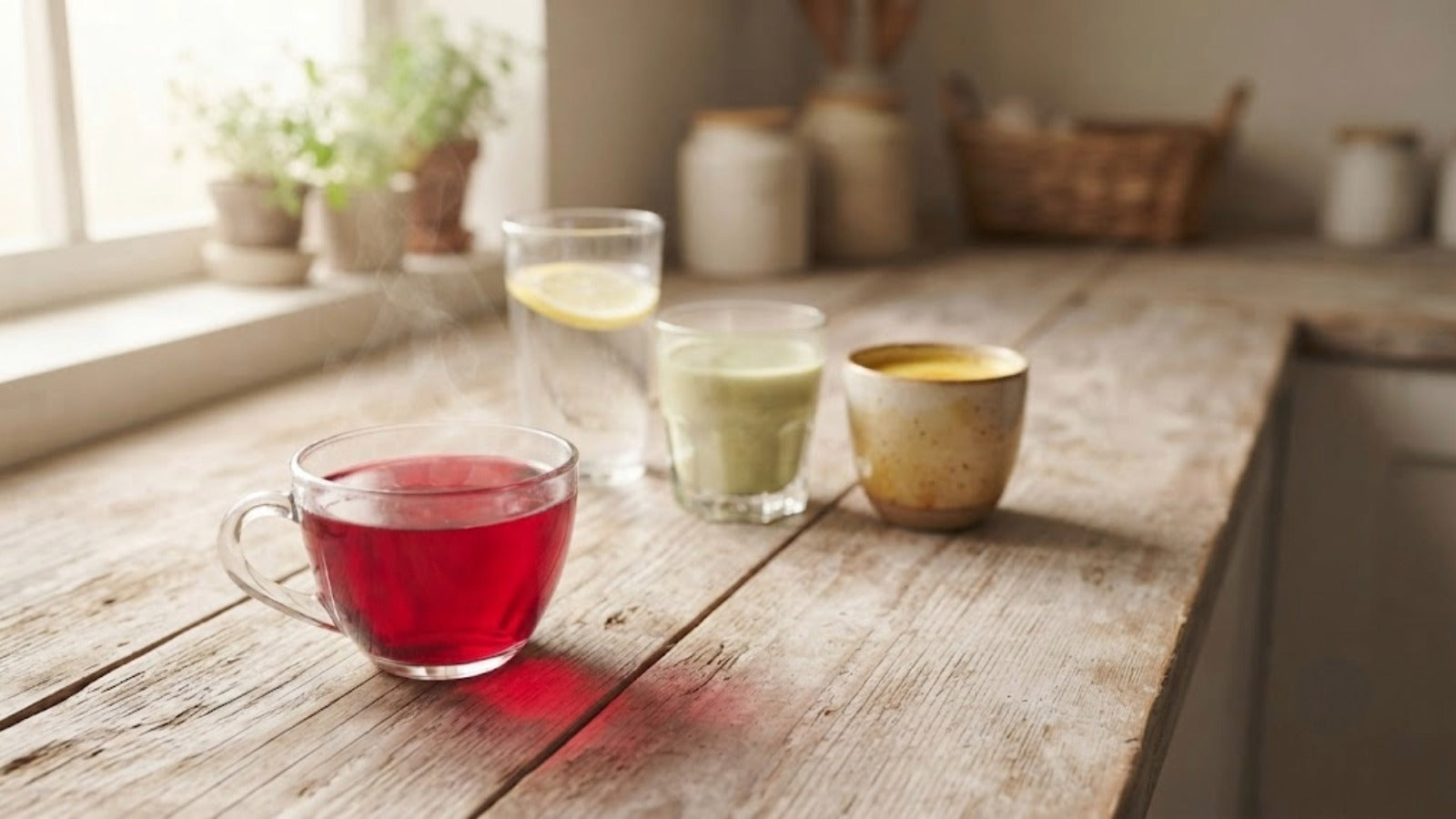
What Herbal Tea Is Good for Morning Energy? (Four to Know)

There is no single best herbal tea for morning energy, and that is not a dodge. Herbal tea is not one drink. The category covers a huge range, and the four directions people commonly take in the morning taste almost nothing like each other.
One is smooth and mild enough to drink every day without thinking about it. One is bright and citrus sharp. One is warm and spiced with real depth to it. One is delicate and floral. They are all good, and which one is right depends entirely on what you want the cup to do at seven in the morning. Herbal tea is only one of the morning drinks that give you energy without caffeine, but it is the one with the most range in it.
The Best Herbal Teas for Morning Energy
These are the four you will meet most often, and each one gives the morning a different character.

Green Rooibos: Smooth and Steady
Green rooibos is the mildest of the four and the easiest to drink. It brews pale, almost golden-green, and it is naturally low in tannins, which means it stays smooth instead of drying at the finish. There is no sharpness to it and nothing to brace against.
That makes it the most forgiving cup on the list. You can drink it before you have eaten, on a morning you are not in the mood for anything, and it will not ask anything of you. If you want a tea you can have every single day without needing to be in the right frame of mind for it, this is the direction.
Lemongrass: Bright and Clean
Lemongrass is the opposite: sharp, citrusy, and light. It brews clear and pale, and the flavor is crisp rather than warm, closer to a squeeze of lemon than to anything herbal.
It wakes the palate rather than the body, and it leaves the mouth feeling clean. On its own it is thin, so it works best when you want the cup to feel refreshing rather than substantial. If your idea of a good morning is a cold-water-on-the-face kind of start, this is the one that matches it.
Ginger Root: Warm and Activating
Ginger is the one with weight. It is aromatic and gently hot, and the heat builds the longer it steeps, so a short brew is mild and a long one is assertive.
This is the direction to take on a cold morning, or when you want the cup to actually do something rather than sit quietly in your hand. It is the most physical of the four, and the one people either love or find too much. Worth trying before you commit to it.
Elderflower & Rose: Floral and Uplifting
Elderflower and rose are the lightest, and they work mostly through aroma. The flavor is delicate, almost perfumed, and the cup is more about what you smell coming off the steam than what lands on the palate.
If you find most teas too strong first thing, this is the direction that solves it. It is soft without being sleepy, and it gives the morning a lift without any weight behind it. It also fades quickly, which some people like and some find frustrating.
Should You Drink a Single Herbal Tea or a Blend?
You may have noticed that each of those four has a gap in it. Lemongrass is thin. Ginger divides people. Elderflower fades. Green rooibos is smooth to the point of being plain. That is not a coincidence, and it is the reason most people end up drinking blends rather than single botanicals.

There is a real case for brewing them single, and if you are curious about herbal tea it is worth doing at least once. It is cheap, it is simple, and it is the fastest way to learn what each botanical actually tastes like rather than reading about it. You will find out very quickly whether you are a ginger person, and you will understand why lemongrass turns up in almost every morning blend ever made.
What you will also find is that most of them are one-dimensional. A single botanical gives you one note, held for the length of the cup. That is fine occasionally and it gets tiring fast, which is why almost nobody drinks straight lemongrass every morning for a month.
A blend is those same directions layered rather than chosen. Something bright at the front, something with body in the middle, something smooth underneath holding it together. Done well, the cup has a shape to it: it opens one way, develops, and finishes somewhere else. That structure is what makes a tea worth drinking every day instead of only when you are in the mood for it.
Done badly, of course, a blend is just several dull things in a bag. Most supermarket blends are exactly that, which is why a lot of people conclude they do not like herbal tea when what they actually do not like is a bad blend. The difference is not subtle once you have tasted both.
Purely's Two Morning Herbal Tea Blends
Both of these take the four directions and layer them rather than picking one.
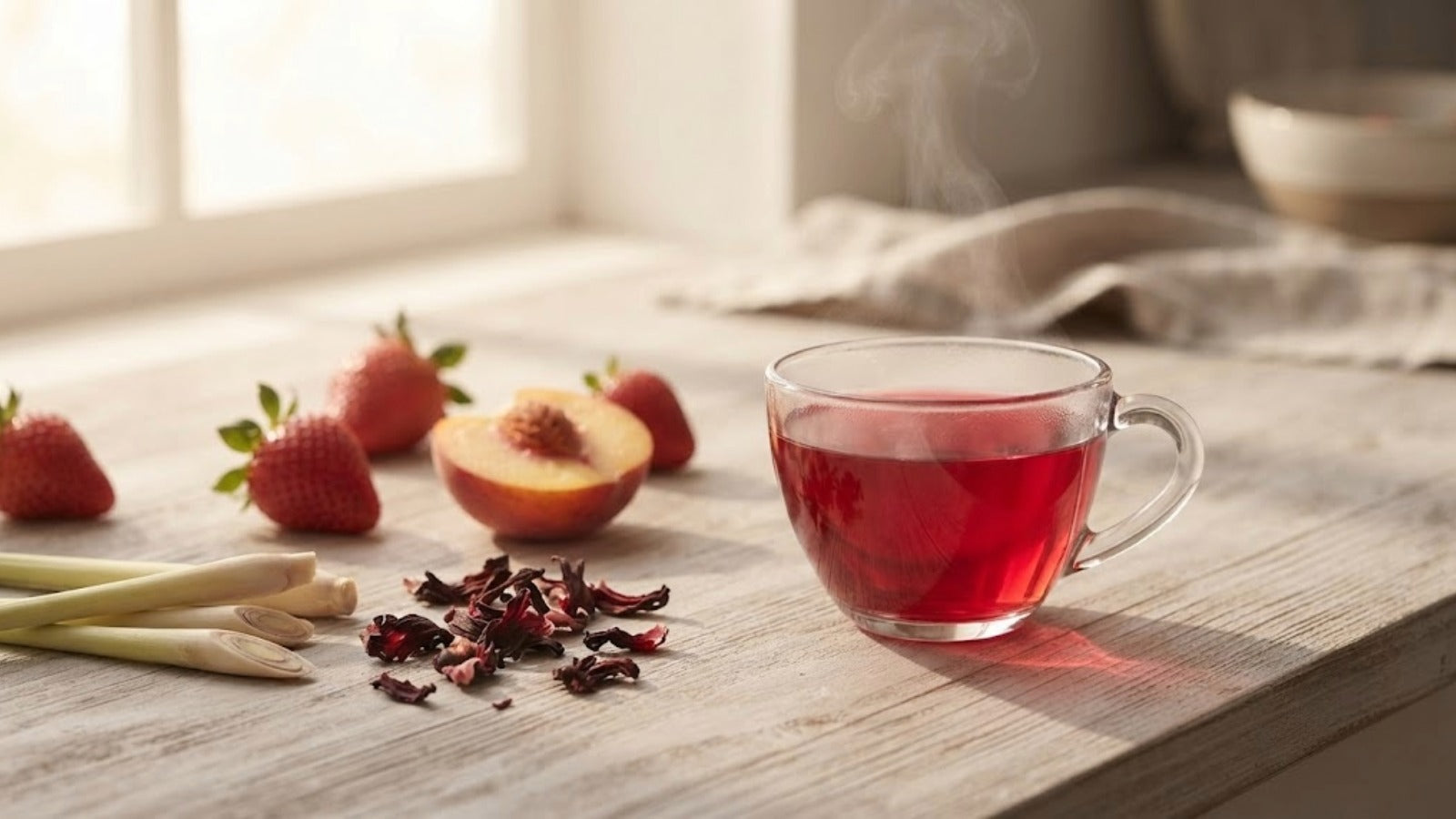
Sunrise Clarity™ is the orchard cup. Strawberry, peach, and apple over a ruby infusion, tasting like fruit picked at the moment it turned ripe. Lemongrass keeps it clean, hibiscus brings the color and just enough tartness to keep it honest, and elderflower rises out of the steam before you have taken a sip. Ginger warms the finish, and green rooibos holds the whole cup smooth underneath.
Radiant Awakening™ goes tropical and stays clean. Pineapple opens it with a sharp edge, mango sits in the middle as the ripe weight, and coconut gives the cup a body you can feel. Rose adds a floral lift, lemongrass runs a clean line straight through, and the same green rooibos base keeps it steady.
Some mornings want the orchard, other mornings want the tropics. The Morning Ritual Sampler carries both, so you can find out which one you are without having to decide first.
Choosing the Right Herbal Tea for Your Morning
There is no best herbal tea for morning energy, only the one that suits the way you want the morning to feel. Smooth if you want a cup, you never have to be in the mood for. Bright if you want the day to feel like a fresh start. Warm if you want the tea to do something. Floral if you find most cups too much, first thing.
Try a few. It is a cheap thing to experiment with and you will know within a week which direction is yours. Once you do, the rest takes care of itself and drinking tea in the morning stops being a question you are still answering and becomes something you simply do.
Editorial Disclaimer
This content is for informational and educational purposes only. It reflects general perspectives on herbal tea, daily rituals, and related lifestyle practices. It is not intended to provide medical advice, diagnose conditions, or recommend treatments. Always consult a qualified healthcare professional with any questions about wellness or health-related matters.