Why Morning Tea Is Fruit Tea

Nobody has to be taught to want fruit at breakfast. You would not eat a slice of chocolate cake at seven in the morning, and you would not want a bowl of berries after dinner instead of pudding. Nobody sat you down and explained this. Your appetite worked it out on its own, years ago, and it has been quietly running the schedule ever since.
Tea works the same way, and almost nobody says so. There is a reason a bright fruit blend feels right first thing and completely wrong at ten at night, and it has nothing to do with what the plants are doing to you. It is about what your palate wants at that hour, which is a question of how a morning blend is built long before it is a question of when you drink it.
Why Morning Tea Is Fruit?
Breakfast is different everywhere, but it leans the same way. Fruit, juice, something sharp and bright somewhere on the table, even when the rest of the plate is eggs and bacon. Nobody decided this. A palate first thing in the morning is fresh and unusually sensitive, and it wants very little sitting on it. Nobody wakes up wanting something heavy, and nobody has to explain why.

So a morning blend is built for a palate that has not been used yet. Everything sits high in the cup: fruit for the sweetness, hibiscus for the tartness that stops the sweetness turning flat, lemongrass so it stays crisp instead of turning muddy. Nothing heavy underneath it, nothing rich, nothing that lingers.
The whole thing is designed to be easy to drink on an empty stomach at an hour when you have no appetite for anything substantial. That is harder to get right than it sounds.
Why Evening Tea is Different from Morning Tea?
The morning case is easier to see once you look at the hours it is not competing with. By two in the afternoon the palate has been used. There is coffee sitting on it, and lunch, and what it wants is not more flavor but less of the flavor already there. Which is why mint works at that hour and very little else quite does. Peppermint and spearmint clear the mouth rather than filling it, and a cup built around them is closer to a reset than a treat.

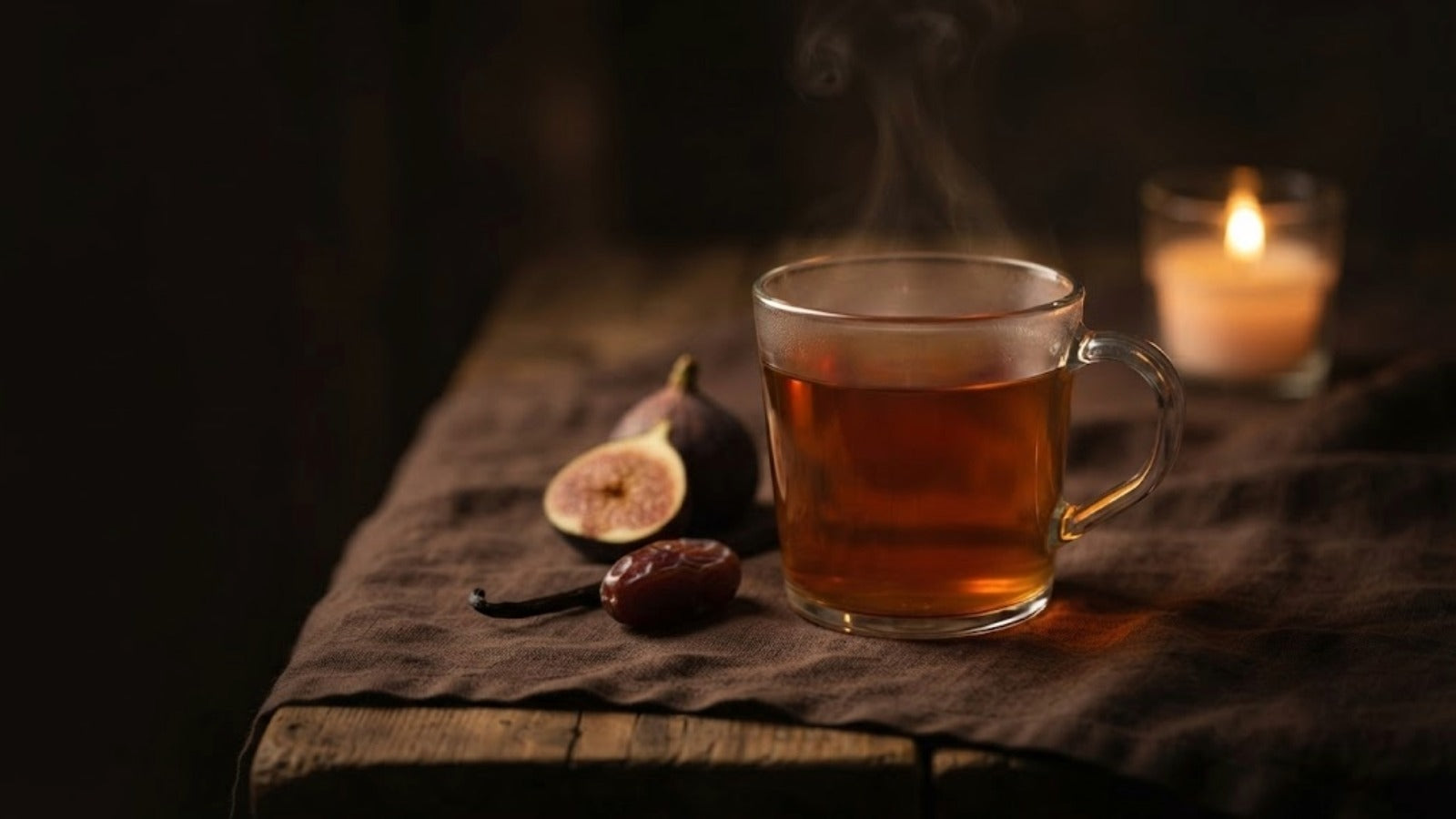
By evening it inverts completely. You have eaten, the day is finished, and what you want is the thing people have always wanted after dinner: something sweet, round, and rich. Fig, vanilla, honeyed botanicals, a cup with some weight to it. Nobody has ever had to justify why dessert exists at nine at night, and an evening blend that ignores that is working against you.
Line the three of them up and the morning cup stops looking like a marketing decision. Bright and light when the palate is fresh. Sharp and clearing when it is cluttered. Sweet and heavy when the day is done. The tea is not doing anything clever. It is following an appetite that was already there.
Does the Time of Day Really Change the Tea?
If any of this sounds like a story a tea company would tell, it is easy enough to check. Brew something rich and honeyed and sweet at six in the morning. Not a bad cup. A good one, the kind that would be perfect at nine at night.

It won't taste right. Not unpleasant and not badly made. Just wrong, in the same way pudding at breakfast is wrong. It is the same tea it was twelve hours ago. Nothing about the tea has changed. What changed is that you slept, and woke, and now want something else.
The Best Herbal Tea for Morning
So the morning cup wants very little from you. Bright, light, caffeine-free, and made with fruit that is actually fruit rather than a flavor sprayed on. Two blends, two directions.
Sunrise Clarity™ — Ripe strawberry, peach, and apple at the center, jammy and full. Hibiscus and elderflower add a soft floral lift; lemongrass keeps it clean. Underneath, ginger root and a thread of saffron give the cup a warm, golden finish, with green rooibos as a smooth, caffeine-free base.
Radiant Awakening™ — Pineapple and mango come in vivid and sun-sweet, then coconut softens the edges. Rose petals and hibiscus add a floral glow; lemongrass brings a citrus snap. Green rooibos holds a clean, light, caffeine-free base.
Morning Ritual Sampler — Berry or tropical is not a question anyone can answer for you at checkout. The sampler puts both in front of you, so the cup you keep is the one you chose across a few real mornings rather than in a single guess. Genuinely caffeine-free, and the simplest place to start.
When Should You Drink Herbal Tea?
None of this is a system you have to learn. It is one you have been following your whole life without noticing, every time you reached for something bright at breakfast and something sweeter after dinner.
The tea is only doing what your appetite already does. That is why the right cup at the right hour does not feel like a decision at all, and why the wrong one feels off before you can say what is wrong with it. Which is the quiet argument for drinking tea in the morning at all: not what it does for you, but that it is the right cup for your awakening.
Editorial Disclaimer
This content is for informational and educational purposes only. It reflects general perspectives on herbal tea, daily rituals, and related lifestyle practices. It is not intended to provide medical advice, diagnose conditions, or recommend treatments. Always consult a qualified healthcare professional with any questions about wellness or health related matters.