How to Build an Alcohol-Free Evening Ritual (Without Missing the Wine)

When people set aside their evening glass of wine, the thing they usually miss isn't the alcohol. It's the ritual, the pour, the pause, the clear signal that the day is done and it's time to rest. That's why most advice for cutting back falls flat: it hands you a random list of things to do instead, when what you actually need is a real routine to take the ritual's place. The good news is that building an alcohol-free evening ritual isn't about willpower. It's about rebuilding the habit around something else worth looking forward to. Here's how to create an evening ritual that genuinely sticks, anchored by a warm cup of tea. It's one part of a complete guide to herbal tea as an alcohol-free evening ritual.
Why the Ritual Matters More Than the Drink
There's a moment most evenings when something shifts. The laptop closes, the light outside changes, and your body registers that the day is mostly done. For a lot of people, that moment has long been marked by pouring a drink. But the drink was never really the point. The pour was a signal, a way of telling yourself the working day is over and you're allowed to slow down.

That's why simply removing the drink tends to leave a gap. The need it was filling, a clear marker between effort and rest, is still there. Willpower doesn't fill that gap, and neither does a scattershot list of activities you don't really care about. What fills it is a new ritual, something deliberate you do in that same moment, night after night, until it becomes the thing that signals the day is done.
So the goal isn't to white-knuckle your way through the evening without wine. It's to give that moment a new center, one that's warm, sensory, and worth looking forward to. Do that, and the ritual does the work for you.
Make a Warm Cup the Anchor of Your Evening
The best ritual has one clear centerpiece, a single deliberate act that everything else builds around. A warm cup of tea is unusually good for this, better than most alcohol-free options, because it comes with a built-in ceremony.

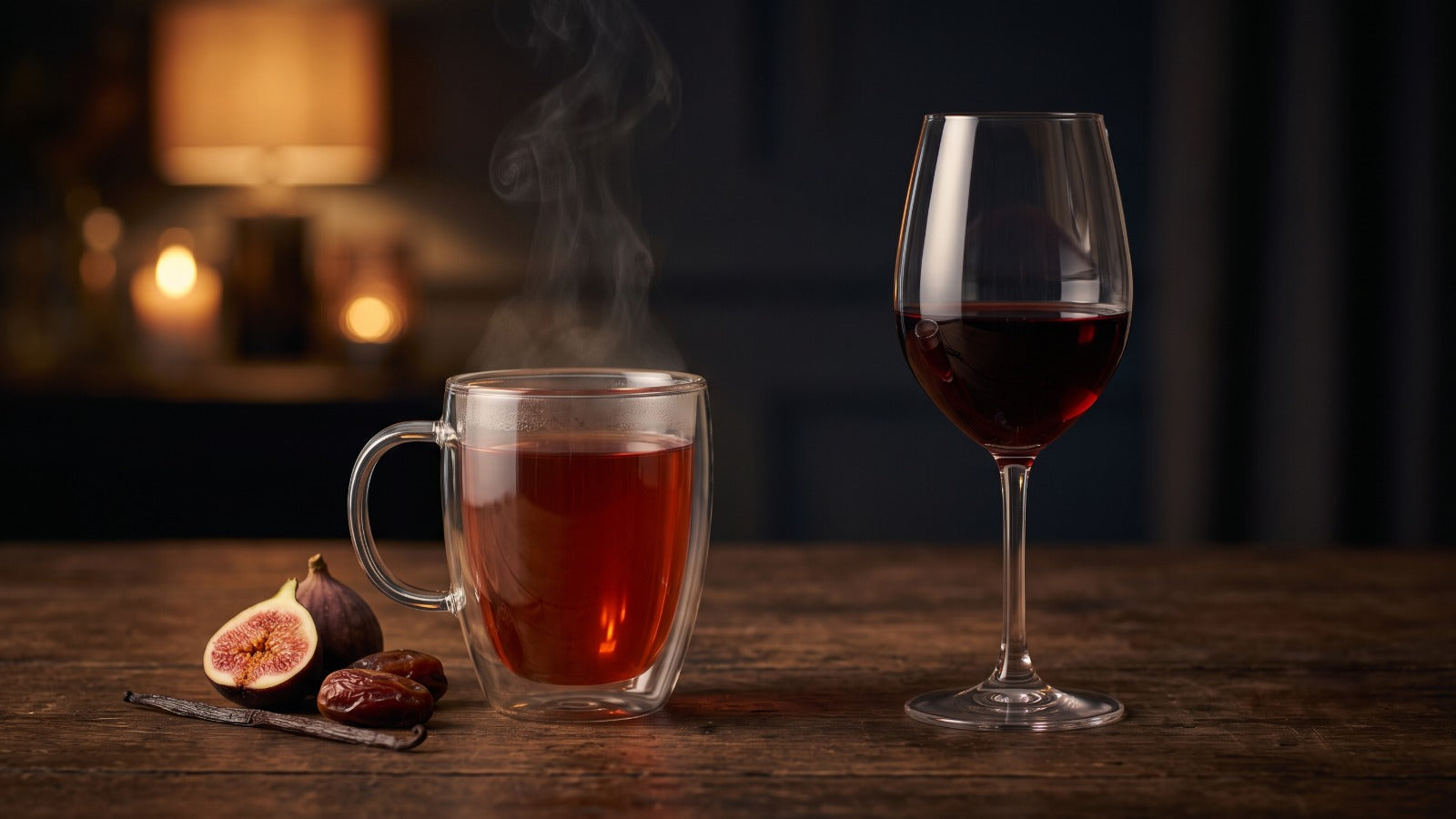
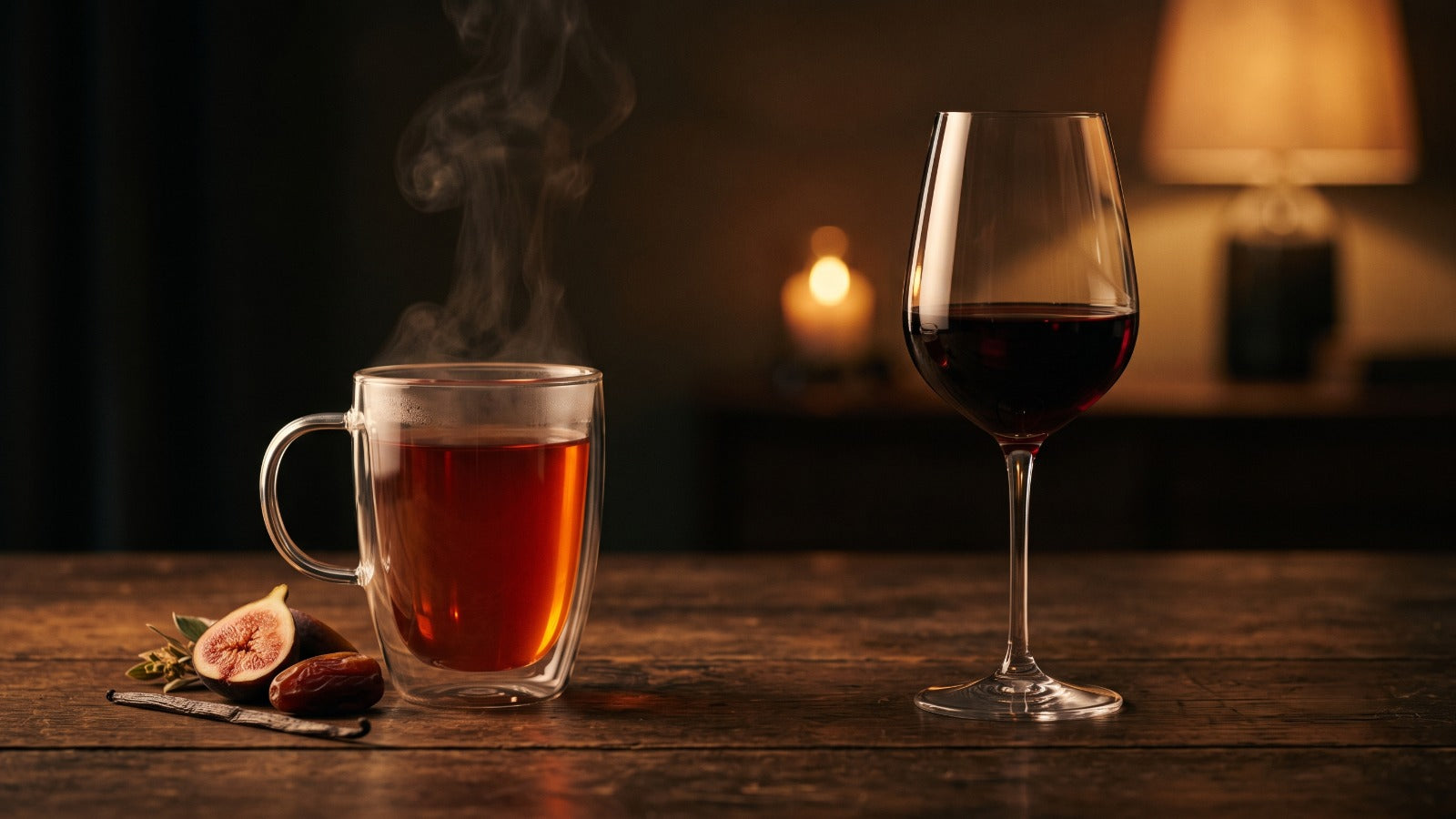
Think about everything involved in making it. You measure the loose botanicals. You heat the water and listen for the kettle. You watch the steam rise and the tea slowly darken as it steeps. You wrap both hands around a warm mug and breathe in the aroma before the first slow sip. That's not just pouring a drink, it's a sequence of small, deliberate actions, and performing them is itself the ritual. A cold drink poured from a bottle is over in seconds. A warm cup asks you to slow down, which is exactly what the moment calls for.
The Habit Mechanics That Make It Stick
A ritual sticks when it's built on a few simple habit principles rather than left to chance. Here's how to make yours hold.

Keep the ritual, change what's in the glass. You're not trying to remove a habit, which is hard. You're swapping its center, which is much easier. Keep the timing, the winding-down, the something-in-hand, and simply put a warm cup where the wine used to be. The shape of the ritual stays the same, so it feels familiar rather than like a loss.
Anchor it to one clear cue. Habits form through repetition tied to a trigger. Pick a single signal that starts your ritual every night, closing the laptop, changing into comfortable clothes, or simply reaching a set hour, and let that be the cue to put the kettle on. Do it at the same time, after the same trigger, and within a couple of weeks it becomes automatic.
Give it its own cup. This sounds small, but it matters. If you brew your evening tea in the same mug you use for morning coffee and emails, your mind keeps the work associations attached to it. A dedicated, beautiful cup you use only for this ritual tells you that this moment is different, that the day's work is behind you.
Design the spot. Give the ritual a home: a particular chair, the corner of the couch, a spot by the window. Add a lamp turned low and a blanket if you like. A consistent place signals wind-down the same way a consistent time does, and it makes the ritual easier to fall into.
Protect the moment. A ritual works best when it's given a little space. Set one small boundary to go with your cup, no screens for ten minutes, or a few pages of a book, or just sitting quietly. That boundary is what turns a drink into an event.
Make It Something You Look Forward To (Not a Sacrifice)
Here's the part most advice gets wrong: a ritual only lasts if it feels like a genuine pleasure, not a consolation prize. If your alcohol-free evening feels like something you're enduring, you won't keep it up. So the goal isn't to make do with less, it's to build a moment you actively look forward to.

That means making the cup good enough to enjoy on its own terms, choosing a blend with real character rather than something you're just tolerating. It means letting the ritual be an event, unhurried and a little indulgent, rather than a quick thing you rush through. The more it feels like a genuine treat, the more it becomes something you want rather than something you're making yourself do.
And it doesn't have to be all or nothing. This isn't about swearing off wine forever. Keep a bottle for the evenings that call for it, a dinner, a celebration, a night you simply want a glass. The point is to have a ritual you genuinely enjoy for all the other evenings, so that reaching for a warm cup feels like a choice you're happy to make, not a rule you're following.
A Simple Evening Ritual to Start With
If you want a place to begin, here's a simple version you can try tonight. When you reach your cue, whether that's closing the laptop or hitting a set hour, put the kettle on. Brew a warm, caffeine-free cup in a mug you keep just for this. Settle into your spot, dim the lights a little, and give yourself ten unhurried minutes with no screens, just the cup and the quiet. Repeat it nightly, and within a couple of weeks it becomes the moment your evening turns on.
For the cup at the center of it, Purely's evening blends are made for exactly this. Sacred Sanctuary™ is the brighter, fruit-forward option, built around fig, pear, and vanilla for a complex, gently sweet cup, the kind of thing a white or rosé drinker might reach for.
Moonlight Stillness™ is the deeper, fuller-bodied one, with date, vanilla, and cardamom over a rich red rooibos base, offering the velvety weight a red wine drinker tends to enjoy.
Both are caffeine-free, both are built entirely from whole botanicals, and both have enough depth and character to make the ritual feel like a genuine treat rather than a substitute.
The easiest way to start is to try both side by side with the Evening Ritual Sampler, which includes both blends for $19. Pick the one that fits the way you like to close the day, give the ritual a couple of weeks to settle in, and let the warm cup become the new signal that the day is done.
Let the Warm Cup Become the Signal
What makes this work in the long run is that a good herbal tea is worth slowing down for. Built from whole botanicals like fig, date, vanilla, and cardamom, a well-made evening blend has real depth and complexity, the kind of drink you can genuinely savor rather than just sip. That matters, because a ritual anchored on something you actually enjoy is a ritual you'll keep.
Make the warm cup the fixed point of your evening, and the rest of the routine has something to gather around. Night after night, the pour, the pause, and the quiet stop being things you have to remember and become the thing that tells you the day is done. That is the whole of it, not willpower, but a warmer signal worth returning to, and one small part of the wider practice of evening tea rituals.
Editorial Disclaimer
This content is for informational and educational purposes only. It reflects general perspectives on herbal tea, daily rituals, and related lifestyle practices. It is not intended to provide medical advice, diagnose conditions, or recommend treatments. Always consult a qualified healthcare professional with any questions about wellness or health-related matters.