Herbal Tea vs Wine: Which Is Better for Your Evening Wind-Down?

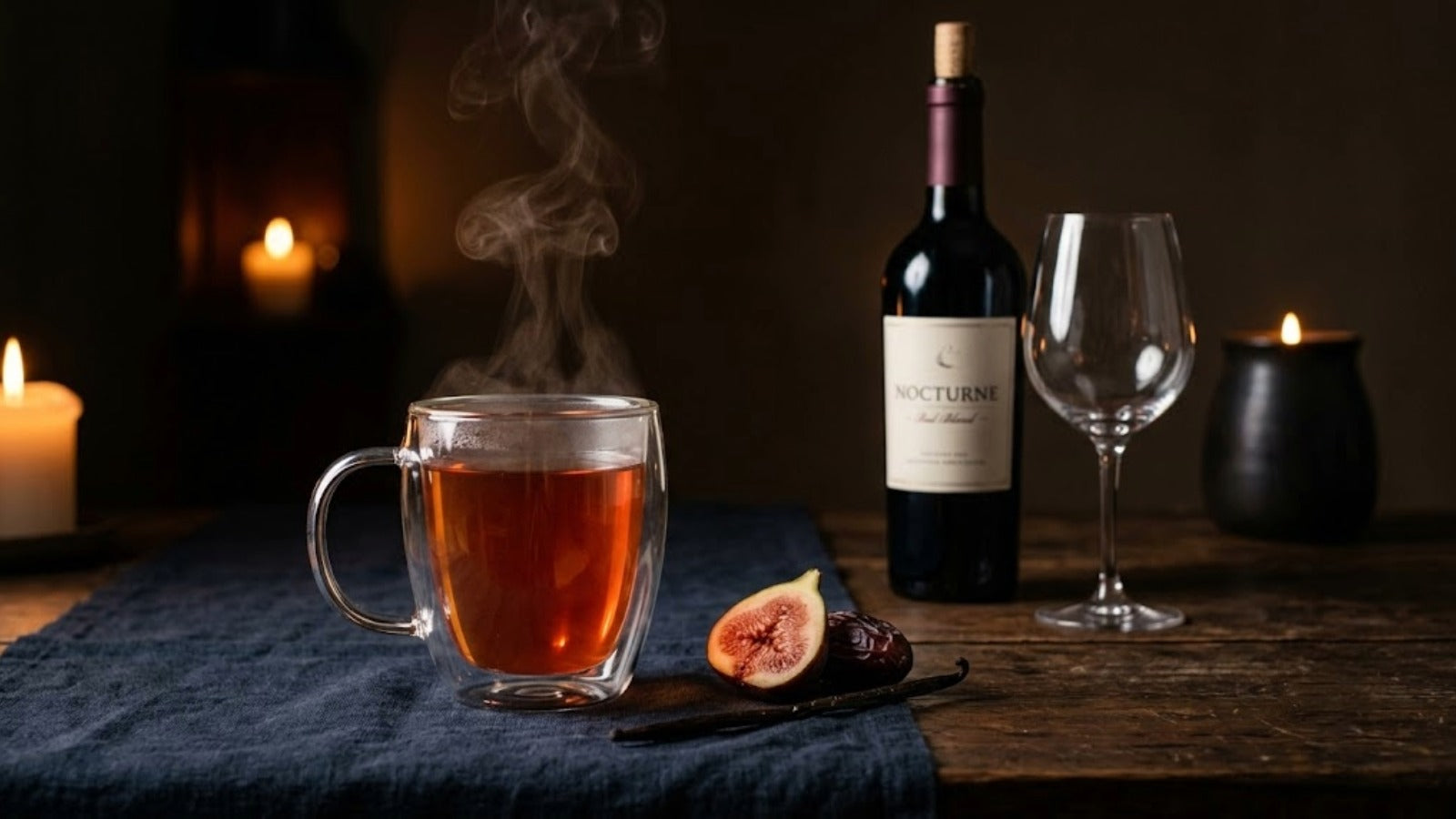
Wine and herbal tea are two of the most common ways to close an evening, and weighing one against the other, the useful answer is that neither wins. They are different pleasures, and the right one depends on the night you are having. Some evenings call for a glass of wine; others are better suited to a warm cup. This is a fair look at how the two compare and how to tell which fits the moment, one part of a complete guide to herbal tea as an alcohol-free evening ritual.
What Wine Does Well in the Evening
Wine has anchored the evening for centuries, and any fair comparison starts by saying why. The ritual is lovely: the uncorking, the pour, the particular glass, the first slow sip, a small ceremony that marks the day as done. It is complex, a good bottle carrying depth and character shaped by grape, region, and age, the kind of thing you notice and turn over. And it offers something tea cannot, a social, celebratory pull few drinks have, the shared bottle over dinner, the pairing that completes a meal, the pour that marks an occasion.

None of that is worth giving up on the nights it is what you want. Wine earns its place. The only real question is whether it is what every evening calls for, and that is where a second option becomes useful.
What Herbal Tea Does Well in the Evening
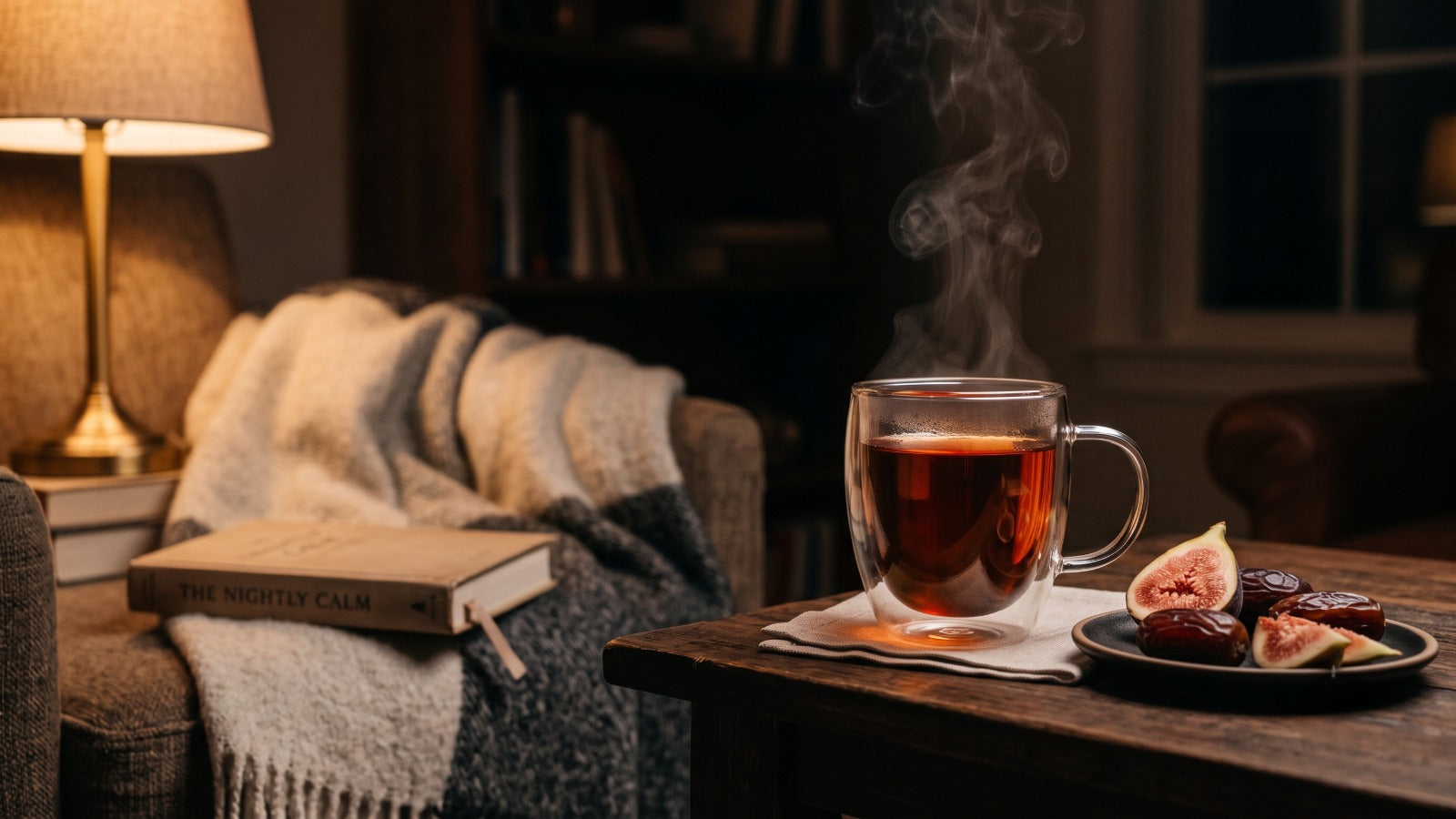
Tea has a ritual of its own, every bit as deliberate: the measure of loose botanicals, the sound of the kettle, the rise of steam, the warmth of a mug held in both hands. A well-made cup has real complexity too, whole fruits, flowers, roots, and spices layered into something worth slowing down for. And it offers two things wine cannot, a warmth that suits a quiet night in, and a next morning that feels exactly like any other.

There is range, too, a cup running bright one night and dessert-deep the next. None of this makes tea the better drink. It makes it the one built for the evenings wine was never meant for, which turn out to be most of them.
Herbal Tea or Wine: Which Fits the Night?
Neither wins, so the only question is which fits the evening in front of you, and it sorts cleanly.

Reach for wine when the night is made for it: a shared bottle over dinner, a meal you want to pair, a celebration, an evening with friends, or simply a night when a good glass is the specific thing you are after. Those are wine's evenings, and they are worth keeping.
Reach for a cup when you are winding down alone, when it is a work night and you would rather stay clear-headed, when you want warmth and a slow finish, or when you just do not feel like a drink. Those nights outnumber the celebrations by a wide margin, which is the whole reason to keep a good cup on hand.
Matching Your Wine to the Right Tea
If you have a trained palate for wine, the useful way to choose a tea isn't to look for one that tastes like your favorite bottle. It's to think about the structure you enjoy, the body, the mouthfeel, the finish, and find a tea built to deliver that same structure. Here's how the qualities wine lovers tend to favor map onto whole-botanical herbal blends.
| The structure you enjoy in wine | What that feels like on the palate | The herbal equivalent |
|---|---|---|
| Full-bodied reds (Cabernet, Malbec, Syrah) | Weight and depth, a velvety, rounded body that sits richly on the palate with a long, warming finish | A deep, full-bodied blend built on red rooibos with date, vanilla, and a touch of cardamom for that same velvety weight and dark, warming depth |
| Crisp whites and rosés (Sauvignon Blanc, Pinot Grigio, dry rosé) | Brightness and lift, a lighter body with fresh, complex fruit and a clean, elegant finish | A bright, fruit-forward blend of fig, pear, and vanilla, layered and complex without being heavy, with a clean, elegant close |
| Complexity and dryness above all | Layers to notice and turn over, a drink with structure and character rather than simple sweetness | Any whole-botanical blend steeped long and full, where real fruits, roots, and spices give the cup genuine depth rather than a flat, one-note sweetness |
The point isn't that these teas taste like wine, because they don't. It's that they're built to satisfy the same things a trained palate looks for: real body, genuine complexity, and a finish worth slowing down for. If you appreciate structure in a glass of wine, you'll recognize it in a well-made cup of tea.
When Herbal Tea Is Tonight's Choice
For the evenings a warm cup is the right call, Purely makes two evening blends built for it, both caffeine-free and both drawn entirely from whole botanicals with the depth to sip slowly.
Sacred Sanctuary™ runs brighter: ripe fig and soft pear folded into vanilla, jammy and rounded, with a clean fruit finish that never tips into sweetness. It answers the palate that reaches for a crisp white or rosé.
Moonlight Stillness™ goes deeper: the low, syrupy sweetness date gives up when it is dried down, vanilla smoothing it, a thread of cardamom lifting underneath, all carried on red rooibos with real weight on the tongue. This is the cup for a red drinker.
The easiest way in is the Evening Ritual Sampler, which carries both, so you can taste each a few nights running and keep the right one ready for the evenings you want a cup instead of a glass.
Two Drinks, Two Kinds of Night
The comparison was never a contest. Wine is right for the nights it is right for, and a warm cup is right for the many quiet ones in between, and keeping a good version of each is better than asking one to cover every evening. Pour the wine when the night calls for it. Brew the cup the rest of the time and let it take its place in the larger practice of drinking tea in evening rituals.
Editorial Disclaimer
This content is for informational and educational purposes only. It reflects general perspectives on herbal tea, daily rituals, and related lifestyle practices. It is not intended to provide medical advice, diagnose conditions, or recommend treatments. Always consult a qualified healthcare professional with any questions about wellness or health-related matters.