The Best Herbal Tea to Replace Your Evening Glass of Wine

The evening glass of wine was mostly never about the wine. It was the ritual, the pour and the pause that mark the end of the day, and on the nights you would rather skip the bottle that ritual is worth keeping. All that changes is what goes in the glass. The trick is picking a cup that fills the same role, and the surest way is to match it to the wine you already reach for. This is one part of a complete guide to herbal tea as an alcohol-free evening ritual.
Why a Glass of Wine Feels So Good at the End of the Day
Most of what the evening glass gives you was never the alcohol. It is the ritual, the pour and the particular glass and the first slow sip, a small ceremony that signals the working part of the day is over, and the depth of a grown-up drink worth tasting and turning over rather than swallowing.

So the swap is not about finding something that tastes like wine. It is about finding a cup that carries the same ritual and the same depth, and the surest way to land on one is to match it to the wine you already reach for. That is where the choosing starts.
What to Look for in a Wine Alternative
Most wine alternatives disappoint, and they do it two ways. The sugary juices and sodas feel like a step down, a child's drink standing in for a grown-up one. The non-alcoholic wines and mocktails chase an exact copy of the real thing and land as a slightly off imitation. Chasing the copy is the mistake.

Look for an equal instead of a copy. A cup worth sipping slowly needs real depth, which is where whole botanicals earn their place, since fig, date, carob, and vanilla give a cup body that a thin, one-note blend never has. It should be caffeine-free, because the point is to wind down. And it should be warm, the thing most alternatives overlook, since a warm cup asks you to slow down in a way a cold, fizzy glass never does.
The Best Herbal Teas to Replace Your Evening Wine, by What You're Craving
The right tea depends on the kind of wine you usually reach for. The goal isn't to match the taste, but to match the experience, the weight, the depth, and the character you enjoy in the glass.
If you love a crisp white or rosé, try Sacred Sanctuary
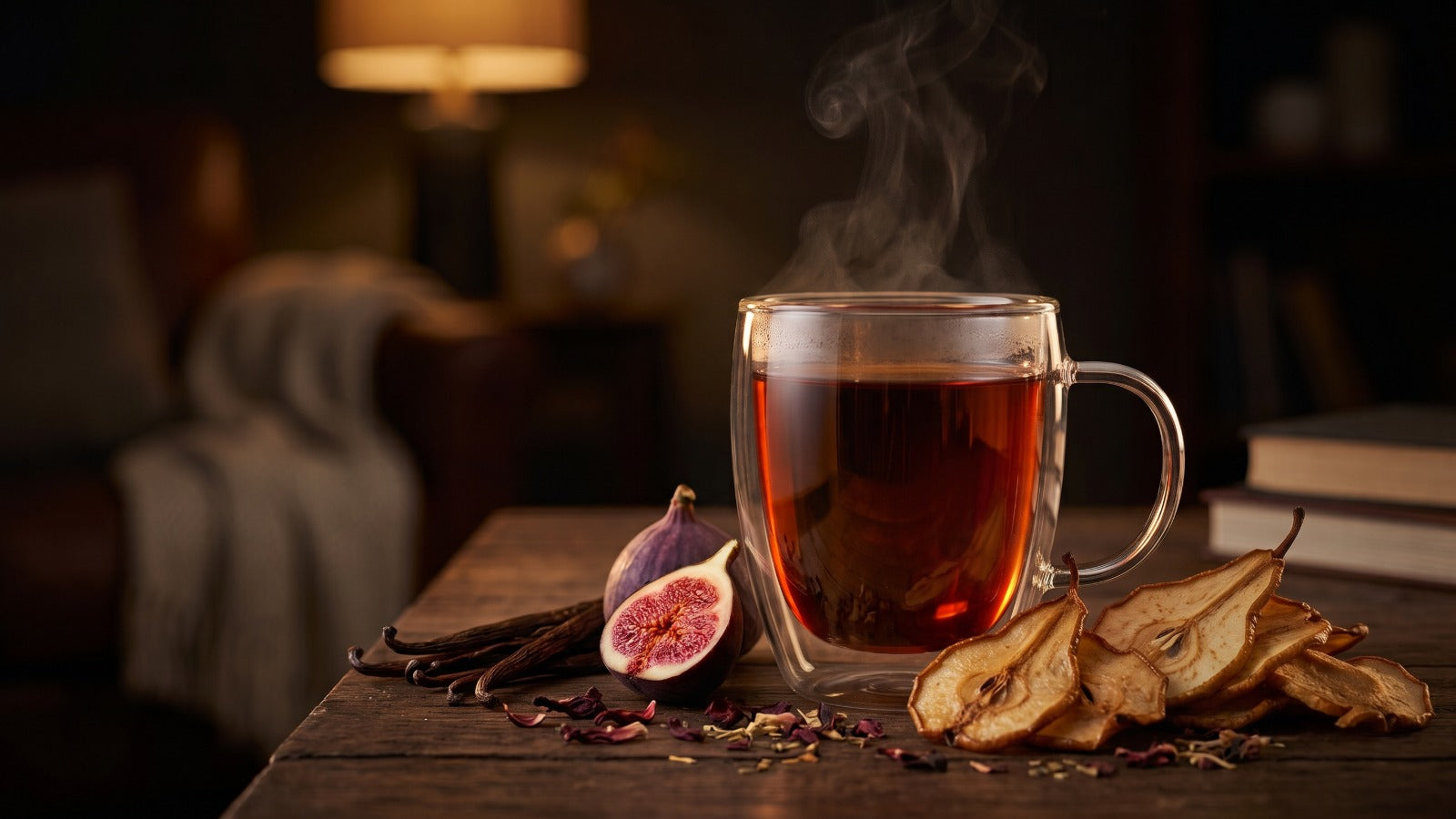
White and rosé drinkers usually want something brighter, a lighter drink with fresh, complex fruit and a clean finish. Sacred Sanctuary™ answers that with soft fig, mellow pear, and vanilla, giving the cup a bright, orchard-fruit character that stays elegant rather than sugary. It's fruit-forward and layered without being heavy, the kind of complex, refreshing cup that fills the same role a crisp glass of white does at the end of the day.
If you love a full-bodied red, try Moonlight Stillness
Red wine drinkers tend to want weight and depth, a drink with a velvety, full body that sits richly on the palate. Moonlight Stillness™ delivers that same sense of depth in a caffeine-free cup. Built on a base of red rooibos with date, vanilla, and a touch of cardamom, it brews dark, warm, and full-bodied, with a naturally deep, dessert-like richness. It isn't trying to taste like Cabernet. It's offering the same velvety weight and grown-up depth that makes a glass of red satisfying to sip slowly.
Both are caffeine-free and built entirely from whole botanicals, which is what gives each cup its complexity. And because the sweetness comes from real fruit and botanicals rather than added sugar, neither one drinks like a juice or a soda. They're grown-up cups, made to be sipped slowly.
The easiest way to find your evening cup is to try them side by side. Purely's Evening Ritual Sampler includes both blends, so you can see which one fits the way you like to close the day, whether you reach for something bright or something deep. It's a simple way to pour something sophisticated into the glass on the nights you'd rather skip the wine.
The Ritual: Pouring a Cup Instead of a Glass
The reason a nightly glass of wine sticks isn't just the drink. It's the ritual around it, and that's exactly what you can keep. Making a cup of tea has its own quiet theater, one that's every bit as deliberate as uncorking a bottle.

Instead of the pour, there's the measure of loose botanicals into the cup. Instead of the cork, there's the sound of the kettle and the first rise of steam. You watch the water darken as the tea steeps, wrap both hands around a warm mug, and breathe in the aroma before the first sip. It's a slow, tactile sequence, and performing it does the same thing the wine ritual did: it draws a clear line between the day and the evening, and it makes the moment feel intentional.
That's the real key to the swap. You're not giving up your evening ritual; you're giving it a new center. Over time, the cup becomes its own kind of signal, the thing you reach for when the day is done, and you want to slow down. It's part of a wider practice of evening tea rituals, the warm, quiet close that lets the day finally settle.
Choosing Your Evening Cup
If a warm cup sounds like the right way to reclaim your evening ritual, the two blends above are the place to begin, Sacred Sanctuary if you lean bright and fruit-forward, Moonlight Stillness if you want something deeper and fuller-bodied. Once you've found your cup, the last step is to build it into an evening ritual that sticks.
Editorial Disclaimer
This content is for informational and educational purposes only. It reflects general perspectives on herbal tea, daily rituals, and related lifestyle practices. It is not intended to provide medical advice, diagnose conditions, or recommend treatments. Always consult a qualified healthcare professional with any questions about wellness or health-related matters.