Is Herbal Tea a Good Alternative to Alcohol?

If you are wondering whether herbal tea can stand in for your usual evening drink, the answer is yes, but for a different reason than most articles give. They tell you tea is a good alternative because it is better for you. The more useful truth is that it fills the same role the drink played: the ritual, the warmth, the wind-down, and the pleasure of something worth savoring at the end of the day. This is one part of a complete guide to herbal tea as an alcohol-free evening ritual.
The Short Answer: Yes, for the Ritual
Here's the honest version of the answer. If you think about what your evening drink actually gives you, most of it isn't the alcohol itself. It's the ritual of pouring something at the end of the day, the warmth of a drink in your hand as you finally sit down, and the quiet signal that the working part of the day is over. For a lot of people, that ritual was the real point all along.

Herbal tea steps into that role well. It gives you the same deliberate ritual, the same warmth, the same something-in-hand while you unwind, and the same grown-up pleasure of a drink worth savoring. So when people ask whether tea is a good alternative to alcohol, the honest answer is: for the ritual and the experience, yes, genuinely. That's the part tea can actually replace, and for most people, most evenings, it's the part that mattered.
What Makes Herbal Tea Work as an Alcohol Alternative
A few specific things make herbal tea genuinely suited to the role, rather than a poor stand-in.

It Carries a Real Ritual
Making tea has its own small ceremony: the measure of botanicals, the kettle, the rising steam, the warm mug held in both hands. That deliberate sequence gives you something to do in the moment the drink used to fill, which is a large part of why it works.
It's Caffeine-Free
A true herbal blend is made from botanicals rather than the tea plant, so it's naturally caffeine-free and fits the evening without adding a stimulant when you're trying to wind down.
It Has Real Complexity
This is where people expect a downgrade and don't get one. A well-made herbal tea built from whole fruits, flowers, roots, and spices has genuine depth and character, a drink you can savor slowly rather than a plain cup you drink out of duty.
It's Warm
Most alcohol alternatives are cold, fizzy drinks. A warm cup asks you to slow down in a way a cold glass doesn't, which suits the quiet end of the day and makes it feel like a genuine ritual rather than just a beverage.
There's Endless Variety
Where a single drink is one flavor, herbal tea comes in dozens of directions, from bright and fruit-forward to deep and dessert-like, so you can match the cup to the night and keep the ritual interesting over time.
What Tea Isn't
It isn't alcohol. A cup won't give you the effects a drink does, and if that is specifically what you are after on a given night, tea will not stand in for it. It also isn't an imitation of wine or a cocktail. The teas that promise to taste just like your favorite drink tend to disappoint, because tea is its own thing with its own flavors, not a copy of anything.

None of that makes it a worse choice, only a different one. Go in expecting tea to be alcohol or to taste like a particular drink and you will be let down. Come to it as what it is, a warm cup that fills the same evening moment, and it holds up. Knowing where the line falls is exactly what makes it work as an alternative.
Which Alcohol Does Tea Replace Best?
Tea doesn't fit every drinking occasion equally, and it helps to know where it shines. It's at its best as a stand-in for the warm, sophisticated, wind-down kinds of drinking, the evening glass of wine, the after-dinner nightcap, the quiet drink you have to mark the end of the day. Those moments are mostly about ritual and warmth, which is exactly what tea offers.

It's a less natural fit for a cold, casual, social beer on a hot afternoon, where something cold and fizzy like a sparkling water or a non-alcoholic option fits better. That's worth being honest about. But for the evening wind-down, the moment most people are actually trying to change, a warm cup is one of the best alternatives there is.
How to Try Herbal Tea Instead of Alcohol
The way to find out is a few evenings with a blend actually built for the hour, caffeine-free and made from real botanicals, with enough depth to sip slowly rather than an afterthought poured to fill the glass.
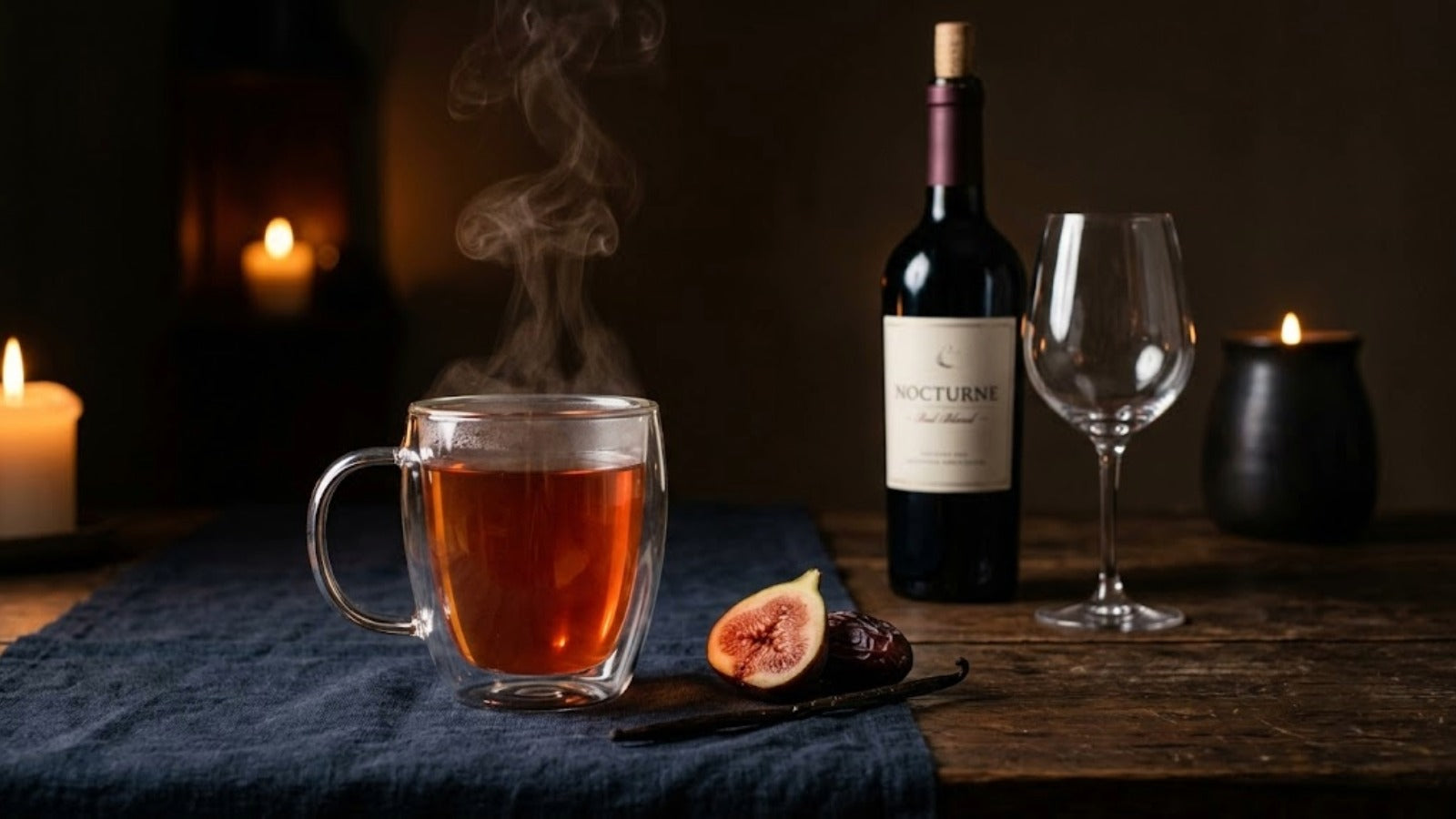
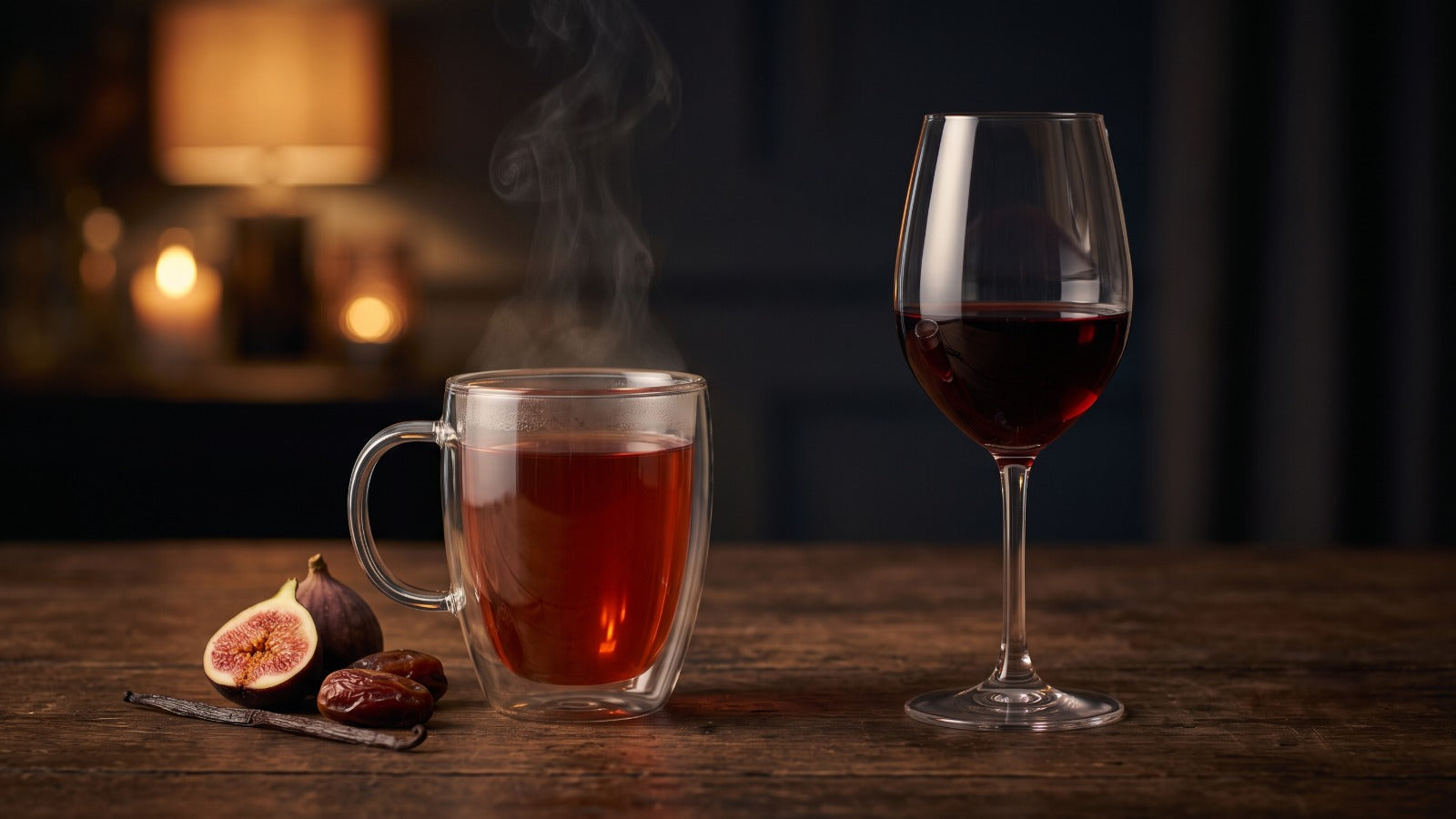
Sacred Sanctuary™ runs brighter: ripe fig and soft pear folded into vanilla, jammy and rounded, sweet without weight. It fills the glass a white or rosé drinker reaches for, the lighter, more open end of the evening.
Moonlight Stillness™ goes deeper: honeyed date and vanilla with a thread of warm cardamom over red rooibos, velvety and slow, a cup with real weight to it. This suits a red drinker, the richer, more enclosed end of the night.
Both are caffeine-free and built entirely from whole botanicals. The easiest way in is the Evening Ritual Sampler, which carries both, so you can pour each a few nights running and settle on whichever your evenings want.
What It Comes Down To
Tea is not a replacement for every drink or every occasion, and it was never going to be. What it replaces well is the specific one most people are actually trying to change: the warm, slow, end-of-day glass that was mostly ritual anyway. For that evening, a cup gives you the pour, the warmth, and the line between the day's work and its rest, with nothing in it working against the hour, part of the larger role a warm cup plays in the evening.
Editorial Disclaimer
This content is for informational and educational purposes only. It reflects general perspectives on herbal tea, daily rituals, and related lifestyle practices. It is not intended to provide medical advice, diagnose conditions, or recommend treatments. Always consult a qualified healthcare professional with any questions about wellness or health-related matters.