Herbal Tea as an Alcohol-Free Evening Ritual: A Complete Guide

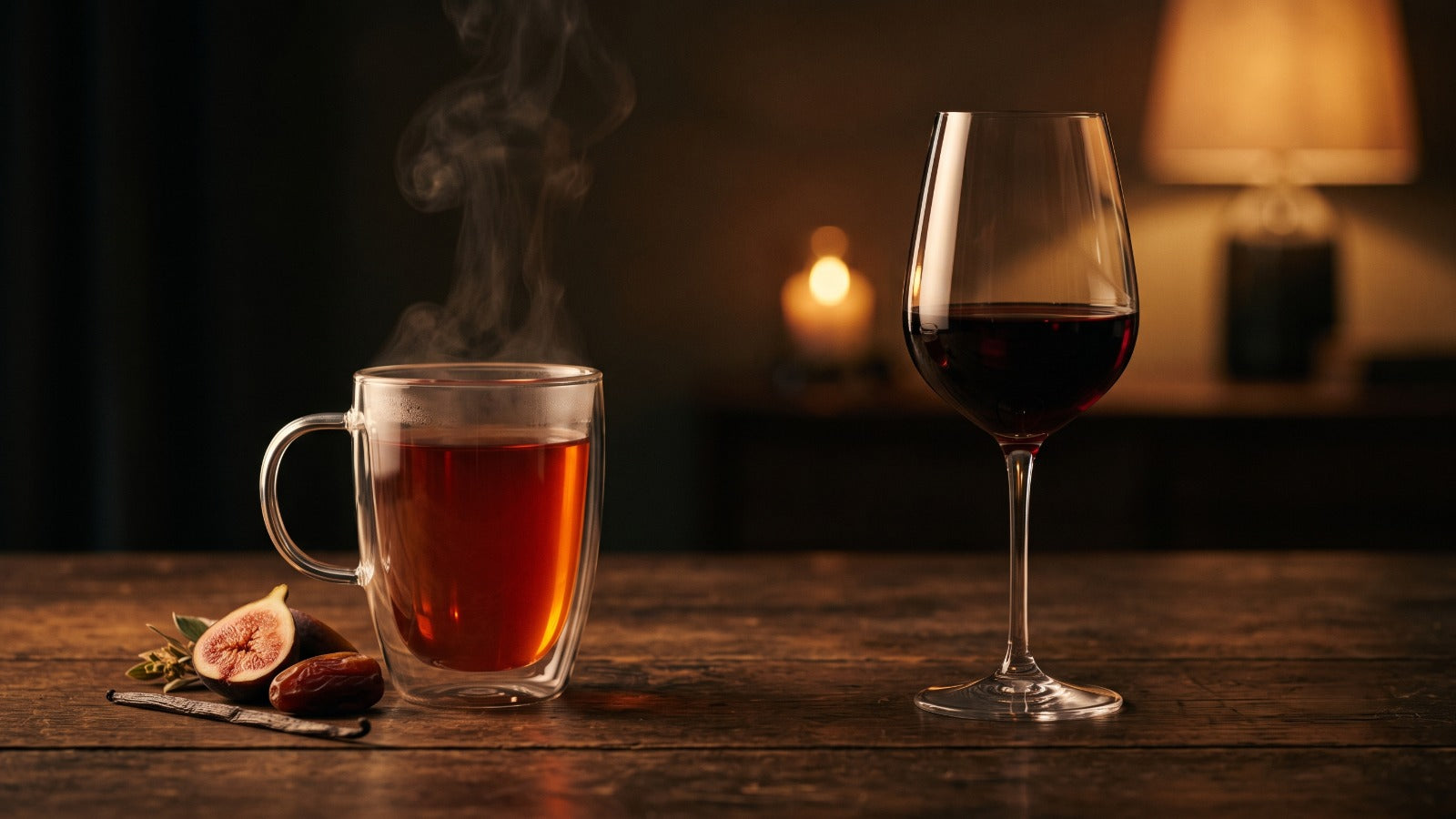
The evening glass of wine has almost nothing to do with the alcohol. It is the pour at the end of the day, the warmth of something in your hand as you sit down, the signal that the working hours are behind you. The wine is the vehicle. The ritual is the point. Once you see that, replacing the glass stops being about giving something up and becomes a question of what goes in the cup instead. It is one part of a larger practice, why tea belongs to the evening.
What Your Evening Drink Was Actually For
The ritual the intro pointed at is not a single thing. It is a few and naming them is what makes the swap obvious. The pour and the first slow sip are a small ceremony. The depth of a grown-up drink is something to taste and turn over. And the glass itself marks the moment as one you gave yourself. None of those is the alcohol, and that is the whole opening.

So the swap is not about finding something wine-flavored. It is about finding something that can carry those same parts, and a warm, well-made cup does, which is where sugary mocktails and imitation wines fall short. The fuller case for what a cup can stand in for, and what it cannot, is in whether herbal tea is a good alternative to alcohol.
Can Tea Really Do the Job?
The skepticism is earned. Plenty of drinks have promised to replace wine and landed as a compromise, so it is worth being plain: whether a cup works depends on what you are after on a given night.

Want the ritual, the warmth, and something with depth to slow down with, and a good cup fills the role more completely than most people expect. Want the effects of alcohol or the taste of a particular bottle, and that is a different night, one to keep wine for. Which of the two you are after decides your evening, and the full case is laid out in whether herbal tea can really replace your evening wine.
Tea or Wine? It Depends on the Night
Wine earns its place on the nights it is made for: a shared bottle over dinner, a meal you want to pair, a celebration, an evening with people. Those are wine's evenings and they are worth keeping. But they are far outnumbered by the quiet nights in between, the work nights, the solo wind-downs, the evenings you would rather stay clear-headed or simply do not feel like a drink.

Those quiet nights are the majority, and they are where a warm cup does its best work. So the choice was never wine versus tea. It is matching the drink to the evening in front of you, and keeping a good option for each. For the full side-by-side, night to night, it is worth reading the comparison of herbal tea versus wine for your evening wind-down.
Matching the Cup to the Wine You Love
The trick to choosing a tea is not looking for one that tastes like your usual bottle. A trained wine palate was never loyal to a flavor. It is loyal to structure, the body, the weight, the finish worth slowing down for, and that is the thing to match. Find a cup built to deliver the feel you reach for rather than the taste, and the swap works where a flavor-match would have disappointed.

Once you match by structure the choices sort themselves, and they sort differently for a red drinker than for someone who reaches for crisp whites. Which cup answers which palate, and how to think about the mapping across styles, is the full breakdown in how to choose the best herbal tea to replace your evening glass of wine.
Building a Ritual That Actually Sticks
Knowing a cup can fill the role is one thing. Keeping it is another, and this is where cutting back usually falls apart, because it leans on willpower. The move that works is not removal at all. You are not taking a habit away, which is hard. You are swapping its center, which is easy: keep the timing, keep the winding-down, keep the something-in-hand, and put a warm cup where the wine used to be, so the evening keeps its shape instead of feeling like a loss.

From there a few small things make it hold, and the one that matters most is that the cup is good enough to look forward to rather than a sacrifice you endure. The full method, the habit mechanics and a ritual you can start tonight, is in how to build an alcohol-free evening ritual that lasts.
The Two Evening Blends to Start With
For the cup at the center of the ritual, Purely's two evening blends are built for this exact moment, and each is matched to the wine you tend to reach for. Both are caffeine-free and built entirely from whole botanicals.
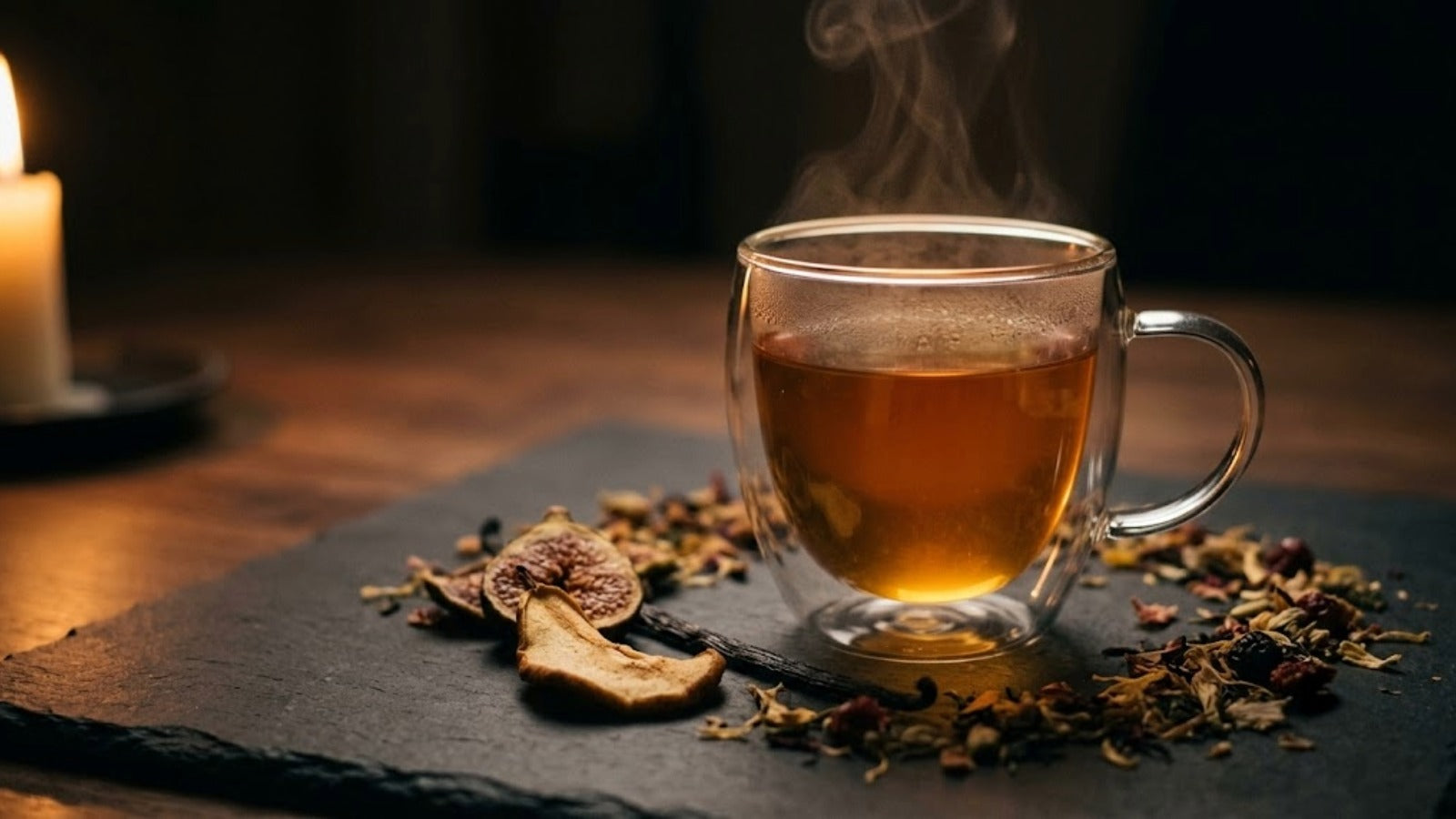
Sacred Sanctuary™ runs brighter: ripe fig and soft pear folded into vanilla, jammy and rounded, with a clean fruit finish that never tips into sweetness. It fills the glass a white or rosé drinker reaches for, the lighter, more open end of the evening.
Moonlight Stillness™ goes deeper: the low, syrupy sweetness date gives up when it is dried down, vanilla smoothing it, a thread of cardamom lifting underneath, all carried on a rich red rooibos base with real weight on the tongue. This is the cup for a red drinker, the richer, more enclosed end of the night.
The easiest way to decide is the Evening Ritual Sampler, which carries both blends, so you can taste each a few nights running and settle on the way you like to close the day.
The Ritual Was Always the Point
Replacing the evening glass was never about giving something up. The alcohol was the smallest part of what the glass was doing, and everything else it did, the pour, the warmth, the pause that closes the day, a warm cup does just as well. Keep the wine for the nights that call for it. Let a cup hold the quiet ones, which are most of them, and the evening loses nothing in the trade.
Editorial Disclaimer
This content is for informational and educational purposes only. It reflects general perspectives on herbal tea, daily rituals, and related lifestyle practices. It is not intended to provide medical advice, diagnose conditions, or recommend treatments. Always consult a qualified healthcare professional with any questions about wellness or health-related matters.