Best Herbal Tea Before Bed (What Actually Helps You Unwind)

The best herbal tea before bed isn't the one that promises to put you to sleep. It's the one you'll actually reach for night after night, a warm, caffeine-free cup that helps you step out of the pace of the day and settle into something quieter.
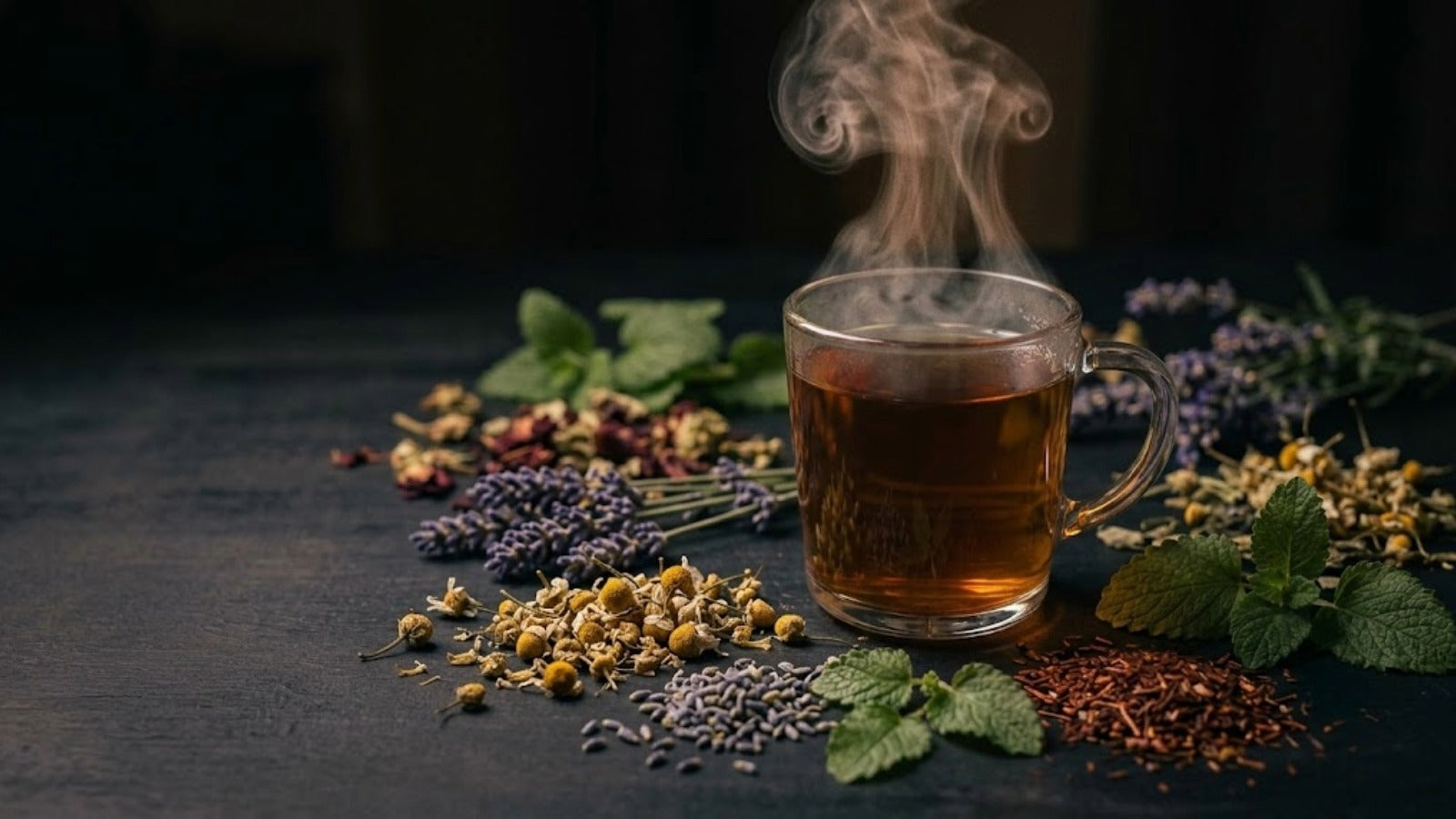
Chamomile, lavender, lemon balm, rooibos, and passionflower are among the most commonly chosen for exactly this, and each leans a slightly different way. Some feel light and familiar. Others are more aromatic or gently warming. The difference is subtle, but it's what decides which cup fits which kind of night. This is one part of a complete guide to herbal tea before bed.
What Makes an Herbal Tea Good Before Bed
Not every tea works well at the end of the day. The best herbal teas before bed share a few simple qualities that make them easy to return to night after night.
First, they are naturally caffeine-free. This removes the risk of stimulation and keeps the experience soft and steady, which is usually the real concern behind the question of whether you should drink herbal tea before bed at all.

Second, they have a gentle flavor profile. Nothing too sharp or bright. The best evening teas feel smooth, rounded, and easy to drink without effort.
Third, they engage the senses in a quiet way. Warmth and a slower pace of drinking help you step out of the day, and subtle aroma deepens it, turning the cup into a softer, more settled environment rather than just a drink. Together, temperature, flavor, and scent are what make a tea feel like part of the evening rather than an afterthought to it.
Best Herbal Teas Before Bed
The teas below are some of the most widely used for evening. Each one leans in a slightly different direction, which makes the choice less about what is "best" and more about what fits the kind of night you want.

Chamomile — best for gentle, familiar calm
Chamomile has a soft, slightly sweet floral profile with a light, calming aroma. It is one of the most widely used herbal teas for evening, with a reputation as an easy, everyday cup to wind down with. If you want something effortless and consistent, this is usually the place to start.
Lavender — best for a more noticeable shift into a calm evening
Lavender has a more pronounced floral profile with a stronger, more immersive aroma. It stands out more than most evening teas, which makes it a better choice when you want a clearer break from the day and a more defined shift into a calmer state.
Lemon balm — best for a light, clean, and subtle unwind
Lemon balm has a light citrus profile with a clean, subtle aroma that stays in the background. It feels fresh without being stimulating, making it a good option if you want something calming that remains soft and unobtrusive.
Red rooibos — best for smooth, warm, and grounding comfort
Rooibos has a smooth, rounded flavor with a naturally warm, slightly sweet profile and a gentle, comforting aroma. It feels fuller than most herbal teas, making it well suited for evenings when you want something more grounding. It also works well as a base for blends with deeper notes like vanilla.
Passionflower — best for quieting a busy or restless mind
Passionflower has a mild, slightly earthy profile with a soft, neutral aroma. It is less distinctive in flavor, but well suited for evenings when your mind feels active and you want something that helps you settle into a calmer, quieter state.
You do not need to try all of them. Most people settle into one or two that feel right and return to them consistently, and that familiarity is part of what makes the experience work. Once you have found your cup, the question shifts from what you are drinking to why a warm, caffeine-free tea helps you unwind in the first place.
Why These Teas Help You Unwind
Once you have a tea that feels right, the effect becomes easier to notice, though it helps to know what you're noticing. Herbal tea doesn't work through intensity. It works through the experience itself: the warmth of the cup, the soft flavor and subtle aroma, and the few unhurried minutes it takes to drink.

That slower pace is most of the point, though what's happening underneath it is more specific than it feels. There's a reason a caffeine-free cup doesn't work against the wind-down your evening is already moving toward, and a reason the same tea lands differently depending on when and where you drink it. That's covered in what happens when you drink herbal tea before bed.
How to Choose the Right Tea for You
You don't have to sample all five to find your cup. The easiest way to narrow it down is to match the tea to the kind of night you're having rather than to a list of qualities.

If your mind is busy and you want something light and unobtrusive, reach for lemon balm or chamomile. If you want a clearer, more defined break from the day, lavender's stronger aroma makes that shift more noticeable. And if you're after warmth and comfort more than anything, a rounded, naturally sweet cup like rooibos tends to feel the most grounding. None of these is a rule, just a starting point that saves you from choosing blind.
Two Evening Blends Made Like Dessert
Everything above is about single herbs, and there's a lot to be said for a simple cup. But a blend can do something a single herb can't: bring warmth, sweetness, and depth into one balanced cup that feels less like tea and more like a warm dessert to close the night. Purely makes two of them.
If you're reaching for something sweet and fruit-forward, Sacred Sanctuary™ is the closest thing to a warm fruit dessert in a mug. Ripe fig and mellow pear give it a soft, jammy sweetness, real vanilla adds a creamy, dessert-like roundness, and carob and marshmallow root bring a velvety weight that makes the cup feel indulgent.
If the craving is for something richer, Moonlight Stillness™ is the pick for nights when only something deep and dessert-like will do. Date gives it a natural caramel-like warmth, real vanilla lends a smooth, creamy sweetness, and a whisper of cardamom adds the kind of warm, baked-spice aroma you'd find in an actual dessert.
Both are caffeine-free, both are built entirely from whole botanicals, and both have enough depth and character to sip slowly and actually savor. The easiest way to find yours is to try them side by side with the Evening Ritual Sampler, a low-commitment way to see which one becomes the cup you reach for when the day is done.
A Simple Way to Use Herbal Tea Before Bed
Once you have a tea you return to, the how matters less than the consistency. Brew it about 20 to 30 minutes before you plan to sleep, use a small scoop, let it steep a few minutes, and sit with it somewhere other than where you spent the day.
That pause is really the whole of it. The tea gives the evening somewhere to turn, and the more room you give that moment, the more it becomes a genuine close to the day rather than the last thing you drink. It's the before-bed edge of a broader practice of evening tea rituals, the warm, quiet cup that has marked the end of the day for centuries.
Editorial Disclaimer
This content is for informational and educational purposes only. It reflects general perspectives on herbal tea, daily rituals, and related lifestyle practices. It is not intended to provide medical advice, diagnose conditions, or recommend treatments. Always consult a qualified healthcare professional with any questions about wellness or health-related matters.