What Happens When You Drink Herbal Tea Before Bed?

When you drink herbal tea before bed, the effect is usually subtle but noticeable. Unlike black, green, or white tea, most herbal teas are naturally caffeine-free, so there's no stimulation working against the wind-down your evening is already moving toward. Instead of adding anything, the cup simply leaves that transition undisturbed.
This doesn't mean herbal tea suddenly makes you sleepy. It's the combination of warmth, the absence of caffeine, and a quiet moment in your evening that creates the conditions to settle, gently, and without force.
What follows is a clear look at what actually happens when you drink herbal tea before bed, and what influences how noticeable the effect feels. It's one part of a complete guide to herbal tea before bed.
What Happens When You Drink Herbal Tea Before Bed
The shift is gentle and happens on a few levels at once, less a single effect than a handful of small changes that add up to an easier wind-down. Here's what tends to happen.

You avoid adding caffeine stimulation
Because herbal tea is typically caffeine-free, it doesn't block adenosine, the chemical that builds up throughout the day and signals tiredness. Without that interference, your body can continue its natural progression toward rest.
The warmth can feel physically settling
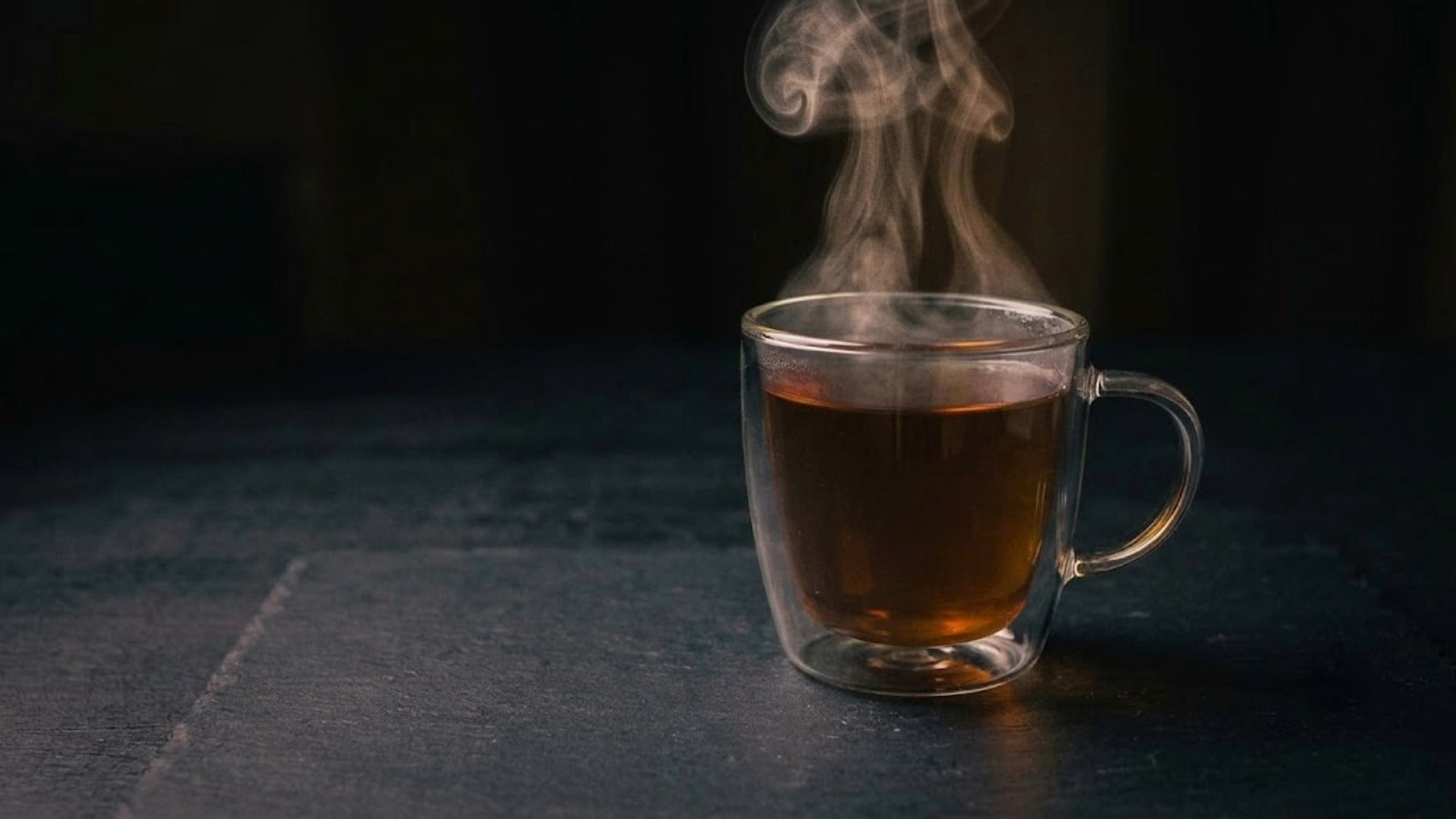
The warmth of the cup can also feel physically settling. A warm drink fits naturally into the body’s evening rhythm, especially as the day slows and the body begins its normal transition toward sleep.
The moment can feel mentally quieter
With less stimulation and fewer competing inputs, your attention often settles. You may notice that your thoughts feel less active and that it becomes easier to disengage from tasks, screens, or problem-solving.
You create a clear break between the day and the night
The act of preparing and drinking tea creates a defined moment where activity slows and the evening begins to transition. This helps your brain distinguish between "doing" and "winding down."
Why Herbal Tea Helps You Wind Down
The most immediate factor is the absence of caffeine. Caffeine works by blocking adenosine, a compound that helps regulate sleep pressure. When caffeine is present, it can delay the feeling of tiredness. Herbal tea removes that interference instead of adding to it.

Temperature also plays a role. Drinking something warm can support your body's natural evening rhythm, and as your body processes that heat, it contributes to the slight cooling cycle that typically occurs as you prepare for sleep.
Some herbal ingredients may also influence the experience. Teas like chamomile, lavender, and lemon balm are commonly associated with calming use in the evening. While the effect varies by individual, these herbs are traditionally used to support relaxation.
What Affects the Experience
The type of herbal tea
Different herbs create different sensory and physical responses. Some feel lighter and more subtle, while others feel warmer or more grounding. The blend you choose can influence how clearly the shift is felt, which is why people tend to notice these differences more clearly when considering what herbal tea to drink before bed and how each option feels in practice.

Timing
Drinking herbal tea earlier in the evening often allows your body more time to respond. Having it immediately before bed may feel more neutral, especially if you transition straight to sleep.
Environment
Your surroundings influence the outcome. A quieter, low-stimulation setting makes it easier to notice the shift compared to drinking tea while remaining engaged with screens or activity.
Pace
Taking a few minutes to sit with the tea allows the effect to develop. Drinking it quickly while multitasking reduces how noticeable the shift feels.
When and How to Drink Herbal Tea Before Bed
Drinking herbal tea about 20 to 30 minutes before bed creates a natural window to unwind. It gives your body time to shift without making the process feel structured or forced. Herbal tea can also be enjoyed closer to bedtime as long as it’s caffeine-free and doesn’t disrupt your comfort or sleep routine.

The effect is usually mild rather than dramatic. Herbal tea doesn’t act as a sleep aid on its own, but it can support the conditions that make it easier to wind down. For most people, the benefit comes from reducing stimulation and creating a consistent moment of pause, rather than producing a strong or immediate change in how quickly they fall asleep.
The type of herbal tea you choose can also make a difference at this stage. Lighter, floral blends and richer, more grounding options tend to create slightly different experiences, which is why many people naturally settle into one or two favorites when they look at the best herbal teas before bed and how they actually feel night after night. What matters most is choosing something that feels comfortable to drink regularly rather than something you need to think about each evening.
Keep it simple. Boil water, steep the tea, and take a few minutes to sit with it. You don’t need a formal routine. What matters is that the process is easy to repeat and fits naturally into your evening.
Two Dessert-Inspired Evening Blends to End the Night
If herbal tea before bed works best when it feels easy to repeat, the blend matters. Purely's evening blends are built around warmth, softness, and real botanicals that make the final cup of the day feel intentional without making the moment complicated.
Sacred Sanctuary™ is the softer of the two, ripe fig and mellow pear rounded out with real vanilla, like a warm fruit dessert in a cup.
Moonlight Stillness™ is the deeper one, date and vanilla over a rich red rooibos base with a whisper of cardamom, the kind of warm, baked-spice sweetness you'd find in an actual dessert.
Both are caffeine-free, both are built from whole botanicals, and both are dessert-like without any added sugar. Not sure which? Reach for Sacred Sanctuary when you want something soft and floral, or Moonlight Stillness when you want a warmer, richer close. The easiest way to find yours is to try them side by side with the Evening Ritual Sampler, which includes both blends for $19.
A Simple Way to End the Day
Drinking herbal tea before bed works best as a low-stimulation evening habit: warm, caffeine-free, and centered around a clear transition out of the day.
The effect is gradual rather than immediate. Over time, the combination of less stimulation, warmth, and a consistent evening moment can make it easier to settle into rest without needing to force it.
What makes the difference over time is not the intensity of the effect, but the consistency of the moment. The body responds more to patterns than single actions, which is why even a simple habit like this can become more noticeable the longer it continues, part of the wider practice of evening tea rituals.
References
- Your Guide to Healthy Sleep — National Heart, Lung, and Blood Institute (NIH)
- Caffeine and Sleep Quality — National Library of Medicine
- The Temperature Dependence of Sleep — National Library of Medicine
- Adenosine and Sleep-Wake Regulation — National Library of Medicine
Editorial Disclaimer
This content is for informational and educational purposes only. It reflects general perspectives on herbal tea, daily routines, and evening habits. It is not intended to provide medical advice, diagnose conditions, or recommend treatments. Always consult a qualified healthcare professional with any questions about health, herbal ingredients, or potential interactions.