Caffeine-Free Coffee Alternatives (That Aren't Just Decaf)

The best caffeine-free coffee alternatives are herbal tea, chicory, roasted grain drinks, golden milk, and mushroom blends. What most lists leave out is that several popular "alternatives" are not actually caffeine-free. Decaf coffee still contains a small amount of caffeine, and matcha, green tea, and yerba mate are all naturally caffeinated, and some preparations can carry a meaningful caffeine dose.
That matters if your goal is genuinely no caffeine, not just less of it. Once you rule out the drinks that still carry a dose, the real list gets shorter and clearer. What you are actually looking for is a warm morning drink that is satisfying, easy to return to, and free of caffeine entirely. If you are weighing the broader field, it helps to start with what to drink in the morning instead of coffee, then narrow to the options that are caffeine-free.
Why "Caffeine-Free" Rules Out More Than You Think
The word "caffeine-free" gets used loosely, and that is where most coffee-alternative lists fall short. A few of the drinks they recommend still contain caffeine, sometimes a meaningful amount. If you are trying to remove caffeine entirely, it helps to know which ones to set aside.

Decaf coffee is the most common mix-up. Decaffeination removes most of the caffeine, but not all of it. A cup of decaf still carries a small residual amount, which is fine if you are cutting back, but not if your goal is none at all.
Matcha and green tea are often grouped in with caffeine-free options, but both come from the same plant as black tea and are naturally caffeinated. Matcha can be especially high, because you are whisking the whole powdered leaf into the cup rather than steeping and discarding it. If you are deciding between the two main morning drinks, it is worth seeing how herbal tea and coffee compare in the morning.
Yerba mate is the one that surprises people most. It is sometimes described as a gentle herbal alternative, but its caffeine content is comparable to coffee, and a strong brew can climb higher. It is a stimulant drink, not a caffeine-free one.
None of these are bad choices if you simply want less caffeine. But they do not belong on a truly caffeine-free list. Once you set them aside, what remains are the drinks that contain no caffeine at all, and those are the ones worth comparing.
The Real Caffeine-Free Coffee Alternatives, Compared
Once you set aside the drinks that still contain caffeine, the real caffeine-free options fall into three groups. They are not interchangeable, because they are each trying to do something different.

The first group is the coffee imitators. These are built to taste like coffee. Chicory root is the classic: roasted and ground, it brews dark and bitter with a coffee-like depth, which is why it has been used as a coffee substitute for generations. Roasted grain blends work the same way, combining roasted barley, rye, or chicory into a brewed drink meant to mimic coffee's flavor, though many are barley- or rye-based and so contain gluten. Mushroom blends are the newer entry, often mixing mushroom extracts with cacao or chicory for an earthy, roasted character. What unites this group is the goal: they want to be coffee without the caffeine. How close they get is a matter of taste, and most people find them similar but not identical.
The second group is the warm-spice comforters. Golden milk and some cacao-style drinks are not trying to taste like coffee at all. Golden milk is a warm, spiced turmeric-and-milk drink with ginger and pepper; cacao is rich and chocolatey. Both are comforting and caffeine-free, but they tend to be richer and more occasional than something you would reach for every single morning. They are a treat more than a daily ritual.
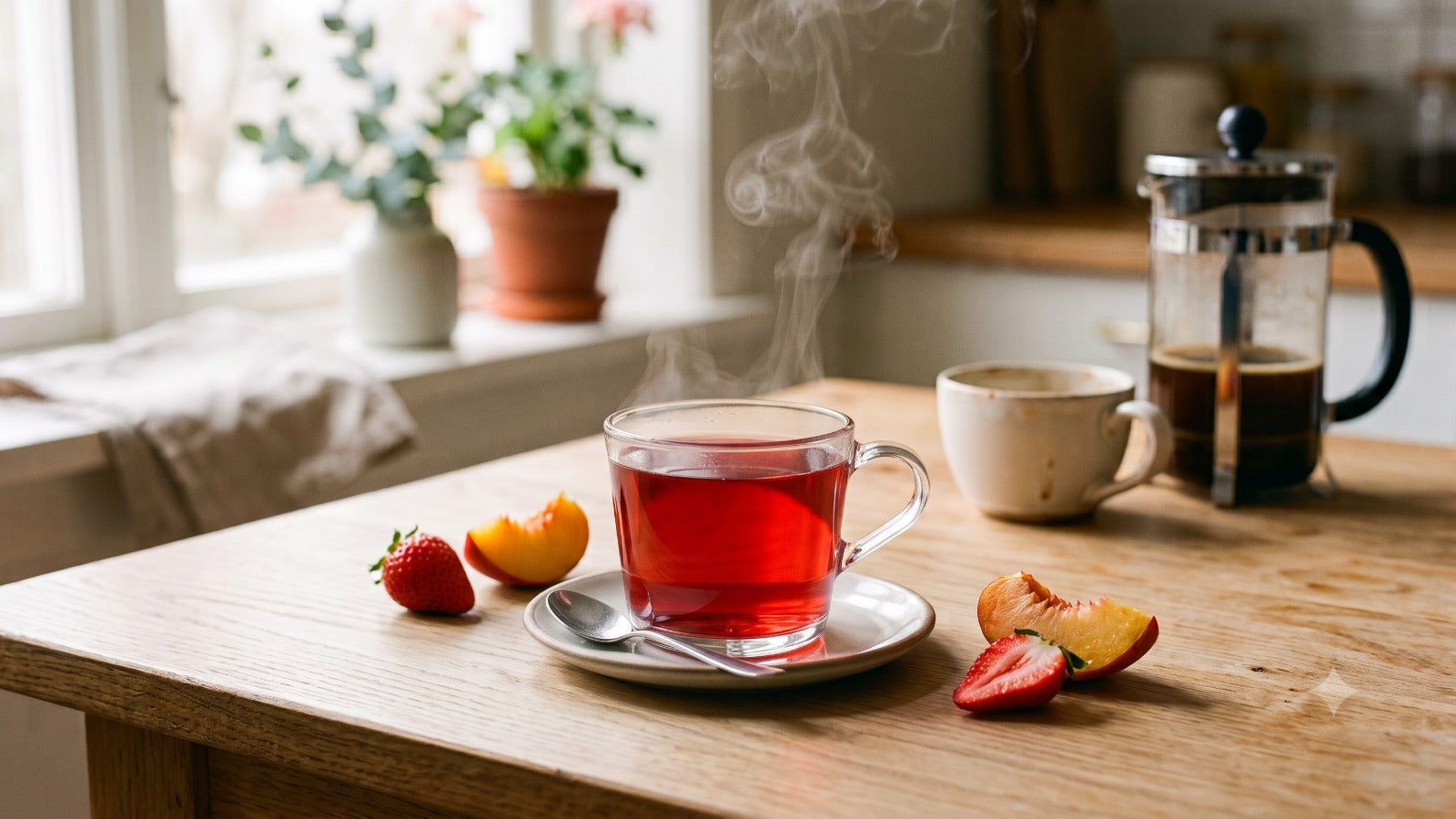
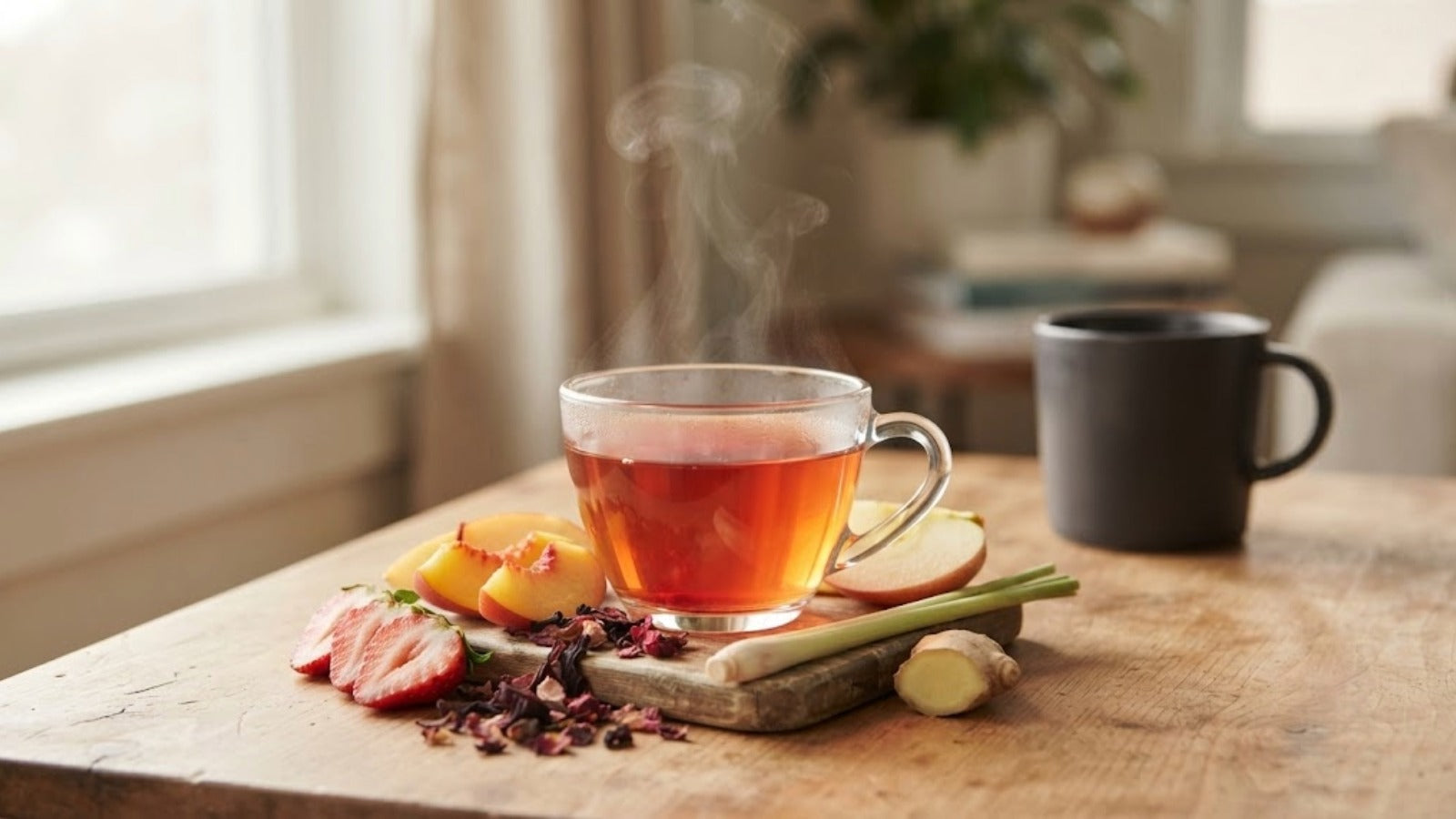
Then there is herbal tea, which sits apart from both groups. It is not imitating coffee, and it is not a once-in-a-while indulgence. A well-made herbal blend is bright, aromatic, and genuinely caffeine-free, light enough to drink first thing and varied enough to stay interesting day after day. Instead of chasing coffee's roasted bitterness, it offers a different kind of morning cup entirely, one built on real fruit, flowers, and botanicals rather than a roasted imitation.
Why Herbal Tea Is the Easiest to Drink Every Day
The real test of a morning drink is not whether it impresses you once. It is whether you still want it on the fortieth morning. That is where herbal tea has an advantage over the coffee imitators. That is the idea behind Purely's morning blends.
Sunrise Clarity™ — Ripe strawberry, peach, and apple at the center, jammy and full. Hibiscus and elderflower add a soft floral lift; lemongrass keeps it clean. Underneath, ginger root and a thread of saffron give the cup a warm, golden finish, with green rooibos as a smooth, caffeine-free base.
Radiant Awakening™ — Pineapple and mango come in vivid and sun-sweet, then coconut softens the edges. Rose petals and hibiscus add a floral glow; lemongrass brings a citrus snap. Green rooibos holds a clean, light, caffeine-free base.
Morning Ritual Sampler — The fortieth-morning test is the only one that counts, and it is not a test you can run at checkout. The sampler puts both Morning blends in front of you so the answer comes from a few actual mornings rather than a guess. Genuinely caffeine-free, and the simplest way to find the cup that holds.
Any of the three gives you a warm, colorful, caffeine-free cup to reach for each morning, made to be enjoyed for its own flavor rather than as a substitute for something else.
A Simple Caffeine-Free Morning to Start With
If you have decided you want a genuinely caffeine-free morning, the easiest next step is simply to taste a few blends and find the one you reach for. You do not have to commit to a full routine to start. One good cup, made the same way each morning, is enough to see whether it fits.
A bright herbal tea makes that easy, because it is built to be enjoyed for its own flavor, not measured against coffee. It is light enough to drink first thing, varied enough to keep interesting, and genuinely caffeine-free, which is exactly what most coffee alternatives are not.
From there, it becomes easier to build a simple morning tea ritual around the cup you choose. Wherever you are in moving away from caffeine, the simplest place to begin is a single bright, caffeine-free cup you actually look forward to in the morning.
Editorial Disclaimer
This content is for informational and educational purposes only. It reflects general perspectives on herbal tea, daily rituals, and related lifestyle practices. It is not intended to provide medical advice, diagnose conditions, or recommend treatments. Always consult a qualified healthcare professional with any questions about wellness or health-related matters.