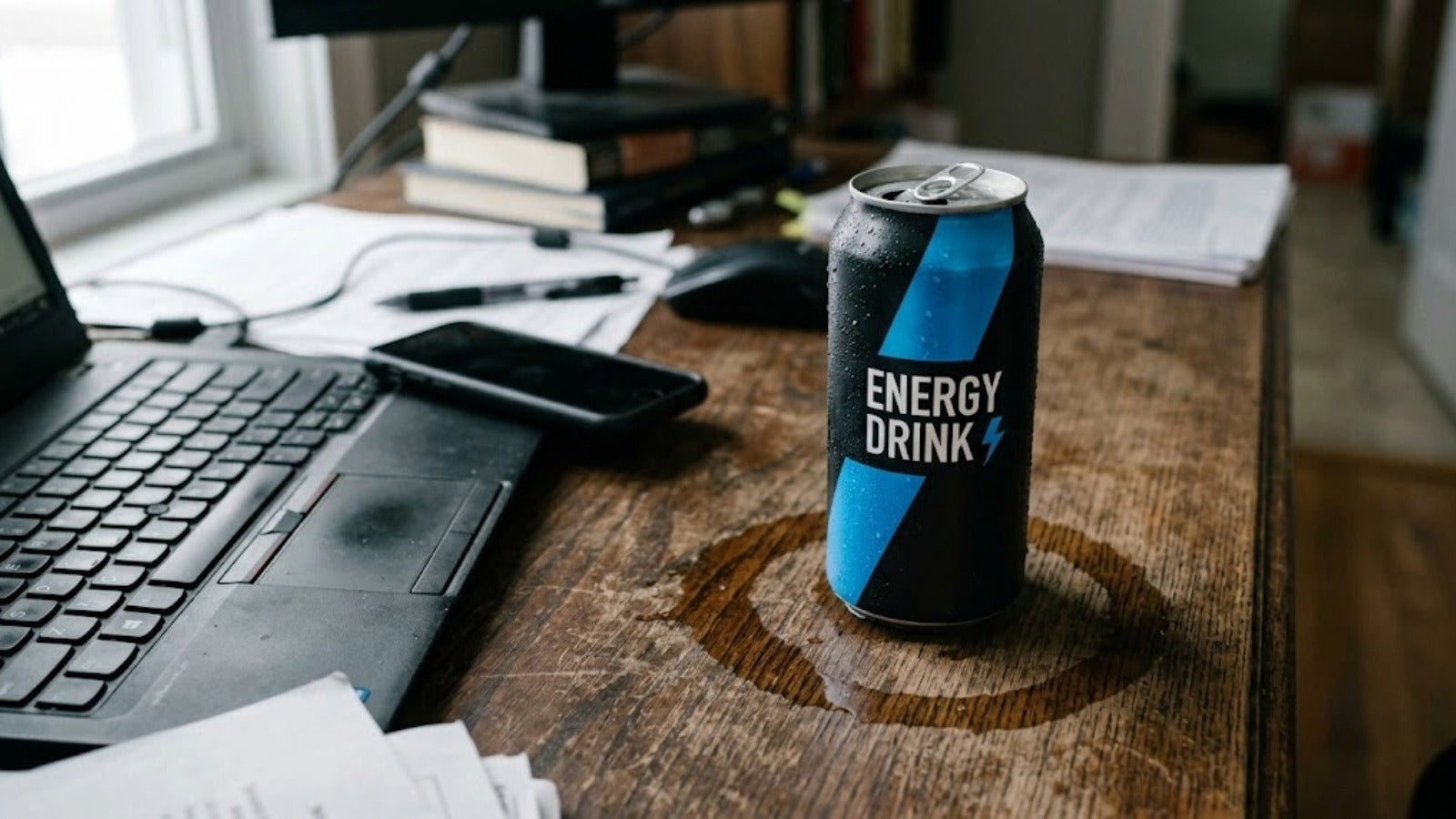
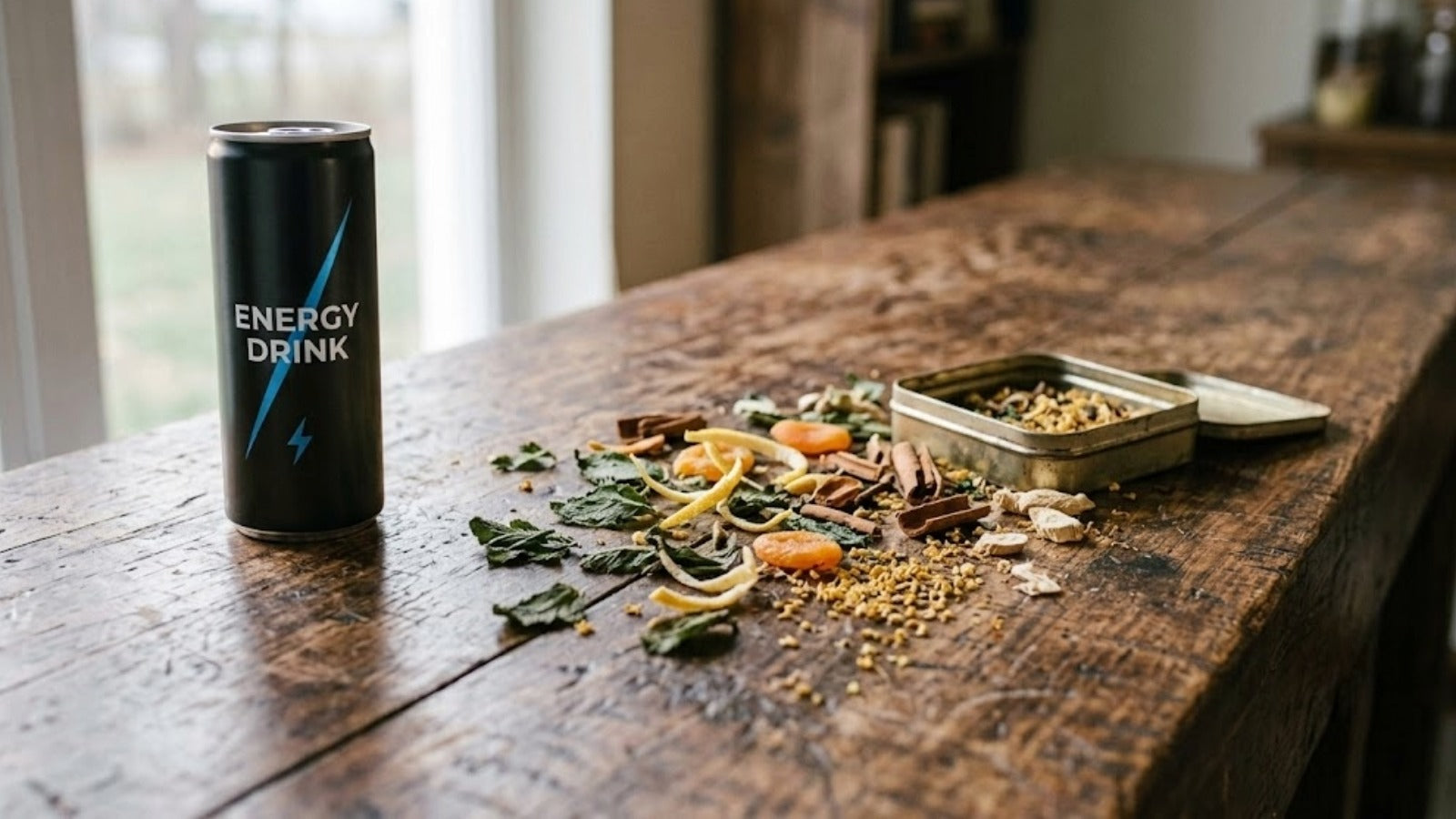
Can Herbal Tea Replace an Energy Drink? Yes and No

No, not on caffeine. Herbal tea has none, while an energy drink has around a hundred and sixty milligrams, and there is no version of this where a cup of botanicals closes that. Anyone telling you otherwise is either selling you something or quietly talking about green tea.
That is the short answer, and it is worth getting out of the way first. The longer answer is that caffeine is likely one of several needs you are satisfying, and how much those "other" factors matter depends on why you are reaching for the can in the first place. Anyone still weighing what to drink instead of energy drinks should sort that out before picking a replacement.
The Short Answer Is No
Simply look at what the retailers and supplement brands claiming yes are actually recommending. Green tea. Black tea. Matcha. Oolong. Yerba mate. All of those contain caffeine, and none of them is herbal tea. Herbal tea means an infusion of something that is not the tea plant, which is to say fruit, flowers, leaves, roots, and spices. The moment a list of energy alternatives includes matcha, it has stopped answering the question you came here for.

Plants are perfectly capable of carrying caffeine. Guarana holds more of it by weight than a coffee bean does, which is exactly why it turns up on energy drink labels in the first place, and cacao carries a small amount of its own. When it comes to herbal tea, nothing is going to stand in for a hundred and sixty milligrams of caffeine, and the botanicals that could are already in the energy drink you are trying to kick.
Caffeine Was Not the Only Thing You Were Buying
If a hundred and sixty milligrams were the whole transaction, a caffeine tablet would do the job, and nobody buys those. The energy drink is cold. You reach for the beverage at likely the same hour. It takes a few minutes to finish, tastes like something, and is part of the afternoon where you take a moment for yourself. There is a fuller breakdown around the psychology of what an energy drink is actually doing for you, but the short version is that the caffeine is only one factor on a list of four or five.

Whether you decide to replace the energy drink with herbal tea depends on why you reach for it in the first place. If it's a daily habit that you run on autopilot, the caffeine is only a small share of the appeal. If you are actually relying on the dose for a double shift or a long drive, then no. You should have caffeine, and a crafted infusion of botanicals is not going to replace that. And if it's the ice-cold aspect you would miss, a strong herbal brew poured over ice or into a jug left in the fridge overnight does the job.
What Herbal Tea Does Replace
What herbal tea gives you instead is a ritual, which is a heavier word than it sounds and still the right one. People have been putting plants in hot water for thousands of years, in Egypt and China and Morocco and every kitchen in between, arriving at it separately and continuing the tradition. Almost nothing survives that long unless it earns its place in a day. That is the honest scope of what is on offer here, and whether it is enough depends on you, because there is no version of this where a cup of botanicals does what a stimulant does. What it does do is taste considerably better than what you are drinking, hot or poured over ice, which is worth saying plainly because none of the pages recommending herbal tea ever tell you what it is actually like.
Pour Guardian Spirit™ and the spearmint arrives first, cool and clean. Lemon peel and lemon verbena lift through it a moment later, bright and slightly sharp. Apricot sits underneath, warm and not sweet. Then dandelion and licorice roots at the base holding it down, and a trace of ceylon cinnamon that stays on the finish. Nine botanicals, weighed and balanced against each other so they arrive in that order.
The Blend That Is Not Quite Zero
There is a version of this that sits closer to yes. Celestial Renewal™ is built around cacao, and cacao carries caffeine of its own, naturally, the way the bean does. It is a trace rather than a dose. Peppermint opens the cup sharp and clean, then the cacao and ceylon cinnamon come in underneath with real weight to them, orange peel and jasmine lifting through the middle, galangal settling at the base with a faint heat that stays. If going to nothing at all is the part you were not sure about, this is the one to start with.
Two cups for the same hour, pulling in different directions. The Midday Ritual Sampler carries both, which is the cheapest way to find out which one you actually reach for.
Why the Afternoon Is Worth Getting Right
The question was narrower than it looked. Herbal tea does not replace caffeine, and it was never going to, but caffeine was one line item in a habit that had four or five. You know which of those you were actually buying better than any page on the internet does.
The afternoon has a shape of its own, and it is worth understanding on its own terms rather than as the gap between lunch and dinner that something has to fill. Start with drinking tea in the afternoon, which covers what the hour actually asks for and which cup answers it.
Editorial Disclaimer
This content is for informational and educational purposes only. It reflects general perspectives on herbal tea, daily rituals, and related lifestyle practices. It is not intended to provide medical advice, diagnose conditions, or recommend treatments. Always consult a qualified healthcare professional with any questions about wellness or health related matters.