What to Drink Instead of Energy Drinks: A Complete Guide

Most pages on the internet answering this question hand you the typical list. Water, coconut water, electrolyte powder, kombucha, green tea, and seven more, ranked by nothing in particular. The lists are not wrong; they are just built on the assumption that you are looking for a liquid that behaves like an energy drink.
Simply stated, you are not. What you are actually doing is trading a formulated product for something you make yourself, and once you see the question framed in that light the answer to what to drink instead of energy drinks narrows fast. This guide covers what is in an energy drink, what you honestly give up when you stop, why most substitutes do not hold, and what a cup of herbal tea puts in the middle of your afternoon instead. It sits inside the larger case for drinking tea in the afternoon, which is the hour all of this is really about.
What You Are Actually Leaving Behind
Pick up an energy drink and turn it around. Somewhere between fifteen and twenty-five ingredients, listed by weight, heaviest first, which means the water and the sweetener sit at the top and the ingredients the marketing is built on, the taurine, guarana, and ginseng, sit near the bottom. Two or three of those are the product. The rest are what it takes to fill a sealed container in one place, truck it to another, and have it taste identical twelve months later. And the last line on most nutrition labels is natural flavors, which is a legal category that names nothing at all and is frequently doing the most to determine how the drink ends up tasting. The label is worth understanding, and what is in an energy drink breaks it down line by line.

The caffeine is the other half, and it is real. An energy drink typically carries around a hundred and sixty milligrams of caffeine. Herbal tea carries none, and nothing in a caffeine-free infusion is going to stand in for that. Anyone claiming otherwise is usually recommending green tea, black tea, matcha, or yerba mate, all of which contain caffeine and none of which is herbal tea. The honest version of that answer, including what a cup does replace and what it plainly does not, is in whether herbal tea can replace an energy drink.
Why Usual Alternatives Do Not Suffice
Go back to the list. Water, coconut water, electrolyte powder, kombucha. Every one of those replaces the beverage, and as beverages they are perfectly good. The trouble is that the beverage was never the whole of what you were reaching for. An energy drink is meeting several needs at once, and only one is something to drink.
Here is the thing none of those lists will say. You looked forward to the energy drink. That was the point of it, and it is one of four separate things the drink was doing for you. Most people do not look forward to a glass of water at three in the afternoon, and a swap you have to tolerate is a swap that quietly stops happening. Herbal tea instead of energy drinks lays out the other three things energy drinks do for you and makes the clear case for why herbal tea does the job better.
Herbal Tea Is the One That Holds
An energy drink is formulated to a spec. Every unit is identical by design, which is a genuine engineering achievement and the reason the ingredient list runs as long as it does. A tin of loose botanicals is something entirely unique. Nine plants, chosen and weighed against each other by an expert blender deciding what should arrive first and what should linger on your palate, and you see every botanical before they hit the water. Neither is an accident. They are two different ideas about the purpose of a drink.

We believe the second is worth your afternoon, and we are not going to pretend that is a neutral opinion. It is also not the whole picture. There are two things an energy drink does better than herbal tea, and we would rather tell you what they are than let you find out for yourself. Both are named in herbal tea vs energy drinks, along with what you get in return, starting with the fact that you decide the strength of the brew.
Which Cup, and How It Becomes Yours
Once herbal tea is the answer, the next question is which one, and the category does not make that easy. Start with the flavor family, because your appetite already knows the answer. Morning wants fruit. Evening wants something rounded and sweet. The middle of the day wants cool and clean, which is why mint has been the afternoon drink in Morocco and across the Mediterranean for centuries and why a heavy dessert at two feels wrong in a way you cannot quite explain. That gets you to the right shelf. Two more things separate the good tins from the mediocre ones, and both are in the best herbal tea for the afternoon, including a test you can run on any tin in about four seconds.

Choosing the herbal tea that suits you is one factor. Turning the behavior into a habit is another. Fortunately, what you have stepped into is older than you probably realize. Morocco pours the same leaves three times in a sitting, each round tasting different from the last. Japan built a practice around tea as art that has inspired people for centuries. England has its own interesting history, involving a duchess who was simply hungry at four o'clock. Three cultures with nothing seemingly in common all came to the consensus that the middle of the day needed a reset, and your afternoon tea ritual covers what these cultures built and the shape your tea ritual can take.
Two Blends Built for the Middle of Your Day
Everything above is the standard Purely blends to. Mint-forward because the hour asks for it, layered rather than single-note, and every bit of the flavor coming from botanicals you can see and count in the tin.
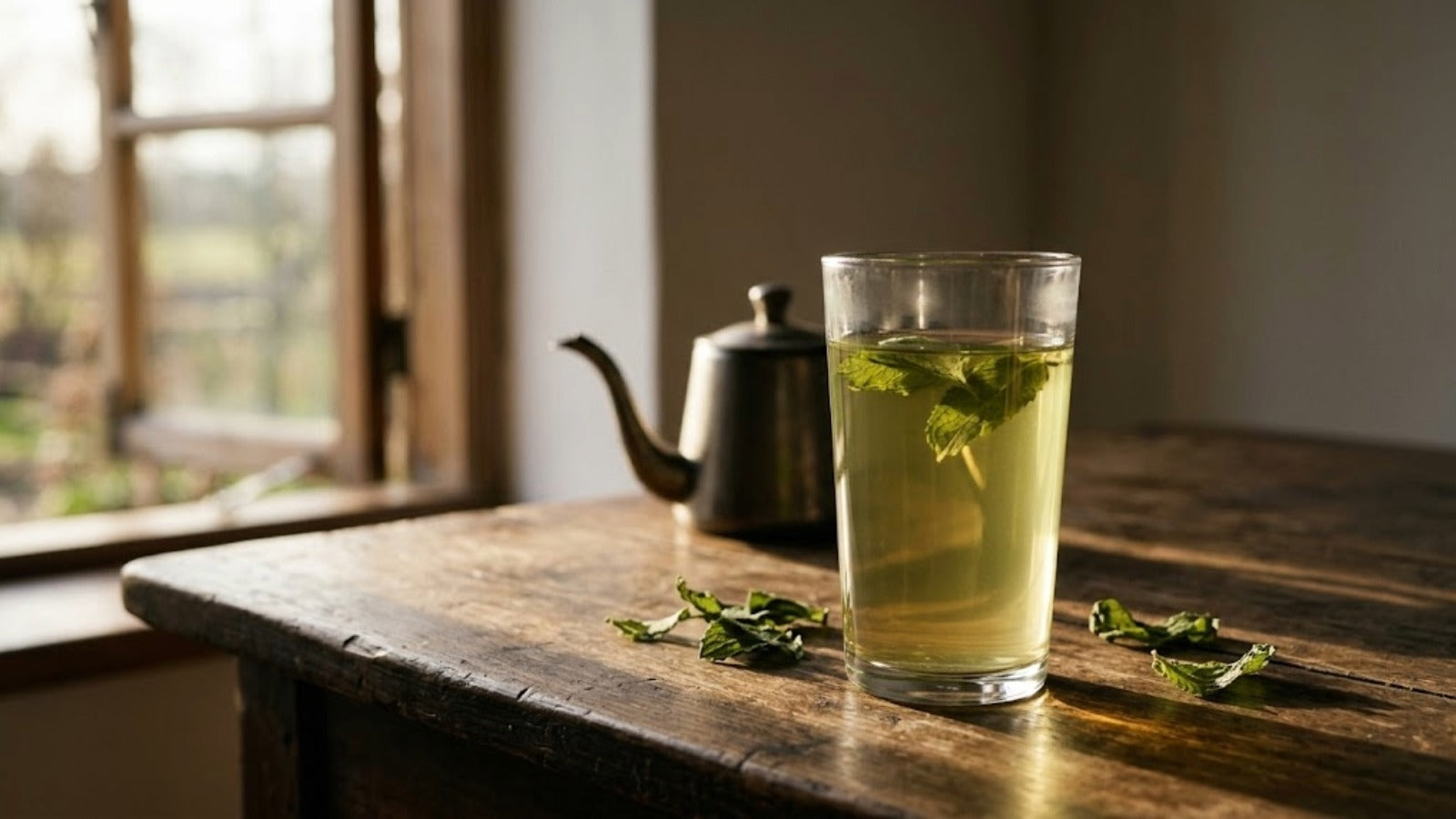
Guardian Spirit™ runs cool and clean. Spearmint arrives first, clean across the front of the palate, then lemon peel and lemon verbena lifting through it, bright and slightly sharp. Apricot sits underneath giving the cup body, warm and not sweet. Dandelion and licorice roots hold the base, and a trace of ceylon cinnamon stays on the finish. Nine botanicals, weighed against each other so they arrive in that order.
Celestial Renewal™ is for the afternoons that want weight instead of lift. Peppermint opens it sharp and clean, then cacao and ceylon cinnamon come in underneath with real depth to them. Orange peel and jasmine lift through the middle, and galangal settles at the base with a faint heat that stays. The cacao carries a trace of caffeine of its own, which is worth knowing before you pick.
Two different afternoons, and most people end up wanting both. The Midday Ritual Sampler carries each of them, which is the easiest way to find out which one your three o'clock prefers.
The Afternoon Is Worth the Decision
You came here looking for something to drink, and the honest answer is that the drink was the smaller half. What you are actually choosing is whether the middle of your day gets anything deliberate, or whether that stretch goes on being handed over to whatever sits nearest. We think that decision is worth making intentional.
Ultimately, the afternoon is the part of the day most people surrender without noticing. Drinking tea in the afternoon is where we make the case for taking it back.
Editorial Disclaimer
This content is for informational and educational purposes only. It reflects general perspectives on herbal tea, daily rituals, and related lifestyle practices. It is not intended to provide medical advice, diagnose conditions, or recommend treatments. Always consult a qualified healthcare professional with any questions about wellness or health related matters.