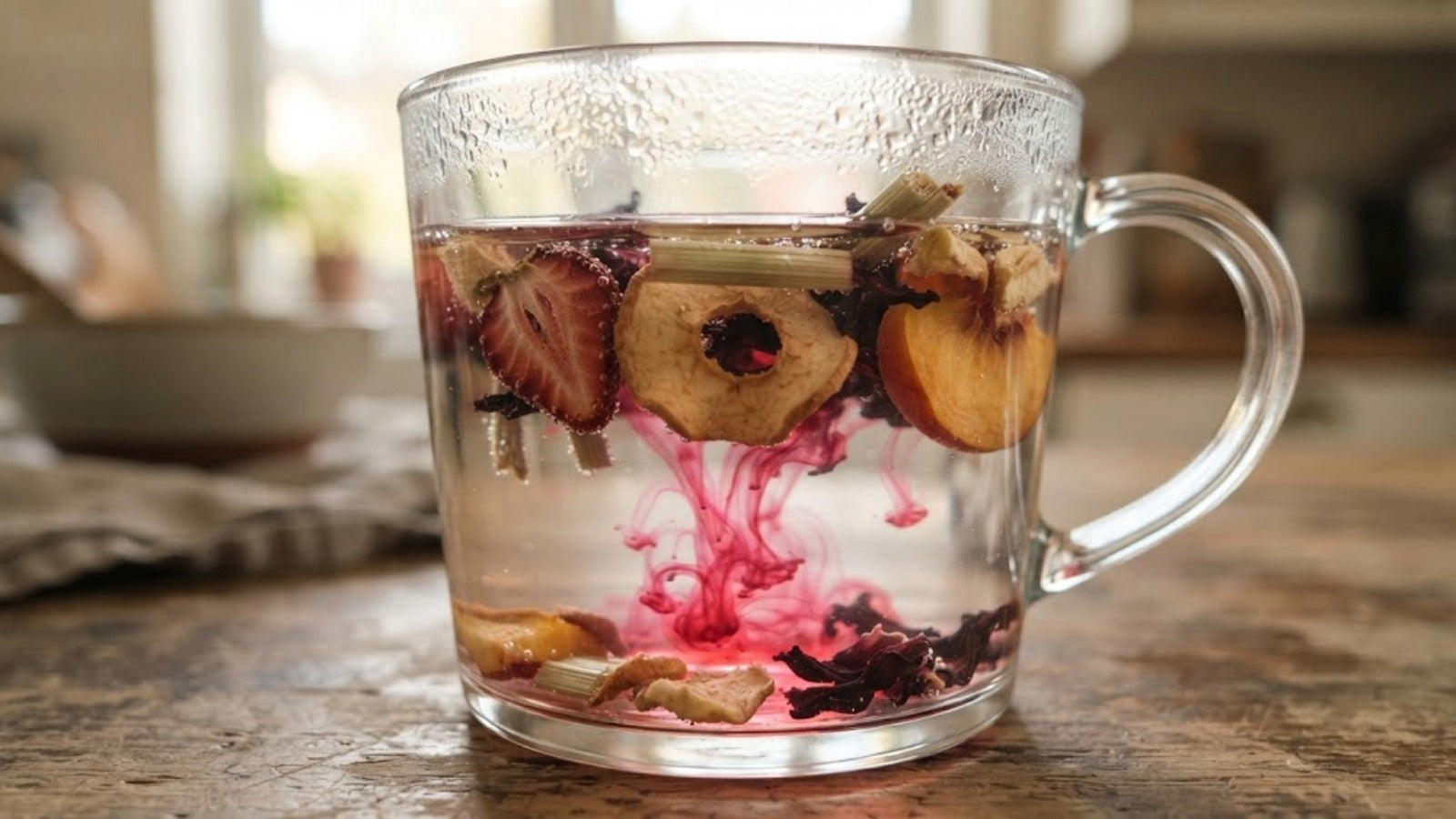
Coconut Herbal Tea: Creamy Tropical Morning Energy

Cut open a coconut and the flesh inside is about sixty percent oil. That is not a detail, it is the entire ingredient. Everything that makes coconut taste like coconut is dissolved in that fat, not in the flesh, which means it behaves nothing like the other fruits it sits beside in a blend.
Strawberry, mango, and pineapple bring sugar, water, and acid. Coconut brings oil, and oil does something in a hot cup that no fruit can: it gives the tea a body you can actually feel. Among the other morning herbal tea ingredients, coconut is the one that changes how the drink sits on the palate.
What Makes Coconut Taste Like Coconut
The flavor of coconut meat comes from constituents of the coconut oil itself, and specifically from a group of compounds called delta lactones. Delta octalactone does most of the work, with delta hexalactone supporting it. Take the oil out and the coconut flavor goes with it.

Lactones should sound familiar. Peach's signature aroma comes from γ-decalactone, a gamma lactone from the same chemical family. This is why peach and coconut smell like relatives despite having nothing else in common, and why perfumers routinely describe peach lactones as having a creamy, coconut character. They are cousins. The fruits are not.
Coconut also does something in a cup that no fruit can. Because its flavor is carried in oil rather than in water-soluble sugars and acids, it does not simply add a note to the infusion. It rounds the whole thing, coating the palate slightly and giving the liquid a fullness it would not otherwise have. Coconut is the only ingredient in a morning blend that changes the texture of the tea.
Why Coconut Is So Hard to Get Right
Fat goes rancid. That is the problem, and everything about how coconut is processed commercially follows from it.

Coconut is known to turn rancid relatively easily, and when it does, the flavor it produces has a name. The medium-chain fatty acids characteristic of coconut oil, lauric and myristic acid among them, release a distinctly soapy taste as they break down. Researchers describe the resulting off-odours as perfumed or ketonic. If you have ever eaten a coconut product that tasted vaguely of candle wax or old cupboard, that is what you were tasting. It is not staleness in the ordinary sense. It is fat coming apart.
The industry's answer is aggressive. The standard process for commercial desiccated coconut runs the kernel through live steam at around 88°C, immerses it in a sulfite solution for stabilization, then grinds it and dries it in a steam-heated dryer. Steamed, chemically treated, and heat-dried, in that order. Sulfites are used because they suppress both browning and rancidity, and there is a patent describing sulfur dioxide and metabisulfite pretreatment as the method for producing white desiccated coconut with good shelf life.
Three interventions, on the ingredient that should be the simplest in the tin.
How Purely Dehydrates Coconut
Every ingredient in Purely's blends is dehydrated in-house, low and slow, and coconut is the one where the industry's shortcuts are hardest to refuse.

There is no steam pasteurization. No sulfite bath. No stabilizer of any kind. What is left is the unglamorous version: dry it gently, dry it properly, and handle it carefully afterward, because a fat that has not been chemically stabilized has to be treated with respect. Low temperature protects the delta lactones, which are what you actually came for. Clean handling and proper storage do the job the sulfites would otherwise have done.
The result is coconut that tastes like coconut rather than like coconut-flavored shelf life.
How Coconut Blends with Other Botanicals
Coconut is the softener in a tropical blend. Where the other fruits are sharp or sweet or bright, coconut is round, and it rounds everything near it.

With pineapple, coconut absorbs the acid and turns a bright, cutting fruit into something warmer. With mango, it deepens the richness into something that feels almost dessert-adjacent without ever tipping into sugar. Against hibiscus, the oil takes the edge off the tartness, and against lemongrass it softens the citrus line so it reads as fresh rather than sharp.
Underneath, green rooibos gives coconut a clean base, and ginger and saffron add a dry warmth that keeps the fat from feeling heavy. Coconut does not lead a blend. It makes the leader more comfortable to sit with.
Coconut in Radiant Awakening™
Radiant Awakening™ is a tropical cup that drinks smooth. Pineapple opens it and mango fills it out, and coconut is what makes the whole thing feel rounded and complete rather than merely sweet. It gives the tea a body you can feel on the palate, a creaminess that no fruit alone could produce, and it is the reason the blend lingers the way it does.
Coconut and the Warmth of Morning
Coconut is the ingredient that makes a fruit tea feel like a drink rather than an infusion. That comes from the fat, which is also what makes it delicate, which is also why almost every coconut on the market has been treated to within an inch of its life.
Sixty percent oil, a handful of lactones, and no shortcuts. If you want to understand how the rest of the blend rests on top of it, start with drinking tea in the morning.
Editorial Disclaimer
This content is for informational and educational purposes only. It reflects general perspectives on herbal tea, daily rituals, and related lifestyle practices. It is not intended to provide medical advice, diagnose conditions, or recommend treatments. Always consult a qualified healthcare professional with any questions about wellness or health related matters.