Orange Blossom Tea: Bright Floral Clarity for Midday

Orange blossom brings light without agitation. Its role is not to energize or soften but to clarify, a calm brightness that sharpens attention while holding steadiness. The blossom's character feels open yet composed, letting the cup feel illuminated without becoming diffuse. It fits the moments when awareness needs to be held rather than shifted, a gentle lift that does not pull the mind forward or inward.
That restrained, luminous quality is what earns orange blossom its place among the afternoon botanical collection. Its floral tone feels defined and self-contained rather than expansive, contributing presence without momentum, a clear marker that the cup is a distinct, deliberately held space.
Orange Blossom Botany, Tradition, and Floral Tea Culture
Orange blossom comes from the flowering citrus tree, most often bitter orange, where fruit, leaf, and flower coexist at once. That simultaneity has long shaped how the blossom is perceived. It is not a fleeting bloom but part of a living system that holds fruit and flower together, appearing at the threshold between potential and presence, which historically suited it to moments that call for attentiveness rather than transformation.

Across Mediterranean, North African, and Middle Eastern traditions, orange blossom water has been used to prepare environments rather than to act on the body, sprinkled into rooms, brushed across linens, worked into shared vessels and table settings. These practices emphasize atmosphere and order, the blossom a way of clarifying a space before engagement begins.
Orange blossom also carries a quiet protective symbolism that is spatial rather than physical. It appears alongside threshold practices that mark entrances and transitions, not repelling or warding off but establishing a clear, intentional presence. Its cultural role has centered on defining space, steadying atmosphere, and signaling that a boundary has been intentionally set, a botanical trusted to hold a space steady and clearly defined.
How Orange Blossom Supports Gentle Midday Clarity
Orange blossom works as a point of orientation, well suited to the moments when the day is already in motion and needs recalibration rather than interruption. It does not pause the day so much as reframe it, offering clarity that feels immediate and present rather than preparatory.

Its renewal does not rely on contrast or stimulation. It refreshes attention by gently clearing mental residue without adding momentum or emotional lift, smoothing the edges of attention so focus stays intact. It holds the cup in a clear, luminous register that does not demand change to be effective, which is what makes it easy to return to across the day.
The Sensory Profile: Golden Floral Aroma, Soft Citrus, and Clean Finish
Orange blossom works as a structural floral rather than a decorative note. It provides lift and definition without overt sweetness or softness, shaping the upper register of the cup while leaving the foundation intact, a clarifying layer that refines the blend's outline and keeps it clean.

Aromatic Character
The aroma is bright and poised, opening quickly with a clean floral brightness that feels sunlit but restrained. It reads as fresh and precise rather than lush or perfumed, establishing an immediate sense of order at the surface of the cup.
Color in the Cup
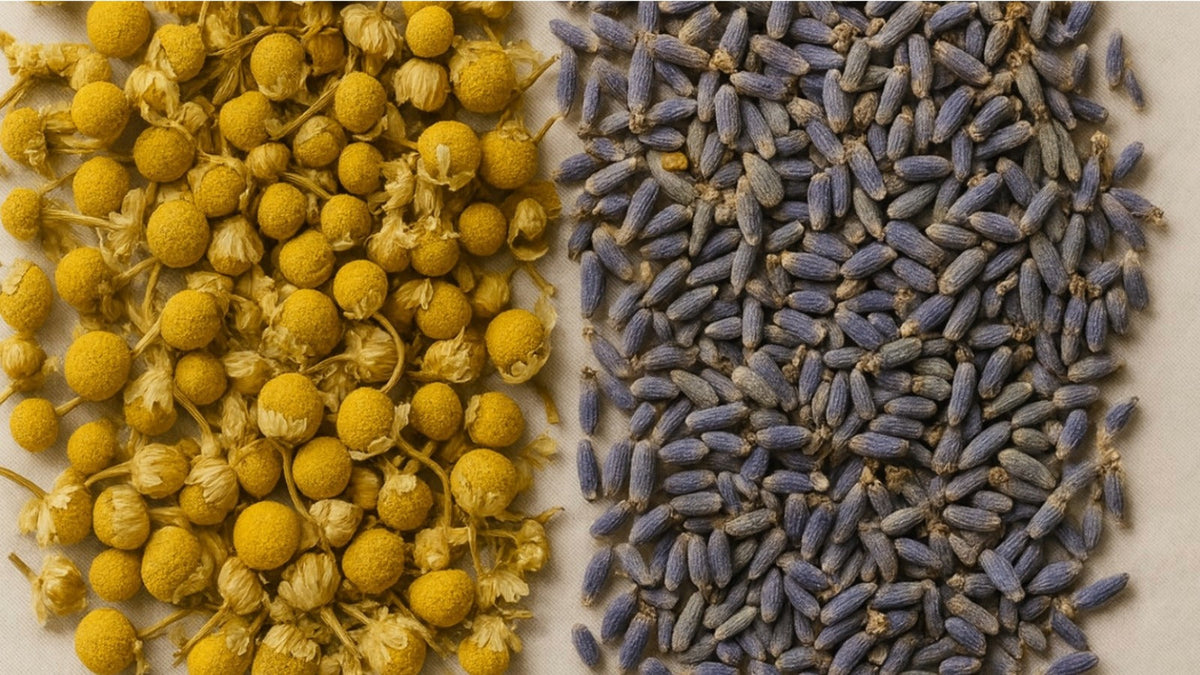
In infusion, orange blossom contributes a pale golden hue that stays translucent. The color feels light and steady, neither deepening nor clouding the brew, reinforcing a cup that is composed and intentionally restrained.
Flavor Profile
The flavor is delicate and dry, a subtle citrus-adjacent floral note that never turns sweet. It sits lightly on the palate, offering definition without overt expression, suggestive rather than declarative, so the other botanicals stay clearly legible.
Weight and Presence
Orange blossom adds lift rather than body. Its presence is felt more in outline than in mass, contributing openness while preserving the blend's stability, keeping the cup elevated without thinning it.
Mouthfeel and Finish
The mouthfeel is clean and lightly textured, with no coating or lingering heaviness. The finish is crisp and orderly, fading evenly rather than trailing, leaving the palate clear.
How Orange Blossom Shapes a Bright Midday Reset
The experience of orange blossom unfolds gradually and with restraint. At first pour it is light and immediate, establishing a clear sensory field without demanding attention. The cup feels composed from the outset, a tone of quiet brightness that stays consistent rather than evolving dramatically.

As the infusion settles and the temperature shifts, orange blossom keeps the cup steady. It neither cools nor warms the experience outright but holds equilibrium as the heat dissipates, smoothing transitions and preventing sharp sensory swings. Paired with mint, it works as an atmospheric modifier rather than a competing presence, lifting the aromatic field while letting the mint keep its clarity and direction.
Over time the cup stays stable and readable, even as it cools fully. Orange blossom does not collapse into absence or intensify unexpectedly. It holds a consistent brightness that supports extended, unhurried drinking, a cup that keeps its character from first sip to last.
Orange Blossom in Blending: Floral Brightness and Clear Structure
Orange blossom refines contrast rather than creating it. Its floral brightness regulates how cool and warm notes register in the cup, keeping either side from becoming dominant, a mediator that holds the blend legible and composed.

With Fruit
Paired with fruit such as orange peel, orange blossom sharpens definition rather than amplifying sweetness. It lifts citrus tones into clearer focus, giving them a cleaner edge without increasing intensity, for fruit that feels structured and precise rather than indulgent.
With Flowers
Alongside other florals such as jasmine, orange blossom provides clarity and spacing. It keeps floral combinations from becoming dense or perfumed by establishing a bright, orderly top note, so layered florals feel intentional and breathable rather than diffuse.
With Herbs
Alongside herbs such as tulsi, orange blossom softens angularity without blurring structure. It tempers sharper herbal notes by introducing light and openness, helping the blend feel balanced while preserving definition, an interaction that stabilizes rather than smooths.
With Roots
Combined with roots like licorice root or dandelion root, orange blossom offers contrast through elevation rather than sweetness. Its brightness lifts the heavier base, keeping the rooted elements grounded but not heavy.
With Spices
With spices such as Ceylon cinnamon, orange blossom refines intensity. It creates space around the warming notes so the spice reads as measured and contained, keeping the blend from tipping into sharpness or excess.
Taken together, these interactions show orange blossom's role as a structural floral. It clarifies the relationships between botanicals rather than asserting itself as a focal point.
Orange Blossom in Celestial Renewal's Mint Cacao Lane
Orange blossom's bright, dry floral is the upper-register lift of one of the two midday blends, the one built for depth as much as clarity. If you want a floral that clarifies and defines rather than perfumes, this is where to meet it in the cup.
Celestial Renewal™ pairs peppermint and cacao, with orange blossom lifting the aromatic field above them. Peppermint keeps the front of the cup cool and defined while the cacao gives it a rounded, grounded base, and the blossom keeps the whole thing open and legible rather than dense, so the blend settles you into a task rather than sharpening to a point. The cacao carries a small trace of natural caffeine, just enough to put a little behind the cup on the afternoons you want it, without tipping into the wired edge of a stronger drink. It is the blend for a long, steady stretch of the day, something to stay with.
Orange Blossom as a Bright Midday Ritual Anchor
Orange blossom offers a brightness that does not seek attention. Its clean, luminous quality refreshes perception without introducing contrast or momentum, a reset that is quiet and internal, clearing attention while boundaries stay intact. It does not transform the moment but helps preserve it, one thread in the wider practice of drinking tea in the afternoon, where the cup becomes a steadying structure rather than a moment of escape.
Editorial Disclaimer
This content is for informational and educational purposes only. It reflects general perspectives on herbal tea, daily rituals, and related lifestyle practices. It is not intended to provide medical advice, diagnose conditions, or recommend treatments. Always consult a qualified healthcare professional with any questions about wellness or health-related matters.