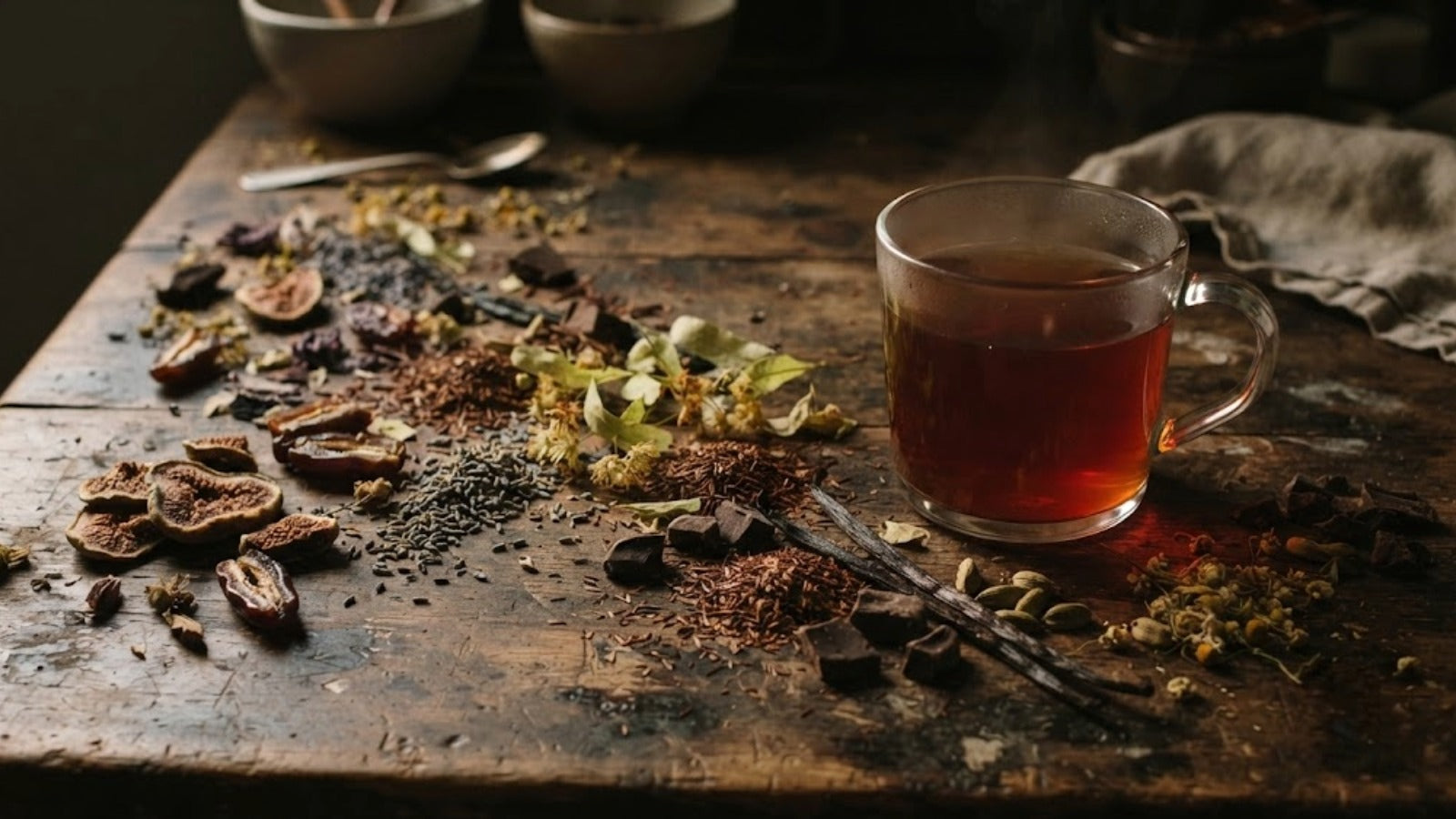
Why People Are Switching to Fruit Tea

People are drinking more herbal tea, and the reason is not complicated. They are tired of drinking things that were manufactured. Tired of ingredient lists that end in "natural flavors" and start with something unpronounceable. Tired of food that tastes like an idea of food.
Fruit-infused morning tea is where a lot of that exhaustion is landing, because it is one of the few categories where the real version is still available and you can tell the difference instantly. A good fruit herbal tea is not a flavor. It is fruit, dried and put in hot water, and the cup behaves accordingly.
Why People Are Switching to Herbal Tea
Somewhere in the last decade, most of what we drink stopped being made of anything. The syrups, the powders, the "natural flavoring" that is neither natural in any useful sense nor a flavor in any honest one. It is all very convenient, and it all tastes slightly like a photograph of the thing it is meant to be.

Herbal tea is a holdout. It is one of the few things left on a shelf where the ingredient list is short, every item on it is a plant, and you could picture each one growing if you tried. Strawberry. Peach. Apple. Ginger root. Hibiscus. No hyphens, no parentheses, nothing you would need to look up.
That is most of the appeal, and it is a plainer appeal than the wellness aisle usually makes. Nobody is claiming the tea will do anything for you. The claim is only that it is made of what it says it is made of, which should be a low bar and increasingly is not.
Real Fruit vs Natural Flavoring
Here is how you tell, without reading anything. Pour hot water on a flavored tea and it arrives complete in about ten seconds. Full color, full smell, done. Nothing changes after that, because there is nothing in the bag to change. The flavor was applied to the outside of a neutral base, and it comes off all at once.

Real fruit cannot do that. It has to rehydrate first, taking on water before it releases anything, which means the cup keeps developing while you are holding it. Color deepens at one minute and again at four. Aroma arrives before flavor. The sip at two minutes is not the sip at six.
That delay is the entire tell, and it is not subtle once you have noticed it. A cup that unfolds has fruit in it. A cup that arrives and then sits there does not.
What Fruit-Infused Morning Tea Tastes Like
Aroma reaches you first, in the steam, before you have sat down. Strawberry and peach come up warm and jammy; pineapple and mango come up bright and almost sharp. It smells like the fruit did before it was dried, which is the point of drying it slowly.

Then the color. Soft corals, warm golds, delicate pinks, building in a clear glass over the first minute or two. It is a small thing to look at and a genuinely good one, particularly at an hour when there is not much else worth looking at.
Flavor comes last and keeps moving. Sweet, but the sweetness of actual fruit rather than sugar: rounded, a little tart at the edges, never cloying. And it deepens as the cup cools, so the last mouthful is warmer and fuller than the first. Nothing manufactured does that.
What's in a Fruit-Infused Morning Blend
Nine ingredients, and you can picture every one of them. In a berry-led morning blend: strawberry, peach, and apple at the center, with hibiscus, elderflower, lemongrass, ginger root, saffron, and green rooibos underneath. In a tropical one: pineapple, mango, and coconut, with rose petals in place of the elderflower.

The fruit leads and the rest of it works underneath. Hibiscus does the color and a light tartness that keeps the sweetness honest. Elderflower and rose sit at the top of the aroma. Lemongrass runs a clean citrus line through the middle. Ginger puts a low warmth beneath the fruit so the cup has a floor, and a thread of saffron carries that warmth into the finish.
Green rooibos is the base. It gives the cup body without bitterness, it does not compete with the fruit, and it is the reason there is no caffeine in any of it. That is the whole list. Nothing else goes in.
Fruit-Infused Morning Blends to Start With
Purely dehydrates its fruit in-house. Small trays, low heat, nothing added. It takes longer and costs more, which is precisely why most tea is not made this way.
Sunrise Clarity™ — Ripe strawberry, peach, and apple at the center, jammy and full. Hibiscus and elderflower add a soft floral lift; lemongrass keeps it clean. Underneath, ginger root and a thread of saffron give the cup a warm, golden finish, with green rooibos as a smooth, caffeine-free base.
Radiant Awakening™ — Pineapple and mango come in vivid and sun-sweet, then coconut softens the edges. Rose petals and hibiscus add a floral glow; lemongrass brings a citrus snap. Green rooibos holds a clean, light, caffeine-free base.
Morning Ritual Sampler — Which of the two suits your morning is not a question you can answer at checkout. The sampler puts both Morning blends in front of you, so the cup you keep is the one you chose across a few real mornings rather than in a single guess. Genuinely caffeine-free, and the simplest place to start.
A Bright Way to Begin the Day
The switch is not really about tea. It is about wanting one thing in the day that was grown rather than assembled, and finding, once you have it, that you would like a few more.
The first cup is the easy one. The fortieth is the test, and real fruit passes it for the same reason it was worth switching to: a cup that keeps changing while you drink it does not get boring, and a cup made of plants you can name does not need to be defended. That is most of what drinking tea in the morning is actually for.
Editorial Disclaimer
This content is for informational and educational purposes only. It reflects general perspectives on herbal tea, daily rituals, and related lifestyle practices. It is not intended to provide medical advice, diagnose conditions, or recommend treatments. Always consult a qualified healthcare professional with any questions about wellness or health related matters.