Tea Before Bed vs Warm Milk (Which Fits Your Wind-Down?)

Warm milk and a cup of herbal tea are two of the most classic ways to end the day, and if you're deciding between them, you're really choosing between two different kinds of comfort. This isn't about which one is "better," because the honest answer is that it depends on you: your taste, your evening, and what you want the last cup of the day to feel like. Here's a fair look at herbal tea before bed versus warm milk, and how to figure out which one fits your wind-down. It's one part of a complete guide to herbal tea before bed.
The Case for Warm Milk
Warm milk has earned its place as a bedtime classic, and it's worth being fair about why. For a lot of people it carries a deep sense of comfort and nostalgia, the drink from childhood that signaled the day was over and it was time to rest. That association is real, and it's part of what makes the cup feel soothing.

It's also simple. There's no steeping and no waiting, just warm it, pour it, and drink. A cup of warm milk is rich and filling in a way most drinks aren't, so it leaves you feeling satisfied rather than wanting something more. And like any warm drink, it brings that cozy, hands-around-the-mug warmth that makes the end of the day feel gentler.
The one thing to keep in mind is the dairy itself. Warm milk is wonderful if you enjoy it and it agrees with you, but it isn't for everyone. If you're lactose intolerant, following a plant-based diet, or you simply find dairy a little heavy right before bed, it may not be the most comfortable choice for you. That's less a mark against warm milk and more a reason it fits some evenings and some people better than others.
The Case for Herbal Tea
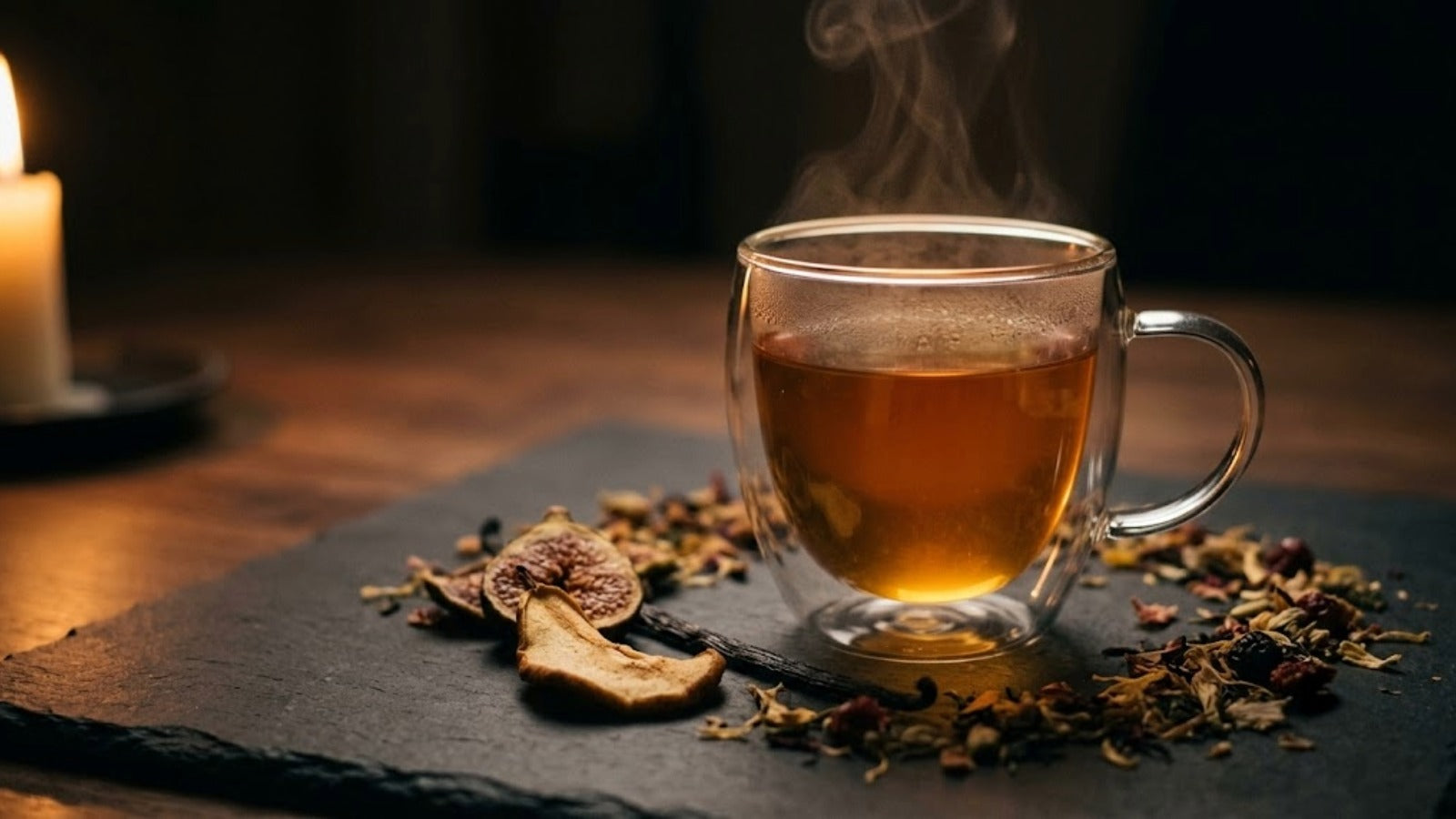
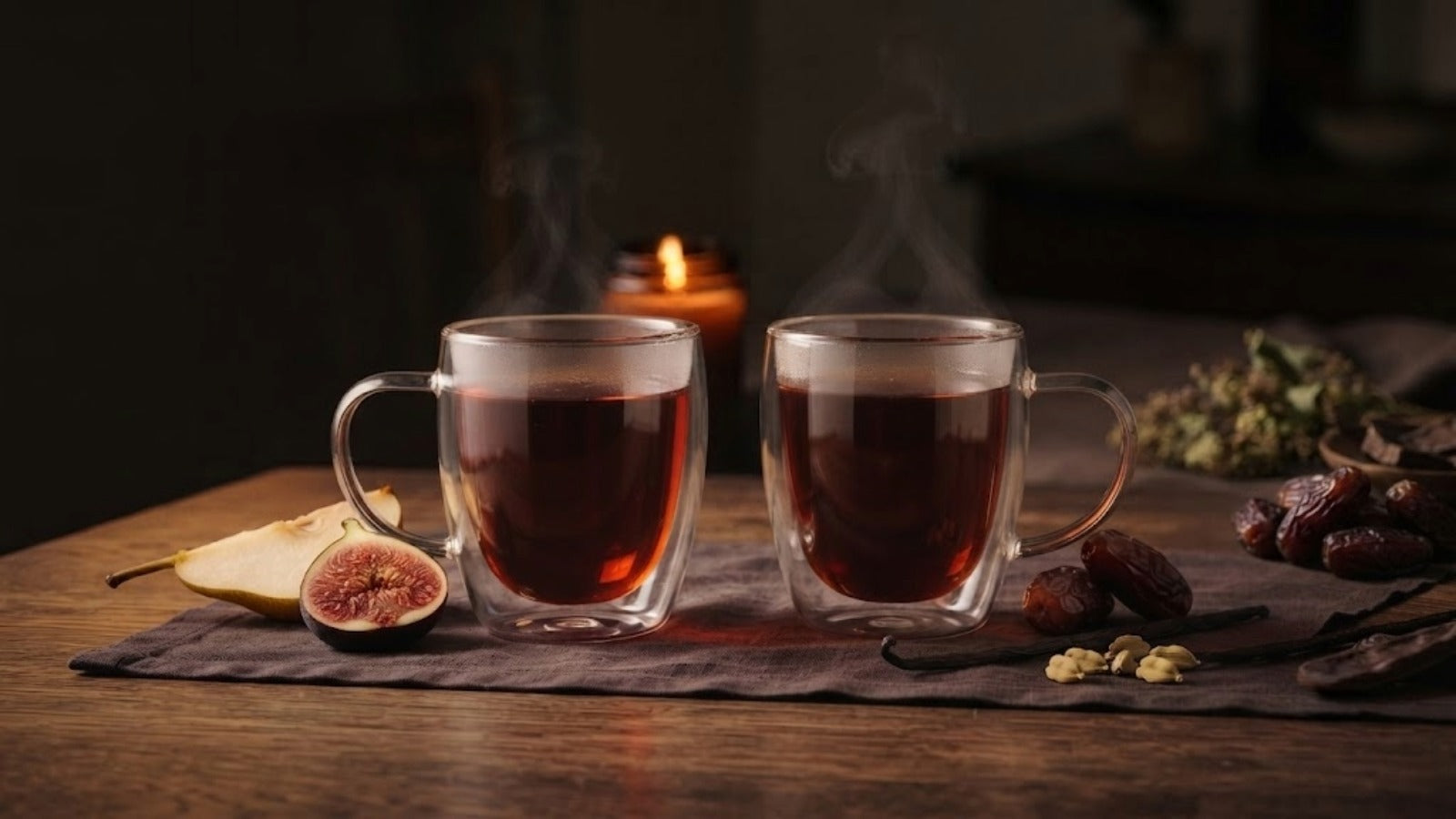
Herbal tea makes its case on a different set of strengths, and for a lot of people they're the deciding ones. The biggest is variety. Warm milk is essentially one flavor, but herbal tea comes in dozens, from soft fruit and floral blends to warm, dessert-like ones with vanilla, date, and spice. You can match the cup to the night, something light and gentle one evening, something rich and comforting the next.

Herbal tea is also naturally dairy-free, which makes it the easy choice if milk doesn't sit well with you. It's light and clean rather than rich and filling, and it won't leave the coating that a glass of milk can leave on your palate. After an evening meal especially, some people prefer that clean, refreshing finish to close the day. And because a good herbal tea builds its flavor from whole botanicals, real fig, date, vanilla, and carob, the sweetness and warmth come from the ingredients themselves.
There's also the making of it. Warm milk is quick, warm and pour, which is part of its appeal. But herbal tea comes with a small ceremony: the scoop of botanicals, the kettle, the rise of steam, the few minutes of steeping. That slower preparation is itself part of the wind-down, a built-in pause that a quick cup doesn't ask of you. For a lot of people, that ritual is exactly what makes the last cup of the day feel like a real close rather than just another drink.
The One Factor That Settles It for Many People: Caffeine
Before comfort or flavor, there's a practical dimension worth weighing, and it's the one most people overlook. Warm milk is naturally caffeine-free, which is part of why it became a bedtime staple in the first place. Herbal tea, when it's genuinely herbal, is caffeine-free too, because it's made from botanicals rather than the tea plant.
The trap is the word "tea." Regular tea, green, black, white, and oolong, all contain caffeine, and even decaf versions usually keep a little. So a before-bed cup only works in tea's favor if it's a true herbal blend with nothing to remove. On that measure, warm milk and herbal tea are evenly matched, and both clear the bar that a cup of regular tea wouldn't. If caffeine is your main concern, either is a safe close to the day.
How to Choose (Which One Fits You)
Since both make a good bedtime drink, the right choice really comes down to what you want from the cup.
| Consideration | Warm Milk | Herbal Tea |
|---|---|---|
| Caffeine | Naturally caffeine-free | Caffeine-free (true herbal blends) |
| Variety | Essentially one flavor | Dozens, from fruit to dessert-like |
| Body | Rich and filling | Light and clean |
| Dairy | Contains dairy | Naturally dairy-free |
| Preparation | Quick, warm and pour | A slower steeping ritual |
| Best for | Nostalgic, filling comfort | Flexible, ritual-friendly wind-down |
Warm milk is likely your fit if you love its nostalgic comfort, you want something simple with no steeping, you like a rich and filling cup, and dairy agrees with you. It's the cozy, familiar classic, and there's a lot to be said for that.
Herbal tea is likely your fit if you want variety from one night to the next, you'd rather avoid dairy or caffeine, you prefer a lighter and cleaner finish, or you like the idea of choosing a flavor to match your mood. It's the more flexible option, and the easier one to build a lasting evening ritual around. If you land on tea, the next step is choosing which one, starting with the best herbal teas before bed.
And you don't have to choose once and for all. Plenty of people keep both on hand, reaching for warm milk some nights and a warm, fragrant tea on others. Some even bring the two together in drinks like a warm vanilla or lavender milk tea. The best bedtime drink is simply the one you look forward to, the cup that tells you the day is done and it's time to settle in.
Getting Started with Herbal Tea Before Bed
First, set your expectations. A warm herbal cup won't work like a switch, and it isn't meant to. The effect is gentle: caffeine-free, so nothing works against your natural wind-down, plus the warmth and the pause that help you step out of the day. It works through consistency rather than intensity, becoming a signal your body learns over a week or two. For the full picture, what happens when you drink herbal tea before bed breaks it down.

Then choose your cup. This is where tea's variety becomes the point, you can match the blend to the night. Something light like chamomile or lemon balm suits a busy mind, something warm like rooibos fits when you want comfort, and something aromatic like lavender helps when you want a clear break from the day. If you'd rather choose by feel, how to choose what herbal tea to drink before bed walks through matching a blend to your mood.
A Dessert-Inspired Cup to End the Night
If you want the comfort of something sweet without the weight of an actual dessert, Purely's evening blends are built for exactly that, caffeine-free, made from real botanicals, and naturally dessert-like without any added sugar.
Sacred Sanctuary™ is a warm, fruit-forward blend of fig, pear, and vanilla, the softer, gently sweet option.
Moonlight Stillness™ is richer and more dessert-like, with date, vanilla, and cardamom over a rich red rooibos base, the pick for a deeper, warmer cup.
Both are caffeine-free, both are dairy-free, and both are sweetened entirely by the botanicals themselves. The easiest way to find yours is to try them side by side with the Evening Ritual Sampler, which includes both blends for $19, whether you lean toward soft fruit or something deeper and more dessert-like. Whichever you reach for, the idea is the same: a sweet, comforting way to signal the day it's complete.
The Cup That Closes the Day
Whether you land on warm milk or a warm cup of tea, the drink itself matters less than the moment it marks. Both give the end of the day the same thing: a warm cup in hand, a slower pace, and a clear signal that the day is done and it's time to settle in. That signal is the real point, and it works because you return to it, night after night, until reaching for it becomes automatic.
If tea is the one you choose, that quiet, repeatable close is one small part of the wider practice of evening tea rituals, the warm cup that has marked the end of the day for centuries.
Editorial Disclaimer
This content is for informational and educational purposes only. It reflects general perspectives on herbal tea, daily rituals, and related lifestyle practices. It is not intended to provide medical advice, diagnose conditions, or recommend treatments. Always consult a qualified healthcare professional with any questions about wellness or health-related matters.