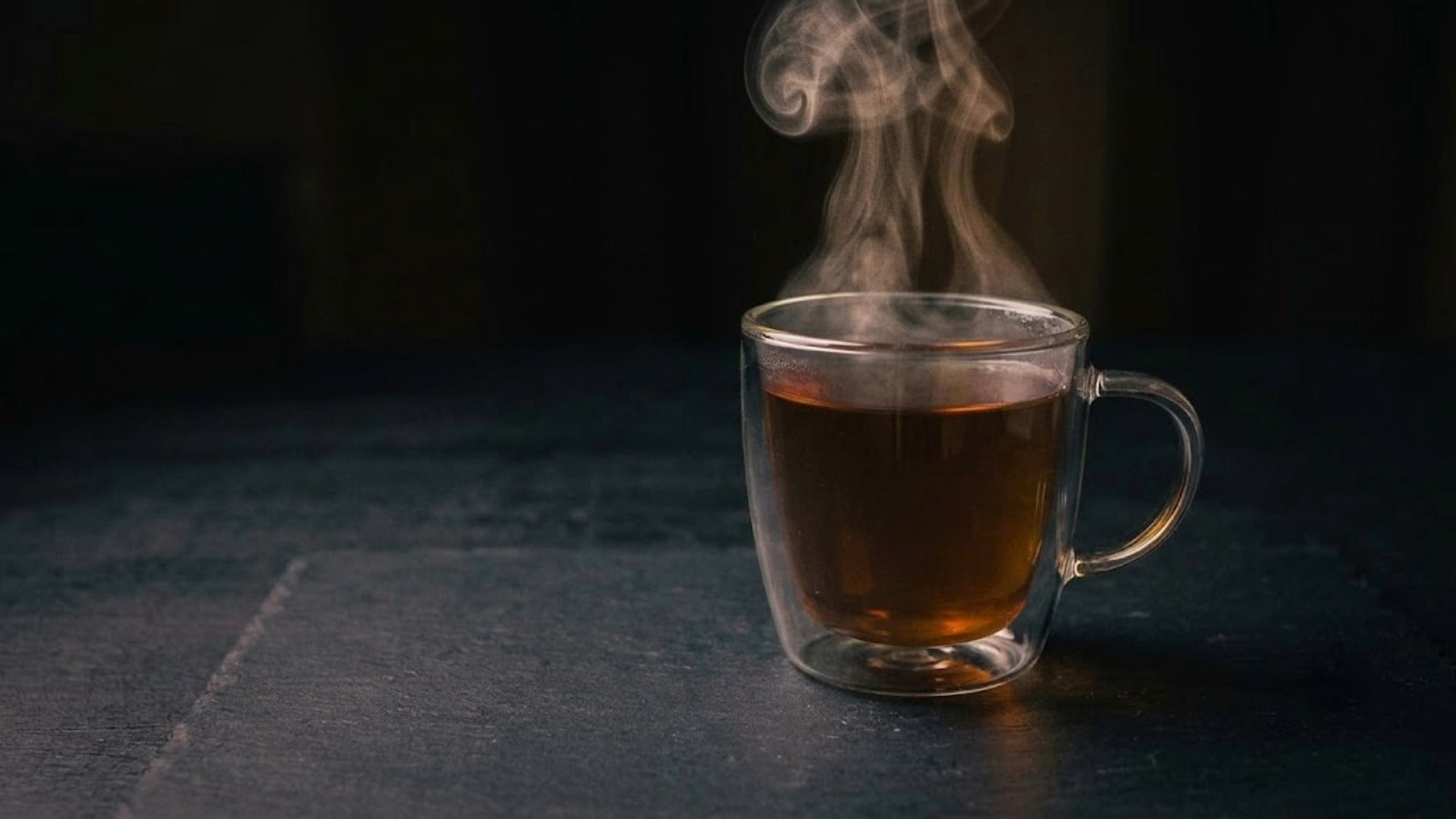
What to Drink for Focus: Herbal Tea vs Energy Drinks

You're at your desk trying to focus, but your mind won't lock in. Thoughts scatter. Tasks drag. You reach for coffee, an energy drink, or soda, hoping it will help you push through.
That's the default move for most people, and it often backfires. More stimulation doesn't create better focus. It usually creates the opposite: scattered thinking, mental noise, and a drop in clarity later. The real question isn't just what to drink, it's what actually helps your focus hold up over time. Herbal tea works differently: instead of forcing intensity, it supports a calmer, more stable state that makes real concentration easier, and it is one piece of the wider approach laid out in the complete guide to herbal tea for focus and mental clarity.
Quick Answer: What Should You Drink for Focus?
| Goal | Best Choice | Why It Wins |
|---|---|---|
| Sustained, reliable focus | Herbal Tea | Steady attention without the drop-off |
| Fast stimulation | Energy drinks / Coffee | Quick boost but often unstable |
| Calm concentration | Herbal Tea | Reduces mental noise |
| Long work sessions | Herbal Tea | Maintains performance over time |
This comparison matters because most people default to temporary stimulation. If your goal is steady mental clarity that holds up over time, the place to start is understanding how specific herbs shape the way your focus feels, so you can move away from short-term spikes and toward a more sustainable afternoon structure.
Why Most Drinks Fail for Focus
Most drinks people rely on for focus are built for stimulation, not sustained attention. Energy drinks and strong coffee spike alertness with high caffeine and sugar, and that spike can feel productive at first.

The trouble is that it creates a predictable set of problems:
- Attention becomes wired but unfocused
- Mental noise increases: racing thoughts and restlessness
- A drop-off follows, leaving you more fatigued
- Over time, consistent focus becomes harder to maintain
These drinks treat focus as a lack of energy, but poor concentration is more often driven by fatigue, stress, or overstimulation, and adding intensity on top only amplifies it. Caffeine still has its place, but for focus that holds beyond a short burst, a steadier approach works better.
Why Herbal Tea Works Better
Herbal tea takes the opposite approach. It removes friction instead of adding intensity. You don’t feel overstimulated. You feel clearer and more in control, and it becomes easier to start tasks, stay with them, and recover when attention drifts.

Herbal tea promotes calm alertness instead of wired energy, reduces background distraction and internal noise, and creates a more stable experience without sharp spikes, one that feels easier to sustain through real work. That difference shows up in your work: not in a burst, but in your ability to stay engaged.
Best Herbal Teas for Focus
You don’t need to overthink individual ingredients here. The goal is to understand the general types of herbal support and choose something that fits how you want your focus to feel. Different herbs work in different ways: some help you reset quickly when your mind feels foggy, others help you stay engaged for longer periods without losing momentum.

- Peppermint – Fast reset. Cuts through mental fog and brings your attention back quickly when thinking feels sluggish.
- Spearmint – Smoother and more gradual. Helps maintain focus over time without feeling overstimulating.
- Tulsi (Holy Basil) – Useful when stress or tension interferes with concentration. Helps quiet internal noise so you can think more clearly.
- Cacao – Ideal for extended work sessions. Provides steady, grounded support that helps you stay with a task longer.
- Ceylon Cinnamon – Complements other herbs and helps create a more balanced, consistent experience.
You don’t need to use all of them. Start with the one that matches how your focus feels right now, then adjust based on what actually helps you stay engaged.
How to Use Herbal Tea for Focus
Effectiveness comes down to timing, not volume. A cup works best at the start of a focused block, during the natural transitions between tasks, or as a quick way to reset when the fog sets in rather than forcing your attention back.

Use about one teaspoon of dried herbs per cup and steep in water just off the boil, around 180°F to 205°F for 5 to 7 minutes with the cup covered, which helps retain the compounds that support clarity, not just taste. More than the mechanics, though, treat the act of preparing and drinking your cup as a deliberate midday pause, a natural break to step away, clear your head, and come back with better control over your attention.
The goal is not to push your mind harder with short-term intensity. Real consistency comes down to habit rhythm, which gets simpler once you build a steady daily routine around it, and that structure is what lets your focus hold up over a full day.
Which Midday Blend Holds Your Focus
Both midday blends are built for the middle of the day, when the pull toward an energy drink is strongest and the afternoon still has hours left in it. Neither can be rushed, which is the point. The steadiness you are after starts with the cup taking a few minutes instead of none.
Guardian Spirit™ is mint and citrus, and it is caffeine-free. Spearmint and lemon come up first and bright, cool across the top of the cup, and underneath there is enough herbal structure to keep it from thinning out the way a light blend would by mid-afternoon. It gives you the reset an energy drink promises without the wired edge or the drop that follows, clear enough to work against without anything to come down from.
Celestial Renewal™ runs deeper, mint and cacao. Peppermint keeps it cool at the front while the cacao gives it a warm, rounded base, so the cup settles you into a task rather than jolting you into one. The cacao carries a small trace of natural caffeine, just enough to put a little behind the cup on the afternoons you want it, without tipping into the wired edge of an energy drink. It is the blend for a long work session, something to linger over while you stay with the work instead of reaching for the next boost.
If you are not sure which one belongs in your afternoon, the Midday Ritual Sampler carries both. A few afternoons with each tells you more than any description can, and one of them will turn out to be the cup you reach for without thinking.
The Smarter Way to Support Focus
The goal isn't to find the perfect drink. It's to choose something that supports how you want to work. Energy drinks create short bursts; herbal tea supports consistency, and the difference shows up in the work itself. Fewer starts and stops, less reaction to the drops, more steady progress across the afternoon.
Over time, that shift compounds. You spend less time trying to get focused and more time actually working, which is where real productivity comes from. That steadiness is also part of a larger daily rhythm; one explored more fully in a simple midday tea ritual you can reset with.
References
- Netzler, L., & Lovell, B. (2025). A Randomized Placebo-Controlled Clinical Trial Exploring the Short-Term Cognitive and Cerebrovascular Effects of Consuming Peppermint Tea. Human Psychopharmacology: Clinical and Experimental. PMC
- Herrlinger, K. A., et al. (2018). Spearmint Extract Improves Working Memory in Men and Women with Age-Associated Memory Impairment. Journal of Alternative and Complementary Medicine. PMC
- Lopresti, A. L., et al. (2022). A randomized, double-blind, placebo-controlled trial investigating the effects of an Ocimum tenuiflorum (Holy Basil) extract on stress, mood, and sleep in healthy adults. Journal of Ethnopharmacology. PMC
- Martín, M. A., et al. (2020). Effect of Cocoa and Cocoa Products on Cognitive Performance in Young Adults: A Systematic Review. Nutrients. PMC
- Nakhaee, S., et al. (2024). Cinnamon and cognitive function: A systematic review of preclinical and clinical studies. Nutritional Neuroscience. PubMed
Editorial Disclaimer
This content is for informational and educational purposes only. It reflects general perspectives on herbal tea, daily rituals, and related lifestyle practices. It is not intended to provide medical advice, diagnose conditions, or recommend treatments. Always consult a qualified healthcare professional with any questions about wellness or health-related matters.